
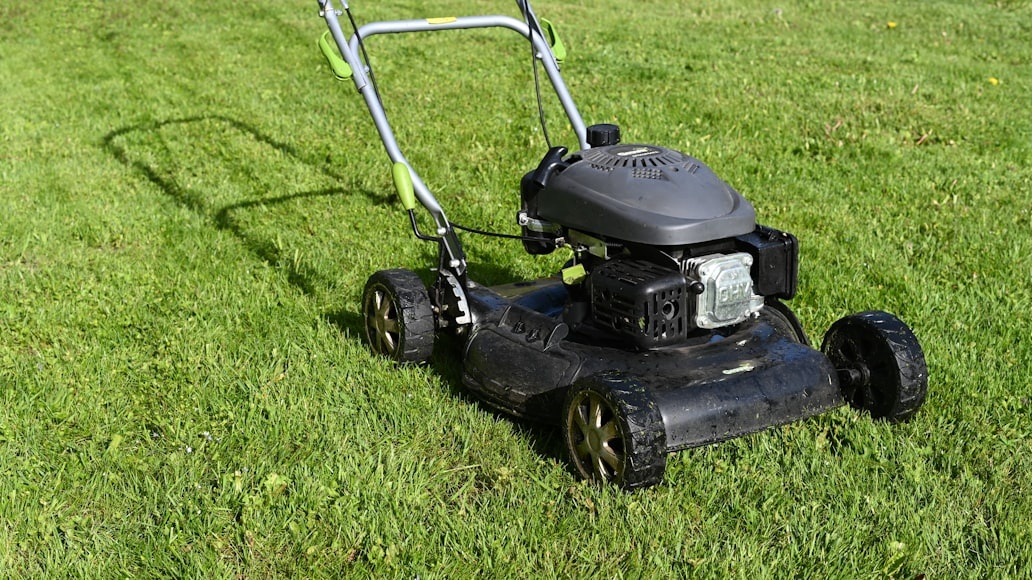
A lawnmower is a gardening tool designed to trim grass evenly across lawns, gardens, and other outdoor areas. Its primary purpose is to maintain a neat and healthy appearance of green spaces, making outdoor areas more inviting and easier to manage. While today’s models come with advanced features and automation, the concept of a lawnmower has evolved significantly since its invention in the 19th century.
The lawnmower was invented in 1830 by Edwin Budding in England. Budding’s initial design was inspired by a machine used to trim the nap of fabric, which utilized a set of rotating blades to cut grass. Over time, lawnmowers transitioned from cumbersome manual machines to practical household tools. Their popularity grew as urban landscapes expanded, and maintaining a manicured lawn became a symbol of pride and a measure of property value. By the 20th century, gas-powered and electric mowers brought efficiency and convenience to home gardens, solidifying the lawnmower’s place as an essential outdoor appliance.
Main Types of Lawnmowers
Lawnmowers have evolved to suit different yard sizes, terrains, and user needs. The primary types include:
● Reel (cylinder) mowers: These mowers feature rotating blades that spin vertically against a stationary bedknife. They produce clean, precise cuts, making them ideal for short, fine lawns.
● Reel mowers are often manual, although motorized versions are also available.
● Rotary mowers: The most common type, rotary mowers use horizontal spinning blades. They can handle taller, tougher grass and uneven terrain, making them versatile for most home gardens.
● Riding mowers and zero-turn mowers: Designed for larger lawns, these machines allow the operator to sit while mowing. Zero-turn mowers offer superior maneuverability, making it easier to cut around obstacles.
● Robotic and electric models: These mowers operate automatically or with minimal human input. They are quiet, environmentally friendly, and increasingly popular in modern landscaping. Many models rely on advanced sensors to navigate safely around obstacles. Some users also upgrade components, such as lawn mower belts, to maintain consistent operation.
Interesting Facts About Lawnmowers
Early lawnmowers were entirely manual, known as push reel mowers. These required users to push the device across their lawns, rotating a cylinder of blades to snip the grass. Despite the physical effort required, these mowers laid the foundation for modern designs. Today, the market offers a broad spectrum of machines, ranging from simple push mowers to fully autonomous robotic mowers that can cut grass on a schedule with minimal human intervention.
While lawnmowers improve efficiency, they are not without risks. Lawn mowing injuries are common, particularly when operators disregard safety rules or fail to maintain their equipment properly. Cuts, puncture wounds, and even more severe accidents can occur, underscoring the importance of safety as a crucial consideration for all users.
Key Parts and Components
Understanding the main parts of a lawnmower helps with maintenance and replacement:
● Engine or motor: Provides the power necessary to rotate the blades and, in some models, drive the wheels. Engines may be powered by gas, electricity, or batteries.
● Blades: Blades come in various shapes and designs, serving specific purposes, from standard grass cutting to mulching.
● Deck, wheels, handles, and safety switches: These parts contribute to usability and protection. The deck protects the operator from debris, while handles and wheels improve maneuverability. Safety switches ensure the mower stops if released unexpectedly.
Types of Lawnmower Blades
Blades are crucial for a clean, healthy cut and efficient operation. Common blade types include:
● Standard (straight) blades: Designed for general-purpose mowing, these blades provide a uniform cut on most grass types.
● High-lift blades: These blades generate more airflow, lifting grass before cutting, which is ideal for collecting clippings in bags.
● Mulching blades: Curved designs allow grass clippings to be finely chopped and returned to the lawn, acting as a natural fertilizer.
● Special blades for various grass conditions: Certain blades are specifically designed for thick, wet, or uneven grass, ensuring optimal cutting performance.
How to Find the Right Replacement Parts
Identifying the correct parts is crucial for maintaining optimal performance and ensuring safety. Here are some tips:
- Locate the model number on your mower: Most manufacturers place the model number on the deck or engine housing. This number ensures you find compatible parts.
- Use parts diagrams to identify exact components: Visual diagrams help match blades, belts, and other parts precisely.
- Avoid mixing incompatible blades or components: Installing the wrong blades or mismatched parts can lead to uneven cuts, reduced efficiency, or even damage to the mower.
Lawnmower Safety Tips
Safety is paramount when using any lawnmower. Following these tips helps prevent injuries and prolongs equipment life:
● Always wear protective gear, including gloves, closed-toe shoes, and an eye protection shield, to shield against flying debris.
● Keep children and pets away: Maintain a safe distance to avoid accidents.
● Never mow when the grass is wet: Wet grass increases the risk of slips and uneven cuts.
● Regularly sharpen and balance blades: Dull or unbalanced blades can tear grass rather than cut cleanly, putting extra strain on the engine.
Conclusion: Why Lawn Care Depends on the Right Machine
A well-maintained lawnmower is more than just a tool—it is the foundation of a beautiful, healthy lawn. Regular maintenance, including sharpening blades and checking components, ensures the mower performs efficiently and safely. Choosing the right blade and replacement parts not only improves the quality of the cut but also reduces the risk of injury. From manual reel mowers to advanced robotic models, understanding your lawnmower’s parts and safety requirements allows every homeowner to maintain a pristine yard with confidence. A properly cared-for mower, combined with informed usage, extends its lifespan and keeps your lawn looking its best year-round.