
PHILIPPINE CROCODILES
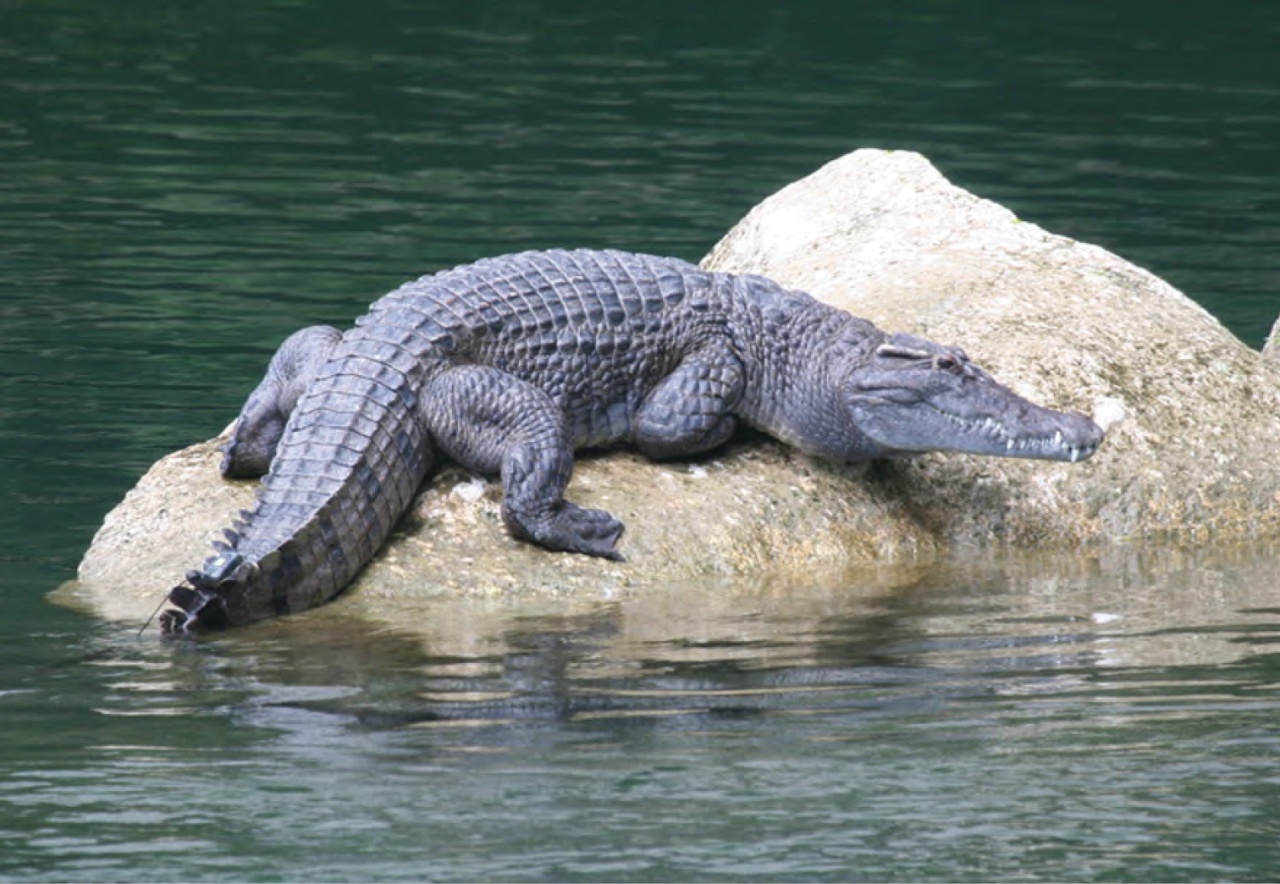
Philippine crocodiles (Crocodylus mindorensis) are also known as Mindoro crocodiles and Philippine freshwater crocodiles. Names used in the Philippines include buwaya and bukarot (in northern Luzon). The only species endemic to the Philippines, Philippine crocodiles were discovered by Westerners on Mindoro island in the Philippines in 1935 by Karl Schmidt. Their discovery location is why they are sometimes called the Mindoro crocodile and have Mindoro in their scientific name. The Philippine crocodile has only been recognized as a separate species since 1989. Before that it was described as a subspecies of the New Guinea crocodile (Crocodylus novaeguineae). [Source: Jamison Law, Animal Diversity Web (ADW) /=]
Philippine crocodiles are considered to be the most severely threatened crocodile species in the world. By one estimate there are only 100 non-hatchling individuals left. There were roughly 250 left in the wild as of September 2011 according to an article by National Geographic. Recent surveys show it to be limited to northern Luzon and southwestern Mindanao islands. Philippine crocodiles were declared critically endangered in 2008 due to exploitation and unsustainable fishing methods, such as dynamite fishing. Since October 2021, they have classified as Critically Depleted by the On the International Union for Conservation of Nature (IUCN).
The Philippine crocodile is one of two species of crocodile that are found in the Philippines; the other is the larger saltwater crocodile. The Saltwater crocodile occurs from India to Australia to islands in the Pacific Ocean and is not globally threatened with extinction. In the Philippines however, saltwater crocodiles are now very rare and the species is locally extinct from many locations where it historically occurred. The Saltwater crocodile is normally found in coastal waters, mangroves, rivers and large lakes that are connected to the sea. They can reach lengths of six meters and are potentially very dangerous and feared as occasional man-eaters.
Philippine crocodiles in contrast are much smaller with a maximum recorded length of about three meters. They live in freshwater habitats such as lakes, rivers and creeks but are also known to occasionaly venture into saltwater habitats such as mangrove forest and intertidal coastal areas, possibly when moving between coastal rivers.
RELATED ARTICLES:
CROCODILES: CHARACTERISTICS, ANATOMY, DIFFERENCES WITH ALLIGATORS factsanddetails.com
PREHISTORIC CROCODILES: EVOLUTION, EARLIEST SPECIES, TRAITS factsanddetails.com
CROCODILE BEHAVIOR: COMMUNICATION, FEEDING, MATING factsanddetails.com
SPECIES OF CROCODILES IN ASIA factsanddetails.com
SALTWATER CROCODILES factsanddetails.com
CROCODILES AND HUMANS: WORSHIP, THREATS, HANDBAGS factsanddetails.com
CROCODILE ATTACKS IN ASIA factsanddetails.com
Philippine Crocodile Habitat and Where They Are Found
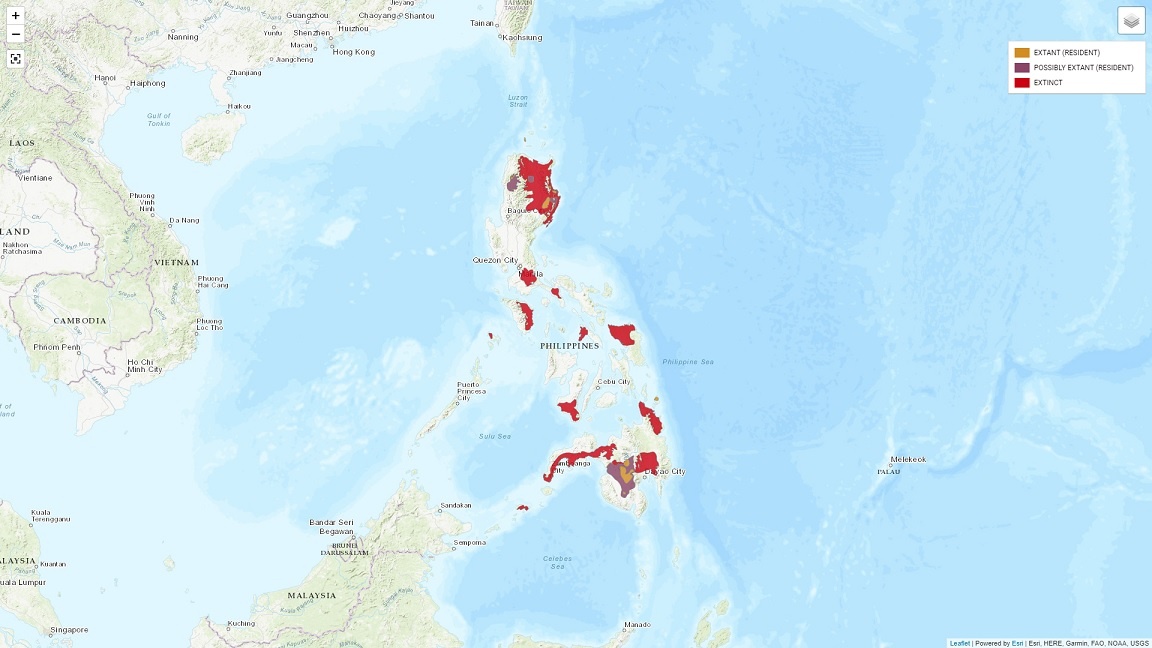
Phillipine crocodiles were historically indigenous throughout the Philippine islands including Dalupiri, Luzon, Mindoro, Masbate, Samar, Jolo, Negros, Busuanga and Mindanao. Recent surveys show that there are or may be still be surviving population in the Northern Sierra Madre Natural Park, San Mariano, Isabela, Dalupiri island in the Babuyan Islands (north of Luzon), Abra (province) in Luzon and Ligawasan Marsh in Mindanao. [Source: Jamison Law, Animal Diversity Web (ADW) /=]
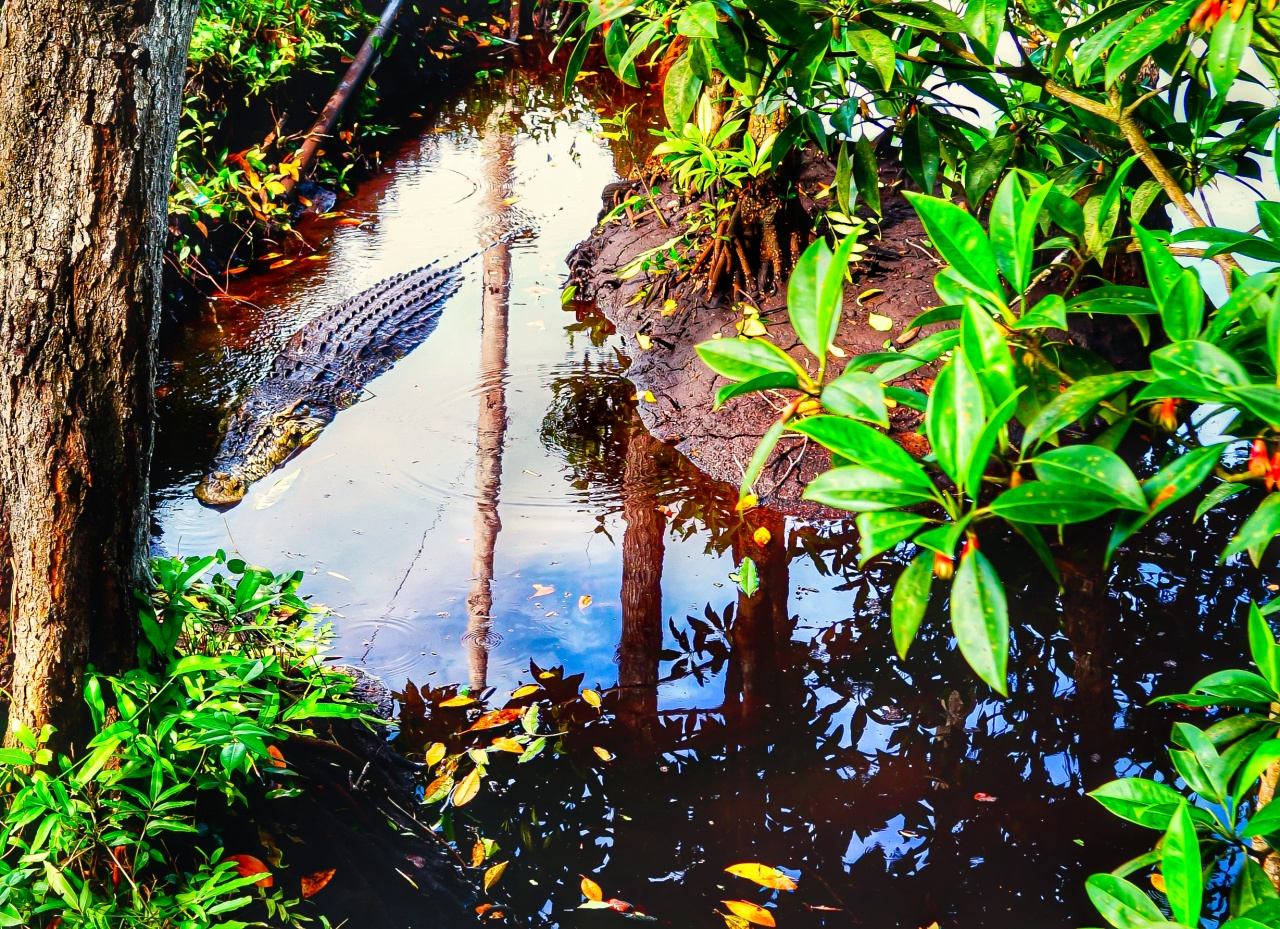
Philippine crocodiles seem to prefer small wetlands, but has also been found in shallow natural ponds and marshes, man-made water reservoirs, shallow narrow creeks, littoral creeks and mangrove areas, and faster-flowing larger rivers in the mountains up to 850 meters (2789 feet). They have been observed in both the Sierra Madre and Cordillera Mountains in fast flowing rivers with rapids and deep pools lined by limestone cliffs. The cliffs have caves thought to be used as hiding places.
Populations still survive in 1) the Northern Sierra Madre Natural Park within the Luzon rainforest; 2) San Mariano, Isabela, Dalupiri island in the Babuyan Islands; 3) Abra (province) in Luzon; 4) the Ligawasan Marsh, Lake Sebu in South Cotabato; 5) the Pulangi River in Bukidnon; 6) Paghungawan Marsh in Siargao Island, and 5) possibly in the Agusan Marsh Wildlife Sanctuary in Mindanao. The Philippine crocodile populations that reside in these locations live geographically isolated from each other, which ultimately impacts their population level differentiation and decreases genetic diversity. [Source: Wikipedia]
Philippine Crocodile Characteristics and Diet
Philippine crocodiles make up a relatively small species of freshwater crocodile. They have reached 3.02 meters (9.91 feet) in length but have an average length closer to two meters (6.56 feet) and both sexes reach breeding maturity at 1.5 meters (4.9 feet) and 15 kilograms (33 pounds). They are cold blooded (ectothermic, use heat from the environment and adapt their behavior to regulate body temperature), heterothermic (having a body temperature that fluctuates with the surrounding environment). Sexual Dimorphism (differences between males and females) is present: Males are larger than females. . Males mature at about 2.1 meters, females at 1.3 meters. /=[Source: Jamison Law, Animal Diversity Web (ADW) /=]
Compared to other crocodiles Philippine crocodiles have a relatively broad snout and heavy dorsal armor (thick bony plates on their back). Hatchlings have golden-brown backs, white bellies and transverse dark stripes, As they age the brown color darkens. Adult Philippine crocodile have enlarged post occipital scales ranging from four to sox, transverse ventral scale rows ranging from 22 to 25, 12 transverse dorsal midbody scales, palatine-pterygoid sutures that are nearly transverse (never bisecting the pterygoid), cervical scalation, lateral scales of equal size arranged in longitudinal rows, and prominent nuchomarginal rows.
Philippine crocodiles have been categorized as carnivores (eat meat or animal parts), piscivores (eat fish) and insectivores (eat insects). Animal foods include birds, mammals, reptiles, fish carrion, insects, mollusks and aquatic crustaceans. Juvenile and hatchlings have been observed eating snails, shrimps, dragonflies, small fish, and white mice. Prey species for adults included pigs, dogs, large fish, "civet cats" (probably Asian palm civets, possibly Malayan civets), snakes and water birds. Being true opportunistic feeders, as many crocodile species are, they have been documented eating marine fish, pork, beef, chicken meat and offal.
Philippine Crocodile Behavior
Philippine crocodiles are natatorial (equipped for swimming), diurnal (active during the daytime), motile (move around as opposed to being stationary), migratory (make seasonal movements between regions, such as between breeding and wintering grounds) and, territorial (defend an area within the home range). The home ranges recorded from radio-tagged crocodiles in northern Luzon were shown to be over one to six kilometers of river. Philippine crocodiles sense using vision, sound, vibrations and chemicals and communicate with vision, sound and chemicals usually detected by smelling. They also employ pheromones (chemicals released into air or water that are detected by and responded to by other animals of the same species). [Source: Jamison Law, Animal Diversity Web (ADW) /=]
Jamison Law wrote in Animal Diversity Web: Philippine crocodiles have been shown to be quite aggressive towards each other in captivity. Juveniles have displayed intra-specific aggressiveness in the wild and, according to field observations in northern Luzon, establish individual territories through aggressive interactions in their second year. However, intra-specific aggressiveness has not been observed among adults or between size or age classes, and sometimes pairs of adult crocodiles are seen basking and swimming together. Crocodiles have also been shown to use individual sites in larger rivers during the drier season when water levels and currents are low but congregate in shallow ponds and creeks during the wet season when river currents are high. /=\
Radio telemetry from a breeding pair revealed the maximum daily movement for the male to be 4.3 kilometers per day and four kilometers per day for the female. The male travelled longer distances but less frequently. Habitats favorable to the crocodiles were characterized by waters with average flow velocity, minimum depth and maximum width. Behavioral studies in Dunoy Lake revealed that average distances among wild Philippine crocodiles, regardless of age, were found to be 20 meters. Areas with lake edge vegetation were found to be preferred by juveniles and hatchlings whereas areas with open water and large logs to bask were preferred by adults. /=\
Philippine Crocodile Mating, Reproduction and Offspring
Philippines crocodiles are oviparous, meaning that young are hatched from eggs, and believed to be polygynandrous (promiscuous), with both males and females having multiple partners — because most crocodilians are. They engage in seasonal breeding — breeding up to three clutches in a year with intervals of between four and six months between each clutch. Breeding from December to May is generally followed by egg laying between May and August. The number of eggs laid ranges from seven to 33, with the average number being 25. Parental care is provided by both females and males. The incubation period for the eggs ranges from four to five months. On average females reach sexual or reproductive maturity at 10 years, with males doing so at 15 years. [Source: Jamison Law, Animal Diversity Web (ADW) /=]
Like all crocodilians, Philippine crocodiles employ temperature dependent sex determination. Using artificial incubation, it has been observed that mostly females are produced at 30 to 31°C and mostly males at 33°C. In captivity, egg fertility rates were found to be 56 percent and 57 percent in Palawan and Negros, respectively, and hatching rates of fertile eggs were 45 percent and 51 percent. Egg fertility and hatching rates for 10 wild nests (201 eggs) on Luzon were comparatively higher at 75 percent and 70 percent, respectively, but wild egg hatching success in the Muleta River was 45.5 percent in one nest.
Captive female and male Philippine crocodiles begin breeding when they are 1.3 meters and 2.1 meters in length, respectively, and about 15 kilograms. Mating and courtship occur in the dry season from December to May and egg laying occurs between April and August, peaking at the beginning of the rainy season in May or June. Incubation periods in the wild for Philippine crocodiles are between 65 to 78, and 77 to 85 days in captivity. /=\
Typically to lay their eggs in, female Philippine crocodiles build either hole nests, mound nests, or a combination of the two on river or pond banks that are four to 21 meters from the edge of the water. Mound nests are built during the dry season and typically consist of dried leaves, twigs, bamboo leaves, and soil, with a mean height of 55 centimeters, length of two meters and width of 1.7 meters (based on four nests in Luzon). After egg laying males and females take turns watching the nests, and females routinely visit their nests either early in the morning or late in the afternoon. Parental care by the female was observed at Silliman University in captivity for three months after hatching, but this has yet to be observed in wild Philippine crocodiles. /=\
Philippine Crocodiles, Humans and Conservation
Since October 2021, Philippine crocodiles been classified as Critically Depleted on the International Union for Conservation of Nature (IUCN) Red List. Before that they were listed as Critically Endangered. There may be as few as 100 left. On the US Federal List they are classified as Endangered. In CITES (Convention on International Trade in Endangered Species of Wild) they are in Appendix I, which lists species that are the most endangered among CITES-listed animals and plants. [Source: Jamison Law, Animal Diversity Web (ADW) /=]
Humans have killed Philippine crocodiles for their meat and hide and because they were confused with the larger, more dangerous saltwater crocodiles. Philippine crocodiles were extensively harvested for the hides from the 1950s to 1970s. They have also been threatened by deforestation and the destruction, disturbance and fragmentation of their habitat.
Philippine crocodiles have been protected in The Philippines by the Republic Act 9147 (the Wildlife Act) since 2001. The Protected Areas and Wildlife Bureau (PAWB) of the Department of Environment and Natural Resources (DENR) are made responsible for their protection and conservation of their habitat. DENR created the 'Philippine Crocodile National Recovery Team' (PCNRT) under Special Order 2000-231, which oversees breeding facilities at Silliman University Environmental Centre (SUEC) and the Palawan Wildlife Rescue and Conservation Centre (PWRCC). The DENR also has agreements with zoos in North America, Europe, and Australia, some of which have captive breeding programs, and has set up a number of research, education and public awareness programs in The Philippines.
Adults of Philippine crocodiles have no reported predators other than humans. Larger saltwater crocodiles might attack them, but the two species have been observed to co-occur in at least one location on Mindanao.Eggs and hatchlings are much more vulnerable. Ants, monitor lizards, pigs dogs, short-tailed mongooses, rats and other animals may eat eggs from unattended nests. Hatchlings have been observed being be attacked by rufous night herons and probably large fish and monitor lizards.
Image Sources: Wikimedia Commons
Text Sources: Animal Diversity Web animaldiversity.org ; National Geographic, Live Science, Natural History magazine, David Attenborough books, New York Times, Washington Post, Los Angeles Times, Smithsonian magazine, Discover magazine, The New Yorker, Time, Reuters, Associated Press, AFP, Lonely Planet Guides, Wikipedia, The Guardian, Top Secret Animal Attack Files website and various books and other publications.
Last updated February 2025