
MUTE SWANS
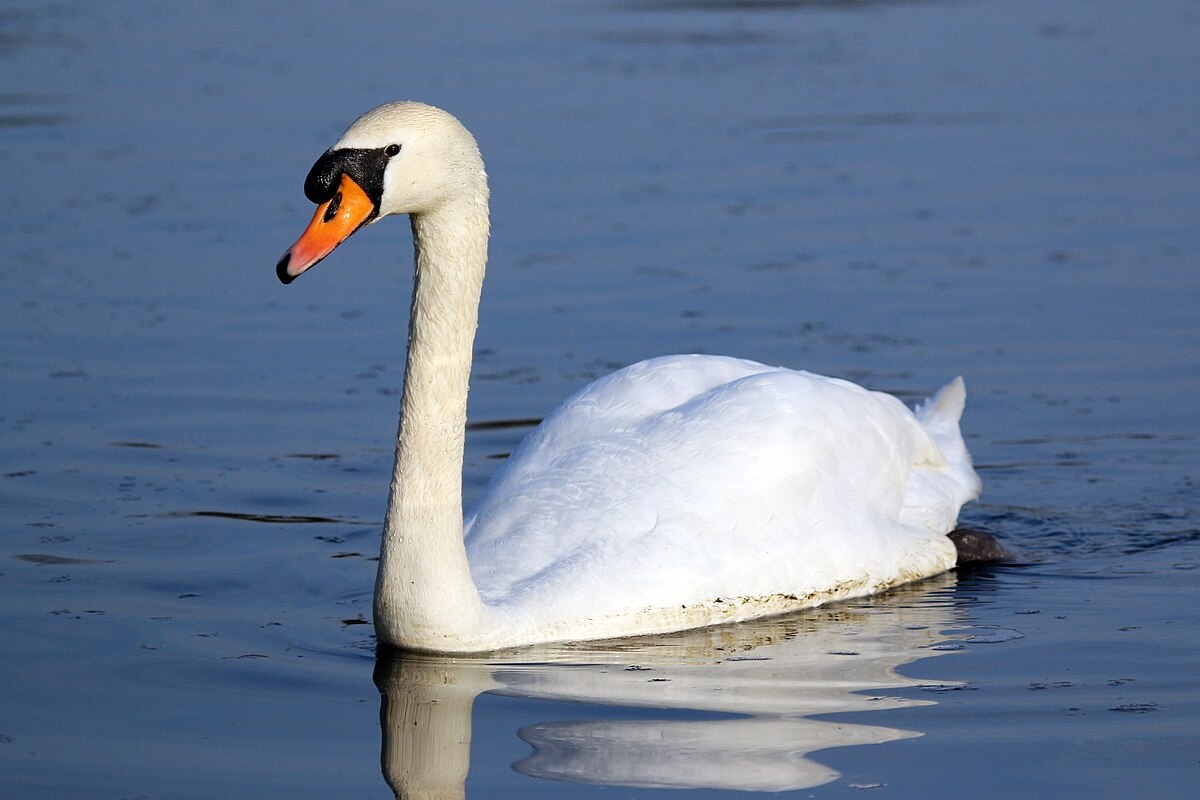
Mute swans (Cygnus olor) have an orange bill with a distinctive black hump at the base. Their name derives from their being less vocal than other swan species Mute swans tend to stay in the same place all year. During the mating season males can be quite aggressive. By tradition, all unmarked mute swans on the River Thames belong to the monarch. Recent fossil records, according to the British Ornithologists' Union, show Mute swans are among the oldest bird species still living today. Bog specimens dating back thousands of years have led to them being upgraded to "native" status in several European countries. They are common temperate Eurasian birds. Semi-domesticated descendants of domestic flocks, are naturalised in the United States and elsewhere. The greatest age recorded for a banded mute swan is 19 years. In captivity, they have lived 30 to 40 years. [Source: Wikipedia, Alicia Ivory, Animal Diversity Web (ADW) |=|]
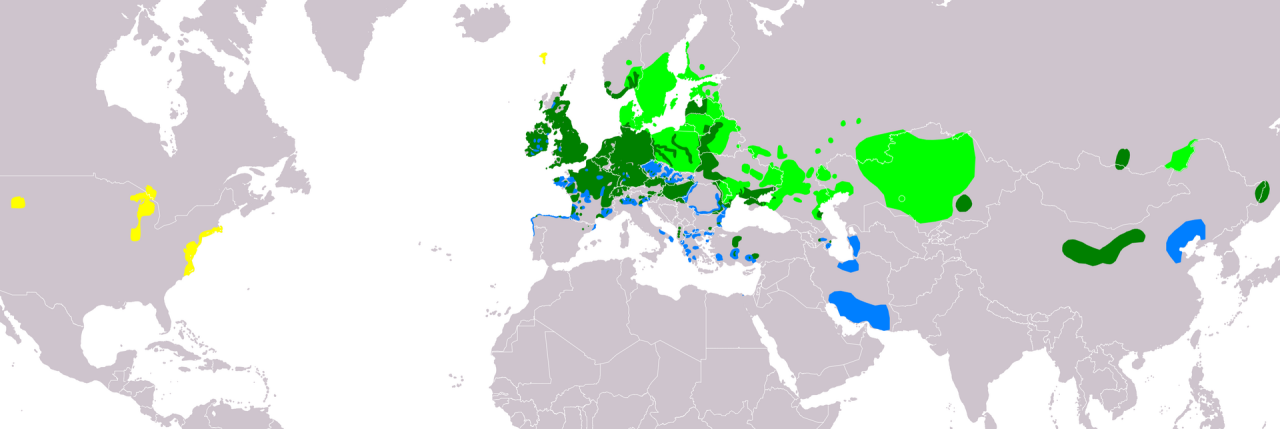
Mute swans are the most common swans in the wild. Common in Europe and southern Russia, China and the Russian Maritimes and introduced to North America, Japan, Australasia and southern Africa, they are found in well-sheltered bays, open marshes, lakes, ponds, rivers, streams, coastal areas, marshes, other wetlands and estuaries as well as in parks or on country estates. In winter, they are more common in marine waters. Mute swans breed in the British Isles, north central Europe and north central Asia. They winter as far south as North Africa, the Near East, and to northwest India and Korea. They have been successfully introduced in North America, where they are a widespread species and permanent residents in many areas.
Mute swans are not endangered. They are designated as a species of least concern on the International Union for Conservation of Nature (IUCN) Red List and have no special status on the Convention on International Trade in Endangered Species (CITES). Domestication saved these bird from becoming hunted to extinction in Britain where their feathers were used as quills for writing and the leathery web of their feet was used for purses, and their wing bones for making whistles. There was a high incidence of lead poisoning in the mute swans of Great Britain, caused by the swans' ingestion of discarded lead shot that became entangled in aquatic vegetation. Since this problem was discovered, it is no longer a major threat to mute swan populations in Britain.
Mute swans are viewed as pests in some places. They may attack people who approach their nests too closely. There are records of them knocking people off of jet skis. An adult swan can seriously injure a child. In addition, mute swans are thought to pose a threat to native wildlife as a result of competition for food, territories, and nesting areas. The introduction and consequent expansion of mute swans into North America pose significant concerns to native wildlife. Common loons and recently re-introduced trumpeter swans are two species of primary concern. The North American population of mute swans has been increasing steadily since its introduction. These birds are aggressive, and have been known to drive off such stubborn and similarly sized species as Canada geese and trumpeter swans. Wildlife managers seek to control non-native mute swans in areas where native wildlife is being threatened.
See Separate Article: SWANS: CHARACTERISTICS, BEHAVIOR, ATTACKS factsanddetails.com ; BLACK SWANS: CHARACTERISTICS, BEHAVIOR AND REPRODUCTION ioa.factsanddetails.com
Mute Swan Characteristics and Diet
Mute swans are very large birds. They range in weight from 7.6 to 14.3 kilograms (16.7 to 31.5 pounds) and range in length from 1.44 to 1.58 meters (4.7 to 5.2 feet). Their wingspan ranges from two to 2.5 meters (6.6 to 8.2 feet). |=| Sexual Dimorphism (differences between males and females) is present: The two sexes look alike but males are generally larger than females. [Source: Alicia Ivory, Animal Diversity Web (ADW) |=|]
The plumage of mute swans is white. They are best distinguished from other swans by the knob at the base of the upper bill, and the color of the bill itself, which is orange, with the tip and base colored black. The head and neck may sometimes be stained brown from water and mud containing iron.
Mute swans are primarily herbivores (eat plants or plants parts) but they are recognized as omnivores (eat a variety of things, including plants and animals) as they do occasionally animal foods such as insects, fish, frogs, mollusks and aquatic or marine worms. The diet of mute swans consists mainly of aquatic vegetation that includes leaves, roots, tubers and algae They do not dive, instead they plunge their head and long neck below the water's surface.
Mute Swan Behavior
Mute swans fly and are natatorial (equipped for swimming), diurnal (active mainly during the daytime), motile (move around as opposed to being stationary), migratory (make seasonal movements between regions, such as between breeding and wintering grounds), territorial (defend an area within the home range) and social (associates with others of its species; forms social groups). Mute swans set up large territories of four to 10 acres, which can include an entire small lake or pond. [Source: Alicia Ivory, Animal Diversity Web (ADW) |=|]
Mute swans do not engage in mass migrations, though in winter there may be gatherings numbering more than 100 individuals in open water. When swimming, a mute swan holds its neck in a graceful curve with the bill pointing downward. Other swans carry their bills level and necks erect. Mute swans can fly at speeds up to 50 to 55 mph. |=|
Mute swans communicate with vision and sound and sense using vision, touch, sound and chemicals usually detected with smell. They have keen vision and hearing but are usually usually silent, as their name implies, but not completely so. Adults sometimes snort and make hissing noises or puppy-like barking notes or whistles, but sounds are not so loud as the swans have a straight trachea. The very audible sound of their wings during flight has been described as a musical throbbing or humming. They also use visual displays as a form of communication, such as postures. For example, in an aggressive posture, males often arch their secondary wing feathers over the back. |=|
Mute swans are large and aggressive birds. As adults they are not often preyed on unless they are old or ill. Eggs and hatchlings are vulnerable to nest predation by raccoons, mink, and a wide variety of other medium to large-sized predators. But swan parents are typically present to protect their young. |=|
Mute Swan Mating, Reproduction and Offspring
Mute swans are monogamous but adults are not paired for life, contrary to the stereotype of the 'pining swan' who has lost its mate. In fact, some have been observed to have as many as four mates, or even 'divorce' one mate in favor of another. However, established pairs are more successful breeders than non-established pairs and mute swans do form monogamous pairs for at least a season. [Source: Alicia Ivory, Animal Diversity Web (ADW) |=|]
Mute swans engage in seasonal breeding. They breed once a year. The breeding begins in March and April. The number of eggs laid each season ranges from five to 12, with the average being five to seven. The time to hatching ranges from 36 to 38 days. During the pre-weaning and pre-independence stage provisioning and protecting are done by males and females. The average fledging age is 60 days, with independence occurring on average at 12 months. On average females and males reach sexual or reproductive maturity at three years.
Mute swans rarely nest in colonies. Nest sites as the breeding season begins. According to Animal Diversity Web: These swans either build a new nest or use a previously constructed mound, such as a muskrat house. The nest is large, made of aquatic vegetation, and lined with feathers and down. It is built well above the normal water level in swampy places near a pond or lake. It is possible for clutches of five to 12 to occur, but five to seven is most common. The eggs are pale gray to pale blue-green. Incubation lasts 36 to 38 days. The chicks are brownish gray (gradually turning white within the next 12 months) and only remain in the nest for one day. The male may often take the first-hatched cygnet to the water while the female continues to incubate the remaining eggs. They are able to fly in about 60 days. Chicks can ride on the backs of their parents or under their wings. By the following breeding season the parents drive the young away. The cygnets then join flocks of other non-breeding swans, and during this time molt their feathers, becoming flightless for a short period of time. In the next two years, the cygnets begin to bond with a mate and begin to look for suitable breeding territory. Swans do not begin to breed until about their third year.
Both sexes share incubation, though the female spends the majority of time sitting, and the male usually stands guard. Even in semi-domestication, the nest is strongly defended; swans have been known to attack other waterfowl and even people. Blows from their powerful wings can be especially painful. They can be dangerous to children, and are capable of killing or maiming some of the larger predators. |=|
Whooper Swans
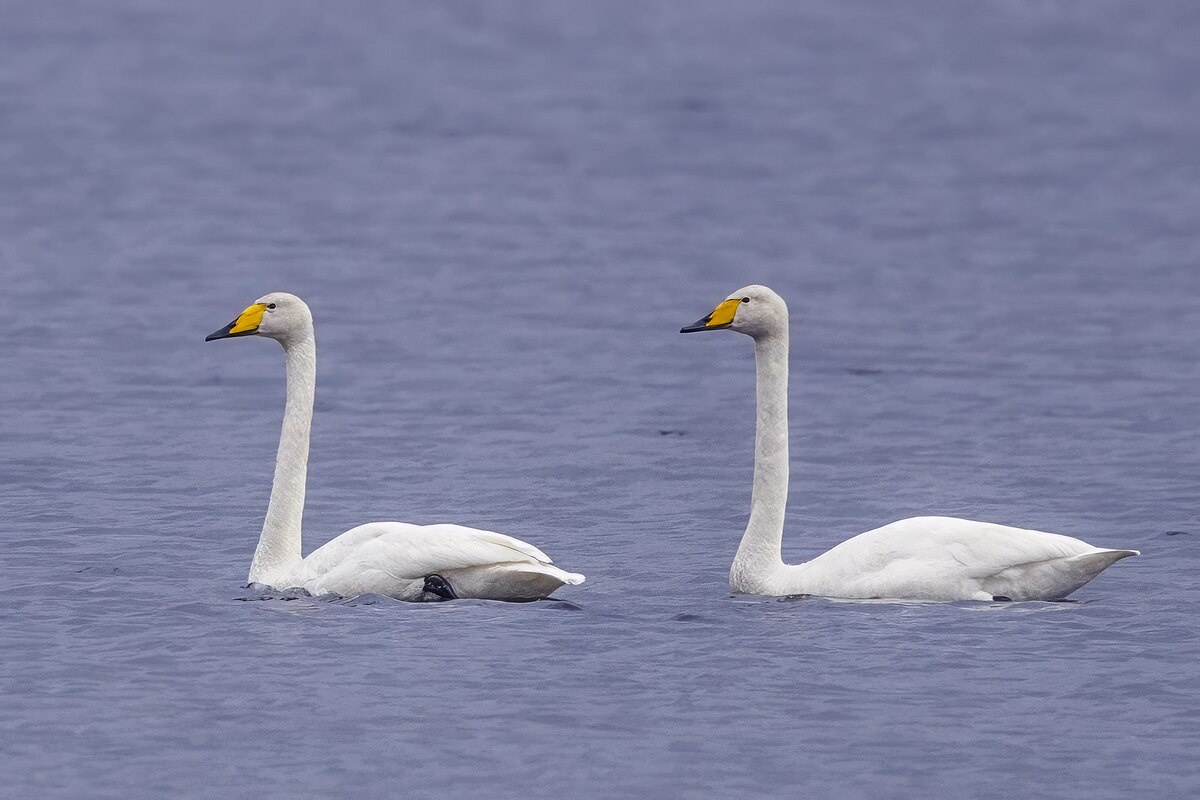
Whooper swans (Cygnus cygnus) are found primarily in northern Eurasia. In the western end of their range they breed in Iceland, and Scandinavia and winter in the British Isles and Europe and are the national bird of Finland. In the east they are seen in Japan and the Russian Far East. The whoopers in Japan breed in eastern Siberia and winter in unfrozen ponds, lakes and bays in Japan. They begin mating after reaching age of three or four and build large nests from reeds and sedges with the female incubating the eggs while the males forages for food. The young are grey in color. They stay with their parents during the first winter.
Whooper swans can measure one and a half meters from head to tail, with a wingspan of over two meters. They have thick bodies and can weigh up to 14 kilograms (30.7 pounds) , making them one of the heaviest flying birds. Adult whooper swans can live up to 20 years in the wild. They have a small annual mortality rate once they are past the first few weeks after hatching. One common cause of death occurs when these linger too feeding on agricultural grains in the north instead of migrating south — and freese to death. However, the greatest cause of deaths among adults and juveniles is flying accidents. [Source: Priscilla Kuo, Animal Diversity Web (ADW) |=|]
Whooper swans are not endangered. They are designated as a species of least concern on the International Union for Conservation of Nature (IUCN) Red List and have no special status on the Convention on International Trade in Endangered Species (CITES). Threats to them have included hunting, egg poaching, and habitat degradation. Among the conservation efforts that have helped them are preservation of wetland sites from Iceland to China and outlawing hunting in Russia.
Whooper swans are generally unafraid of humans and will take food directly from a human's hand. This level of approachability occurs mainly during the winter when food is scarce. In some places they are tourism draws. Some whooper swans prefer to feed on crop plants which has higher nutritional value obtained than their traditional foods — aquatic plants. They are sometimes viewed as agricultural pests. foods. Whooper swans are carriers of the H5N1 bird flu virus and because their wide-ranging migratory habits can spread it through much of the Northern Hemisphere.
Whooper Swan Habitat, Range and Migrations
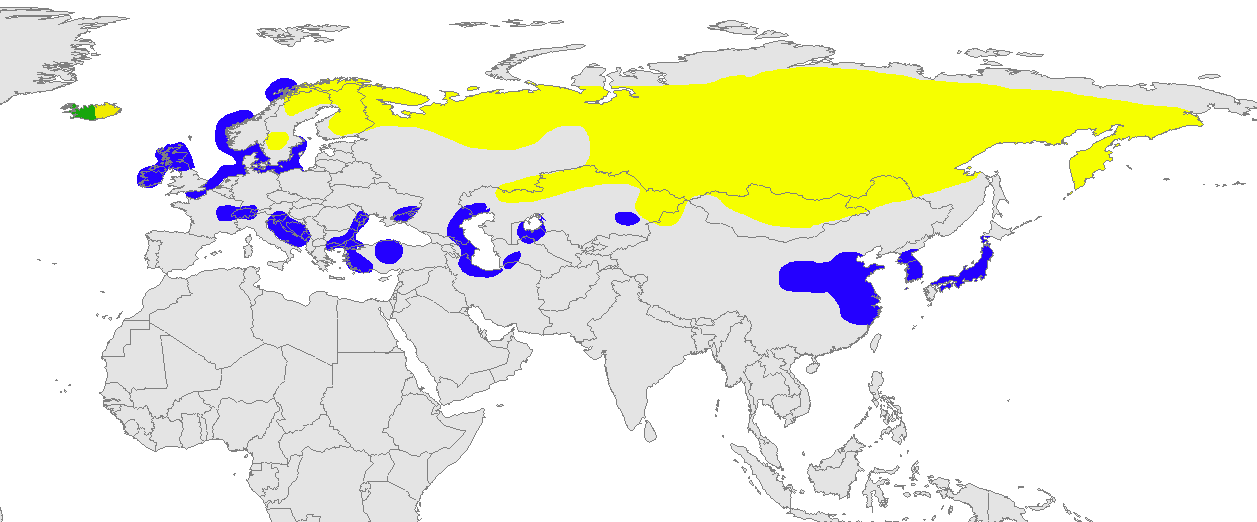
Whooper swans have an extensive geographic range and can be found within the boreal zone in Eurasia and many nearby islands. Boreal conditions often include cold winters, short summers, and dramatic seasonal temperature variations. Whooper swans breed primarily in northern Siberia and Russia, but also in Iceland, Ireland, and Great Britain and migrate in the winter in various parts of Europe, Central Asia, China, Korea, and Japan. Some migratory populations can be found in India and western North America.
Whooper swans breed and nest near freshwater lakes, pools, shallow rivers, marshes, bogs, swamps and brackish water estuaries. They prefer habitats with bushes and emergent vegetation, which can provide protection for nests and newborn cygnets (chicks). In Iceland, they are commonly found at elevations up to 700 meters. Non-breeding pairs of swans can be found near sheltered estuaries, lagoons, and shallow bays. Migrating whooper swans fly at altitudes of 500 to 1,700 meters when crossing oceans, but often prefer flying at lower levels and avoid flying over long expanses of water so they can take frequent breaks. Near the British Isles, migrating whooper swans have been recorded reaching heights above 8,000 meters. [Source: Priscilla Kuo, Animal Diversity Web (ADW) |=|]
Whooper swans that migrate to Japan birds breed around lakes and marshes in the Siberian boreal forest zone, leaving their breeding grounds in October, and slowly working their way southward. Radio collar research conducted by the Biodiversity Center of Japan indicates that one of the main migration routes for whooper swans passes through the island of Sakhalin (Karafuto) and on into Hokkaido, but some birds may also come via the Kamchatka Peninsula.
Great flocks with thousands of whooper swans stop in eastern Hokkaido in November and December on their way from Siberia to warm areas in Honshu. To help swans survive the winter local people often scatter grain in pond water to make sure they get enough to eat. Hundreds of swans spend the winter at Kussharo Lake in Akan National Park in Hokkaido where hot springs keep parts of the lake unfrozen throughout the winter and busloads of tourist throw bread and chips and food to them. The swans have gotten so used to the feeding ritual they sometimes eat out of people's hands.
Whooper Swan Characteristics and Diet
Adult whooper swans are large birds, They range in weight from 7.4 to 15.5 kilograms (16.3 to 34.1 pounds). Their average length is 1.4 to 1.65 meters (4.6 to 5.4 feet) and their average wingspan is 2.05 to 2.75 meters (6.7 to 9 feet). Sexual Dimorphism (differences between males and females) is present: Males are larger than females and have longer and thinner necks. Male weigh from 7.4 to 14 kilograms (16.3 to 31 pounds) with an average of 9.8 kilograms (21.6 pounds). Female range in weight from 8.2 to 9.2 kilograms (18 to 20.3 pounds). The heaviest whooper swan recorded was a wintering male swan in Denmark weighed 15.5 kilograms (34.1 pounds).
Whooper swans have white plumage with black webbed feet and legs. Their beaks are orange-yellow at the base with a black tip. The markings on their beak can be used to differentiate between individuals. In the spring and summer, adults may develop dark neck plumage due to their iron-rich environment. Juveniles have downy grey-brown plumage with a pink and black tipped beak. A close relative of whooper swans are the smaller, shorter-necked Bewick swans, a tundra swan subspecies. These swans can be differentiated by beak color. Whooper swans have more orange-yellow beak markings while Bewick swans have more black markings. |=|
Whooper swans are recognized as omnivores (eat a variety of things, including plants and animals), herbivores (eat plants or plants parts), carnivores (eat meat or animal parts), piscivores (eat fish), insectivores (eat insects), folivores (eat leaves), granivore (eat seeds and grain) and lignivores (eat wood) depending on their age, the season, where they happen to be and individual tastes. Animal foods include fish and insects. Among the plant foods they eat are leaves, roots, tubers, wood, bark, stems, seeds, grains, and nuts. [Source: Priscilla Kuo, Animal Diversity Web (ADW) |=|]
Adult whooper swans feed in shallow bodies of water and mainly consume aquatic plants and roots. Cygnets feed on small insects and other invertebrates to meet their high protein requirements that fuel their growth and development. Parents help cygnets feed by stirring up the water column to bring make aquatic vegetation closer to the surface where it is more accessible. In freshwater systems, foraging activity peaks in the morning and afternoon. In saltwater systems foraging peaks between morning and afternoon and during low tide. When days are short, cold, and dark, whooper swans are less energetic and forage less than when days are longer, warmer, and brighter. In agriculture areas such as Denmark and northern Germany, whooper swans feed on crops during the winter. |=|
Whooper Swan Behavior
Whooper swans fly and are natatorial (equipped for swimming), diurnal (active mainly during the daytime), motile (moves around as opposed to being stationary), migratory (make seasonal movements between regions, such as between breeding and wintering grounds), social (associates with others of its species; forms social groups), and have dominance hierarchies (ranking systems or pecking orders among members of a long-term social group, where dominance status affects access to resources or mates). Estimates of their home range size range from a low as 0.7 square kilometers and a high as 5.7 square kilometers. Breeding pairs generally do not share a territory, however, in some circumstances several pairs have been found sharing the same small body of water. [Source:Priscilla Kuo, Animal Diversity Web (ADW) |=|]
Whooper swans are territorial during the summer but social during the winter, when they can be found living in flocks near wetlands. Larger flocks of 40 or more birds are more common from October to November, whereas smaller flocks of fewer than 30 individuals are more common from January to early spring. At the top of their social hierarchy are larger families, followed by monogamous pairs in the middle, and unpaired individuals at the bottom. Dominant birds feed for the longest period of time, and individuals often seek to join flocks for added protection. Aggressive males may also cause one family to be more dominant over another family of equal size. Cygnets rarely initiate flight, but they participate in pre-flight signaling to communicate with their parents.
Whooper swans sense using vision, touch, sound and chemicals usually detected with smell and communicate with vision, touch and sound and employ choruses (joint displays, usually with sounds, by individuals of the same or different species) to communicate. These swans use several pre-flight signals to indicate that it is time to leave a certain area. Priscilla Kuo wrote in Animal Diversity Web: Common movements include 'head pumping', increased four-syllabic calling, and wing flapping. Flocks continue to increase signaling to build excitement and allow synchronization to occur during take-off. Shortly after landing, whooper swans sometimes participate in greeting or triumph ceremonies, which include head bobbing, calling, and wing flapping. Due to the closeness of these interactions, greeting and triumph ceremonies can easily transition to either sexual or aggressive interactions. Aggression toward others can be displayed by a combination of ground staring, where the neck is arched and wings are spread slightly, bow-spitting, where the neck is held forward, and carpal flapping, where the wings flap vigorously. In the case of member of their own species competition, a 'water-boiling' display may occur, in which both swans outstretch their wings before physical attacks are initiated by both parties.
Known predators, mainly of young and eggs, include Arctic foxes, red foxes, golden eagles, brown bears, wolverines, coyotes, raccoons, American minks, river otters, snapping turtles, California gulls, great horned owls, white-tailed eagles, common ravens, hooded crows and wild boars. Resting whooper swans are able to curl up on the ground to reduce exposure to cold climates while keeping an eye out for predators. Predators often target clutches of eggs and steal one egg at a time when parents take incubation breaks to feed. Once whooper swans reach their adult size, the threat of predation decreases. Young rely heavily on parental protection. Due to their large size, whooper swans are somewhat awkward on land and feel safer in the water.
Whooper Swan Mating, Reproduction and Offspring
Whooper swans are monogamous (have one mate at a time) and form lifelong pairs. In some cases, the only time a swan will find a new mate is when their partner dies. Whooper swans breed once a year — usually beginning in late April and early May. The number of eggs laid each season ranges from one to eight. Young are precocial. This means they are relatively well-developed when born. Parental care is provided by both females and males. The time to hatching ranges from 30 to 32 days, with the fledging age ranging from 78 to 96 days, with independence occurring on average at one year. On average females and males reach sexual or reproductive maturity at four years, which is a long time in the bird world. |=| [Source: Priscilla Kuo, Animal Diversity Web (ADW) |=|]
Whooper swans can be very territorial during the breeding season. According to Animal Diversity Web: Rivals sometimes fight savagely by beating their wings and, depending on their location, either ground staring or head-plunging. Courtship displays can begin in the winter, but most occur in the summer. Males and females often bob their heads up and down as a greeting and then, with bodies facing each other, turn their necks from left to right as they beat their wings fervently. Before copulation occurs, pre-copulation displays are short and include head dipping and thrusting of their neck and chest into the water. Copulation is short and lasts around a minute. During copulation, the male grasps the female's nape. Certain pairs participate in post-copulation preening.
The earliest eggs are laid is in late April, while the majority are laid in May. Whooper swan eggs are large and elliptical with an off-white coloration. Older eggs may become stained and turn brown after several days due to nest conditions and iron-rich waters. Clutch sizes depend on the age of the pair and resource availability at the breeding site. Younger couples tend to be inexperienced and lay smaller clutches. Nests are often situated on a large mound near a body of fresh water with bushes and vegetation nearby for protection. After the first egg is laid, the female's main duty is incubation while the male's main duty is protecting the nest and the surrounding territory. Swans have long incubation periods. Males rarely incubate the eggs, but they vigilantly guard the nest by remaining within 50 to 100 meters from the nest. When females take incubation breaks to feed, the eggs are able to maintain a constant temperature due to their larger size, which helps minimize heat loss. The length of incubation breaks increase as eggs mature, and incubation stops completely several days before hatching.
Haching takes place in June and.or July. Not all pairs lay eggs, and not all eggs hatch. Cygnets are born covered with down feathers and leave the nest two to three days after hatching. After three months, chicks begin to fledge and are able to fly at 78 to 96 days. Cygnet growth rates are impacted strongly by habitat quality and food availability. The first few days after hatching, cygnets remain close to the nest where they are taken care of by the female. Unlike trumpeter swans, whooper swans do not carry their young on their backs. Mortality rates are high for cygnets due to susceptibility to cold weather, predators, and inadequate feeding. Parents help cygnets feed and remain close to them in the early stages of development. Whooper cygnets stay within shaded areas near their parents until fledging. Parental care declines as cygnets grow older and parents begin to spend less time with their heads above water and more time feeding. In general, males keep a vigilant watch before hatching and females take over that role during fledging. After fledging and before independence, the distance between cygnets and parents increases as the young become bolder and more adventurous. However, broods remain together even after fledging. If an early freeze occurs and cygnets are not yet able to fly, parents may leave their brood behind. This often results in the cygnets' death due to the absence of parental guidance. Cygnets tend to migrate with their parents until one year of age, and then parents restart the reproduction cycle. |=|
Tundra Swans
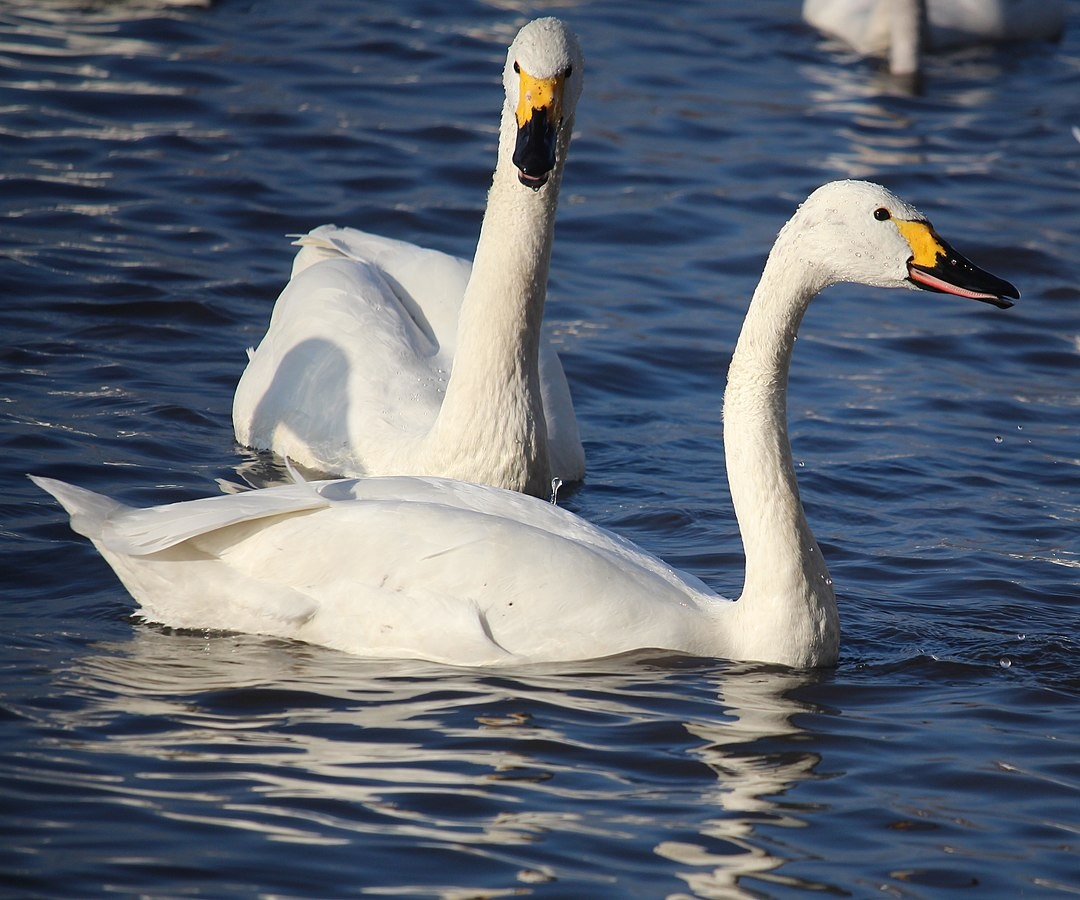
Tundra Swans (Cygnus columbianus) breed in the Arctic tundra and winter in more temperate regions of Eurasia and North America. There are two forms, generally considered to be subspecies but considered separate species by some authorities. 1) Bewick's Swans (Cygnus columbianus bewickii) are the Eurasian form that migrates from Arctic Russia to western Europe and eastern Asia (China, Korea, Japan) in winter. Whistling Swans (Cygnus columbianus columbianus) are the North American form.
Tundra swans are noticeably smaller than whooper swans but look almost exactly the same except the yellow markings on their beaks stops before their nostrils while the markings on whoopers extends past the nostrils. Whistling swans tend to breed in the arctic tundra, while whoopers prefer boreal forests further south.
In the wild, the longest known lifespan for a tundra swan was 24.1 years, and their expected lifespan is between 15 to 20 years. In captivity, their expected lifespan is 20 to 25 years. Their annual mortality rate is 25 to 50 percent before they are three years of age. After that their annual mortality rate decreases to 10 to 15 percent. Lead poisoning from shotgun pellets and avian cholera (caused by Pasteurella multocida bacteria) are the leading causes of death. Other causes of death include hunting, "trauma," drowning, kidney dysfunction, parasites, starvation, suffocation, aspergillosis (a disease caused by the fungus Aspergillus), botulism (caused by Clostridium botulinum bacteria), and necrotic enteritis (caused by Clostridium perfringens bacteria).[Source: Jessica Robinson, Animal Diversity Web (ADW) |=|]
Tundra swans are not endangered. They are designated as a species of least concern on the International Union for Conservation of Nature (IUCN) Red List and have no special status on the Convention on International Trade in Endangered Species (CITES). The development of oil is threatening some tundra swan breeding sites. Their nesting sites have also been disrupted by invasive species and chemical waste. Tundra swan feathers have been used by humans for coats, pillows, blankets, mattresses, and winter clothing. They have been hunted for their meat. Their excrement has been used as a fertilizer. Tundra swans are very territorial and can violently attack anything or anyone that is viewed as a threat. They can peck very hard but they usually do not bite. They can be crop pests, pulling up planted crops by their roots and can bird flu. |=|
Tundra Swan Habitat, Range and Migrations
Tundra swans are widespread; they are found in parts of North America, Europe, Asia, Africa, and the Caribbean. Many breed in Siberia, and migrate south to various parts of Europe and Asia/ They tend nest on the Siberian tundra, the north of the boreal areas where whoopers breed. Their migration route from Siberia to Japan covers 4,000 kilometers. In North America, there are two populations: the western population and the eastern population. During the summer breeding season, the western population inhabits the southwestern coast of Alaska, the Aleutian Islands, and above the Arctic circle of Canada. During the wintering season, they inhabit a vast territory that stretches from the Arctic slope of Alaska to the California Central Valley.
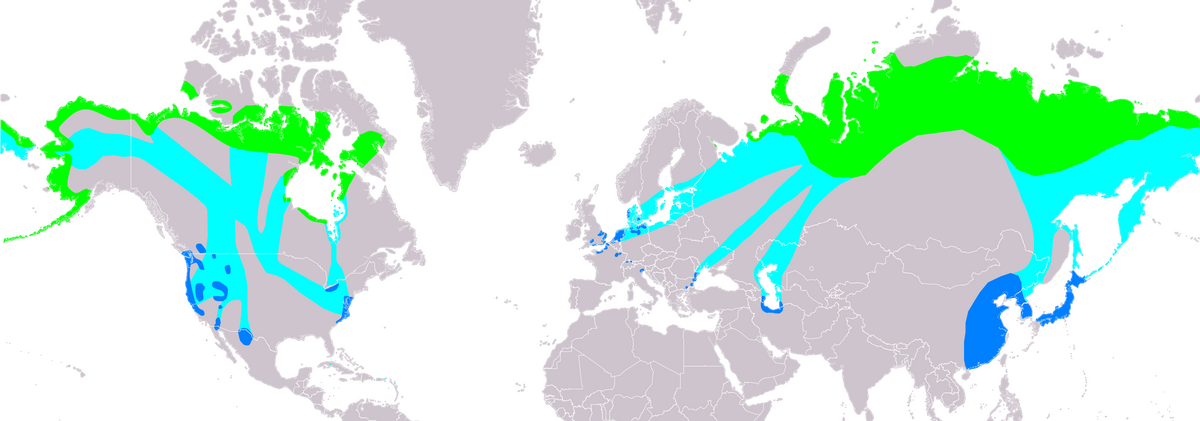
Tundra swans breed during the summer in Russia, Canada, and Alaska in the United States and are native to and found at other times of the year in China, Japan, Mongolia, North Korea, South Korea, Nepal, Pakistan, India, Greenland, Iceland, Austria, Belgium, Bulgaria, Croatia, Denmark, Estonia, Finland, France, Germany, Greece, Norway, Poland, Hungary, Serbia, Sweden, Switzerland, Ukraine, Italy, Israel, Libya, Mexico, Cuba and Puerto Rico. They have been introduced to Algeria, Antigua, Barbuda, Belarus, Bermuda, Guam, Jordan, Kyrgyzstan, Northern Mariana Islands, Oman, Portugal, Spain, United Arab Emirates, and the Virgin Islands. [Source: Jessica Robinson, Animal Diversity Web (ADW) |=|]
Tundra swans live in freshwater environments and tundra areas and are found in lakes, ponds, rivers and streams, temporary pools and coastal areas and marshes and bogs as well as agricultural areas at elevations from sea level to 60 meters (197 feet). Tundra swans are most commonly seen in wetlands close to agricultural fields during the winter months. They favor aquatic habitats that have sago pondweed, which is one of their primary food sources. Wetlands with large channels are also chosen because of the availability of aquatic vegetation. During migration, they are found in rivers and lakes along their migratory pathways. The swans are most commonly seen at an elevation below 60 meters. While in flight, they have been observed as high as 8,229.6 meters 27,000 feet).
Tundra Swan Characteristics and Diet
Tundra swans range in weight from 3.6 to 9.1 kilograms (7.93 to 20.04 pounds) and range in length from 1.2 to 1.5 meters (3.94 to 4.92 feet). Their wingspan is between 1.65 to 2.16 meters (5.4 to 7.1 feet). Sexual Dimorphism (differences between males and females) is not present: Both sexes are roughly equal in size and look similar. Tundra swans are called kohakucho or “little swans” in Japanese, as they are smaller than the whoopers, which they sometimes share territory with. [Source: Jessica Robinson, Animal Diversity Web (ADW) |=|]
Tundra swans have a long neck, which is held high and stretched out. Their head is round with brown eyes. They have a short tail with short black legs. Most of their body, including their neck, is white. The shape of the yellow bill markings vary widely from bird to bird, but never extend past the nostrils. Among mature tundra swans, their black beak extends up their forehead. In some swans, a yellow spot, resembling a teardrop, can be found below their eye. Tundra swans can easily be mistaken for trumpeter swans or whooper swans. Tundra swans can be distinguished from them by their straight neck, which differs from the neck kink among trumpeter swans or the “s” shape among whooper swans. Immature tundra swans are greyish but turn fully white during the winter months. Young swans have pinkish- grey legs, which turn a dull black as they get older. Their beak is also pinkish-grey and turns pure black with age.
Tundra swans and omnivores (eat a variety of things, including plants and animals) but are primarily herbivores (eat plants or plants parts). They consume grasses, sedges, and smartweed and favor flowers, stems, roots, and tubers. Specific grasses include mannagrass and seagrass. They also feed on some invertebrates such as shellfish. Tundra swans have a mutualistic relationship with sago pondweed. The swans feed pondweed during migration, and then disperse pondweed seeds in their feces, causing its population to expand. Tundra The swans feed by dipping their heads underwater, and stretching out their long necks to obtain food up to one meter under the surface. Using their beaks, tundra swans dig up plants by their roots, or tear plants out of the ground using their webbed feet as paddles.
Tundra Swan Behavior
Tundra swans fly and are terricolous (live on the ground), motile (move around as opposed to being stationary),migratory (make seasonal movements between regions, such as between breeding and wintering grounds), territorial (defend an area within the home range), social (associates with others of its species; forms social groups), colonial (live together in groups or in close proximity to each other), and have dominance hierarchies (ranking systems or pecking orders among members of a long-term social group, where dominance status affects access to resources or mates). Pairs of tundra swans tend to live on a land territory of about 1.29 square kilometers, which includes or is adjacent to a body of water. [Source:Jessica Robinson, Animal Diversity Web (ADW) |=|]
Tundra swans sense using vision, infrared and heat sensing, touch, sound and chemicals usually detected with smelling or smelling-like senses. They have keen vision and hearing, which are helpful in avoiding predation, being aware of other flock members, and scanning for food. Tundra swans communicate with vision, touch, mimicry, sound and chemicals usually detected by smelling. Tundra swans have a high-pitched, high-frequency, loud, yelp-like call, which sounds like, “woo-oh” or a “kow-hooo”. This call is used for communication with other flock members.
Jessica Robinson wrote in Animal Diversity Web: Tundra swans spend their breeding time in flocks to avoid predators. The more swans in a flock, the less likely they are to be attacked. Likewise, when flock sizes increase, there are more swans to spot predators and signal that danger is nearby. When swans go head first underwater to obtain food, they are less likely to spot predators. Therefore, swans have adapted the large flock size to help recognize predators while feeding. During the nesting period, males sit close to the nest and watch for predators. After the nest period, males are more likely to display vocal characteristics and chase off predators while the mother takes care of the cygnets. Adult, non-nesting swans have few predators. However, during the nesting period, the young and mother have many predators including common ravens, long-tailed jaegers, brown bears, and Arctic foxes. After the nesting period, red foxes, wolves, and raccoons prey on young swans.
Tundra Swan Mating, Reproduction and Offspring
Tundra swans are monogamous (have one mate at a time) and are believed to pair for life. They engage in seasonal breeding — from late May until late June. The number of eggs laid each season ranges from three to seven. Young are precocial. This means they are relatively well-developed when born. Parental care is provided by both females and males. The time to hatching ranges from 31 to 33 days, with the fledging age ranging from 60 to 75 days and the age in which they become independent ranges from two (low) years. Tundra swan males and female are capable of reproducing by age three, but may not begin breeding until age four or five. [Source: Jessica Robinson, Animal Diversity Web (ADW) |=|]
Tundra swans raise one brood annually. If the first brood fails, they do not try second time. According to Animal Diversity Web: The swans court by facing each other, then quivering, spreading their wings, and calling out loudly. While calling, they also bow their heads up and down to express interest. Reproductive success determines dominance in the social structure and is determined by the number of young from the previous year that are paired with a mate upon their arrival at their wintering site. The greater the number of cygnets that are paired, the more successful the family unit is perceived. Additionally, because swans choose mates of a similar age and similar size, the oldest and largest pairs tend to be more dominant. To help establish dominance, males fight to protect their mates. When threatened by members of their own species or predators, pairs in close proximity have a better chance of intimidating invading swans. Single females are more open to swan attacks, and can fall socially if the male is constantly absent.
Tundra swan nests are composed of moss, dead leaves, and grasses. Built in late May, they have an outside diameter of between 122 to 183 centimeters. The inside diameter averages 46 centimeters, and the nest height averages 61 centimeters. The number of offspring per breeding season is dependent on climate, with warmer temperatures resulting in more eggs. The average clutch is five eggs. Their creamy white eggs are about 107 x 66 millimeters in size, with a smooth, circular shape. Eggs are laid one at a time, every 1.5 to two days.
Hatchlings are born fully feathered and weigh about 180 grams. Their eyes are opened, and they are able to leave their nests immediately. However, the cygnets cannot fly until they are between 60 to 75 days old. Before age two, cygnets follow closely behind their mother and remain with their parents until they are two years old. Sometimes siblings rejoin their family, with or without a mate.
A pair establishes and defends a territory in which they raise their young and feed. This territory is about 1.29 square kilometers, which includes land and a body of water. After laying her eggs, the female tends to the clutch the majority of the time by sitting on her eggs. When the female is absent, the male sits on the eggs. Tundra swans have a precise mechanism of changeover. The parent swan that is leaving the eggs stands and pokes downwards at the eggs a few times, and then walks off. Then, the parent that is returning to the nest quickly sits on the eggs. The male is always more reluctant to come off of the eggs. During a changeover, the male does most of the addition of the nest material around the sides and the base of the nest. During the moment the change happens, the male adds nest material around the sides and the base of the nest. The female rearranges the nest material. This changeover of labor is usually quiet. The other parent usually stays nearby to watch for predators. After the eggs hatch, the parental roles are less distinct. Both sexes take care of the cygnets and assist them with getting food and chasing off predators. However, cygnets follow their mother, keep closer to her, and interact with her more than the father. Both parents tend to stay close to each other and their offspring during the pre-fledging period.
Image Sources: Wikimedia Commons
Text Sources: Animal Diversity Web animaldiversity.org ; National Geographic, Live Science, Natural History magazine, David Attenborough books, New York Times, Washington Post, Los Angeles Times, Smithsonian magazine, Discover magazine, The New Yorker, Time, BBC, CNN, Reuters, Associated Press, AFP, Lonely Planet Guides, Wikipedia, The Guardian, Top Secret Animal Attack Files website and various books and other publications.
Last updated June 2025