
TAMARAWS
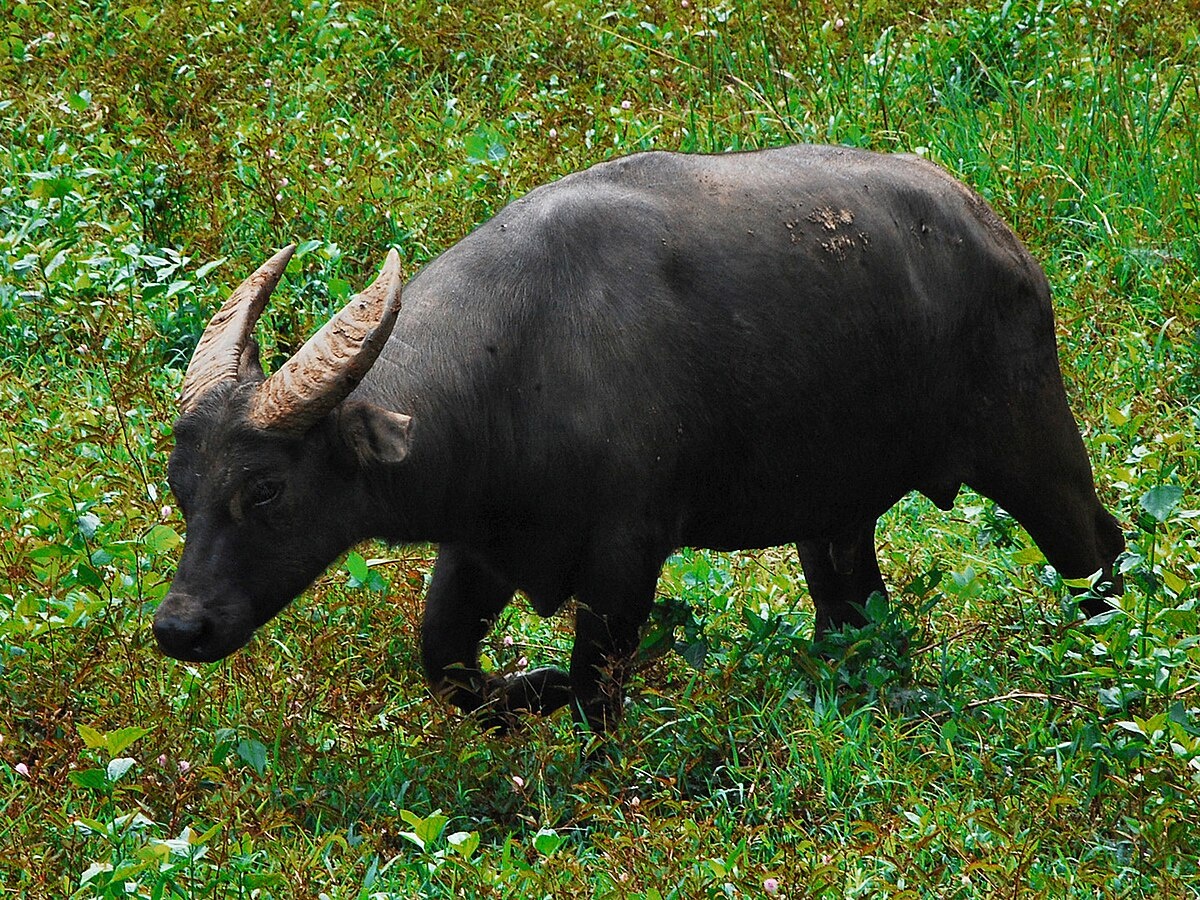
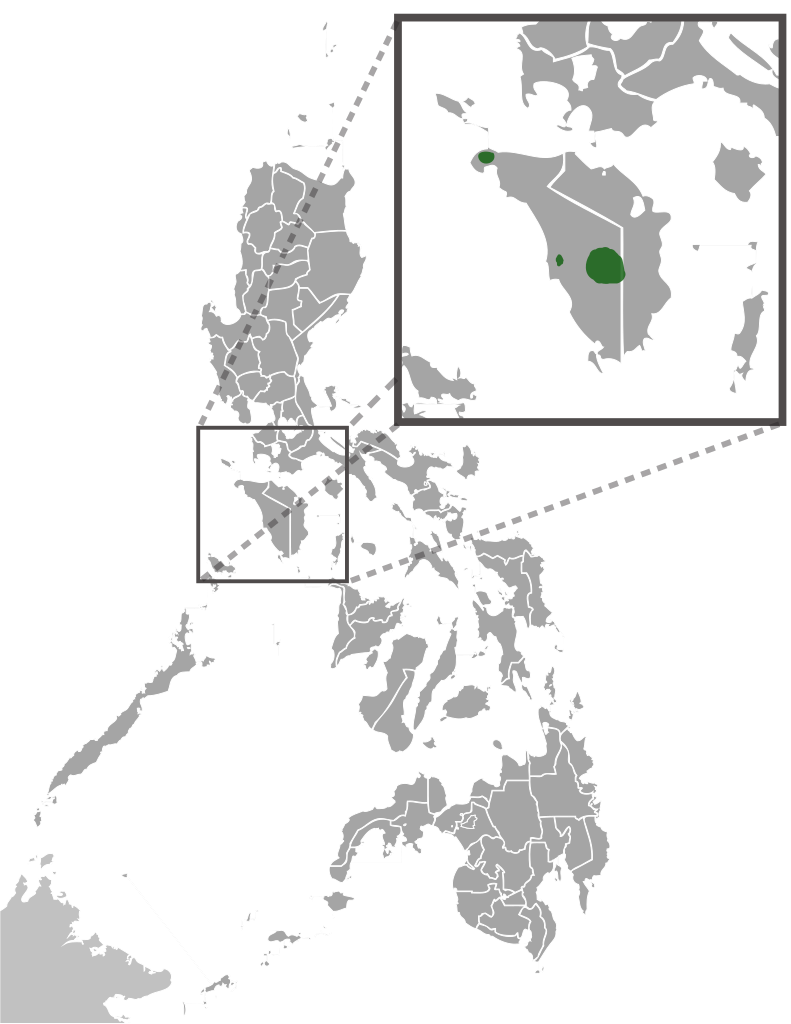
Tamaraws (Bubalus mindorensis) are also known as Mindoro dwarf buffalos. One of the world’s most endangered animals, with at most 200 of them left in the wild, They are found only on the 9,375-square-kilometer island of Mindoro in the Philippines. Fossil evidence suggests that they may also have occupied the island of Luzon. On Mindoro, they are restricted to three game refuges covering about 200,000 hectares. The refuges were created in 1969 by the Philippine Parks and Wildlife Office. [Source: Peter Gesch, Animal Diversity Web (ADW) /=]
Tamaraws are primarily herbivores (eat plants or plants parts). Among the plant foods they eat are leaves and grass species such as Cynodon arcuatus, Digitaria sanguinalis, Eleusine indica, Sorghum nitidum, Paspalum scrobilatum, Alloteropsis semialata, and Vetiveria zizanoides. During the rainy season they feed bamboo shoots (Schizostachyum spp.), The Batangans, a tribal group practicing slash-and-burn agriculture on Mindoro, frequently burn small plots for agriculture. Tamaraws often visit these newly burned locations to feed on grass shoots. /=\
Tamaraws was initially described independently by Heude and Steere in 1888 and 1889. Contrary to common belief and past classification, the tamaraw is not a subspecies of the water buffalo, nor is it a subspecies of the slightly larger carabao, which is classified as a subspecies of the water buffalo. There are some significant differences between carabao and tamaraw. The latter is slightly hairier, has light markings on its face, is not gregarious, and has shorter horns that are somewhat V-shaped. It is the second-largest native terrestrial mammal in the Philippines next only to the carabao.
Before 1900, tamaraws were widely distributed throughout Mindoro, inhabiting all elevations up to 2000 meters (6562 feet) and all habitat types — forests, wetlands, grasslands, riparian areas (wetlands adjacent to rivers) and bamboo thickets. Human settlement in the early 20th century led to large-scale deforestation and the conversion of forests to agricultural land. Currently, tamaraws inhabit Mindoro's abundant grasslands and secondary successional forests and can be found at 300 to 1000 meters (984 to 3281 feet) in elevation. Some researchers speculate that their preferred habitat is forest edge, providing access to forage, water, and cover.
See Separate Article: WILD CATTLE IN SOUTHEAST ASIA factsanddetails.com
Tamaraw Characteristics
Tamaraws range in weight from 180 to 300 kilograms (396.5 to 660.8 pounds). Their average head and body length is 220 centimeters (86.6 inches). They stand 106 centimeters (41.7 inches) at the shoulder. Their tail is 60 centimeters (23.6 inches) long. Sexual Dimorphism (differences between males and females) is present: Males and females have different shapes. Ornamentation is different. [Source: Peter Gesch, Animal Diversity Web (ADW) /=]
Peter Gesch wrote in Animal Diversity Web: Tamaraws are distinguished from related buffalo by their smaller stature and straight horns. These characteristics (among others) led taxonomists to categorize these animals as a unique species, and not a sub-species of Asiatic water buffalo (Domesticated water buffalo). Few reported weights are available in the literature. Those given are for females only and range from 180 to 300 kilograms. Horn shape can be used to determine the sex of skulls, with male horns being thicker, longer, flatter, and closer together than those of females. Horn length is 35 to 43 centimeters. The dental formula is 0/3, 0/1, 3/3, 3/3 = 32. /=\
Adult fur is dark brown or black, with no differences between sexes. Juvenile fur is reddish-brown, with dark brown legs and a black dorsal line. Fur turns slate colored at three to four years of age, and adult coloration is achieved at five years of age. Horn length and thickness can be used to age tamaraws in the field. As they mature, the horns grow longer relative to the length of the ears and broaden at the base. /=\
Tamaraw Behavior
Tamaraws are terricolous (live on the ground), nocturnal (active at night), motile (move around as opposed to being stationary), nomadic (move from place to place, generally within a well-defined range) and solitary. They sense and communicate with vision, touch, sound and chemicals usually detected by smelling. [Source: Peter Gesch, Animal Diversity Web (ADW) /=]
According to Animal Diversity Web: Adult tamaraws, both cows and bulls, are largely solitary. This differs from other bovids, and has been explained as an adaptation to living in forested environments where large social groups are impractical. Associations between males and females are infrequent and short-lived, occurring during the breeding season. Cows are often accompanied by young of several years. Males and females are driven from family groups at three and 4.5 years of age, respectively. Juvenile tamaraws are known to form groups for a year or more, but they become solitary when they reach adulthood. Tamaraws are also described as being aggressive towards humans.
Traditionally, tamaraws were active during the day, feeding in close proximity to human ranching operations. Activity patterns now appear more nocturnal (active at night), with days spent resting in dense vegetation. In a limited number of observations of tamaraw behavior, Kuehn (1986) did not observe fights between bulls. However, bulls were observed chasing other bulls, especially during breeding season and on burned grasslands. Female tamaraws threatened members of their own species by lowering their heads and shaking their horns. Cows have also been observed chasing and prodding their calves. Tamaraws will use mud wallows like related buffalo species. 986) /=\
Very little is known about communication in tamaraws. Aggression is expressed through head movements and adult bulls will occassionally communicate dominance by chasing subordinate males from food sources or potential mates. It is likely that tamaraws communicate also through some auditory and chemical cues. Most bovids have keen senses of smell and hearing, although their eyesight may be poor. /=\
Tamaraw Mating, Reproduction and Offspring
Little is known about mating systems of tamaraws in the wild. They engage in seasonal breeding, typically during the dry season, from December to May. . Males and females generally remain separate during most of the year, coming together only during breeding season. How mates are selected is unknown. Tamaraw females breed every two years. The number of offspring is usually one. [Source: Peter Gesch, Animal Diversity Web (ADW) /=]
The gestation period of tamaraws ranges from 9.2 to 10.5 months, with births occurring during Mindoro's wet season (June to November), giving newborns access to a fresh, abundant food supply. The age at which young become independent ranges from 24 to 48 months.
Females nurse and care for their young; males as far as can be determined are not involved in parental care. Pre-weaning and pre-independence provisioning and protecting are done by females. One cow was observed grazing 50 meters from a newborn calf hiding in the grass. This suggests that young may behave as "hiders". The post-independence period is characterized by the association of offspring with their parents. Females stay with the mother longer than males.
Endangered Tamaraws, Humans and Conservation
On the International Union for Conservation of Nature (IUCN) Red List tamaraws are listed as Critically Endangered. On the US Federal List they are classified as Endangered. In CITES (Convention on International Trade in Endangered Species of Wild) they are in Appendix I, which lists species that are the most endangered among CITES-listed animals and plants. [Source: Peter Gesch, Animal Diversity Web (ADW) /=]
Current estimates count a wild tamaraw population with 30 to 200 individuals. The first surveys of tamaraws in the 1900s estimated there were around 10,000 individuals. Less than 50 years later in 1949, the population declined to about 1000 individuals. By 1953, fewer than 250 animals were estimated to be alive. In the 1969 Red Data Book, the IUCN had dwindled to 100 individuals, with the number rising to 120 animals in 1975. [Source: Wikipedia]
The main threat to tamaraws has been loss of habitat and degradation due to agriculture, logging, and development as well as hunting and poaching, and disease. A rinderpest epidemic in 1930 was particularly devastating to the population. Tamaraws are protected under Philippine law, and several reserves have been created to maintain habitat for wild, free-ranging tamaraws. Tamaraws have been hunted for food and sport in the past, but these activities have been outlawed since 1936. Tamaraws have no known natural predators on Mindoro, and frequently fed in the open during daylight, suggesting little concern for predation.
Image Sources: Wikimedia Commons
Text Sources: Animal Diversity Web animaldiversity.org ; National Geographic, Live Science, Natural History magazine, David Attenborough books, New York Times, Washington Post, Los Angeles Times, Smithsonian magazine, Discover magazine, The New Yorker, Time, Reuters, Associated Press, AFP, Lonely Planet Guides, Wikipedia, The Guardian, Top Secret Animal Attack Files website and various books and other publications.
Last updated January 2025