
FILM IN THE PHILIPPINES

Most films made in the Philippines are in Tagalog. Sex and violence are major themes in films, which are often adaptations of American screen productions. American films are popular and readily available, and so high-quality Filipino films have been slow to develop. In the 2000s, first run Hollywood films were available on the streets in the form of cheap, pirated DVDs.
The first film to be shown in the Philippines was shown in 1897. Over the years, Filipino films have ranged from silent movies to talkies; black and white to color. Nationwide, there are more than 1000 movie theaters. Early in the 1980s, it was estimated in Metro Manila alone, there were around 2.5 million moviegoers.
There is a strong local film production industry in the Philippines. Although very long (three hours) Marilou Abaya’ "Rizal", made in 1998 to coincide with the Centennial celebrations of Philippines Independence is well worth watching. "Bayan Ko (My country)" was made by Lino Brocka, arguably the most renowned and accomplished Filipino film director. Many of the films are produced in the Filipino language and concentrate on peculiarly Filipino film genres of comedy (such as the movies of Nora Aunor or Yoyoy Villayame), stories of frustrated love and action movies a-kindred to "Kung Fu" movies.
Award-winning and well-respected Filipino directors include Marilou Diaz-Abaya, Laurice Guillen, Olivia Lamasan, Carlitos Siguion-Reyna, Ishmael Bernal, Joel Lamangan, Jose Javier Reyes and Lino Brocka (deceased). The Filipino film "100" directed by Chris Martinez won the Audience Award at the 2008 Pusan International Film Festival. Well-regarded Philippines films include Blessings of the Land,'' a 1959 feature-length film by Manuel Silos, ''Portrait of the Artist as Filipino'', ''Moral'' and ''Speck in the Water.'' A video entitled ''Philippine Cinema'' is a good introduction to Filipino film. [Source: New York Times, November 22, 1985]
However, Philippine cinema has generally not taken centre stage outside the Philippines. This is a curious phenomenon, given that the Philippines has had a film tradition for longer than most countries, has been one of the world's top ten film producers for years, and has fought with governments and other entities over issues that are common to the film industry worldwide. [Source: John A. Lent, Schirmer Encyclopedia of Film, Thomson Learning, 2007]
Film Censors and Banned Films in the Philippines
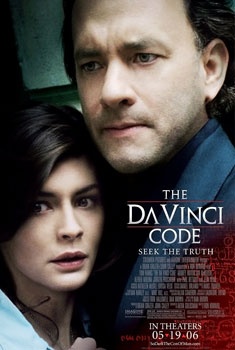
Banned in the Philippines
Films in the Philippines are screened and censored by the Movie and Television Review and Classification Board (MTRCB). Some of the decisions have spark controversy such as the censorship of sex scenes in three Oscar-winning films, including “Shindler’s List”, and the Spanish film “Belle Epoque”. Philippine President Arroyo was criticized for using her office to ban a sexually explicit movie passed by censors but condemned by the Catholic church. The film, “Live Show”, was about people who performed sex acts before audiences. The chief censor quit and artists actors and directors joined human rights and military groups to protest the ban as a curb on the freedom of expression and defended the film as social commentary on poverty not a pornographic film.
The effort to ban the film was led by powerful Cardinal Sin. Film viewers may have been deprived of seeing the film at theaters but they could pick it up on the streets in the form of cheap, pirated DVDs. Martin Scorsese's “The Last Temptation of Christ” was banned in the Philippines for its 'blasphemous' content.
In 2006, the film “Da Vinci Code” was banned in the Philippines. Associated Press reported: “In the Philippines - with Asia's biggest Christian population - the Manila City Council passed a resolution banning the movie, effective Friday. The movie "is undoubtedly offensive and contrary to established religious beliefs which cannot take precedence over the right of the persons involved in the film to freedom of expression," the resolution said. In a letter to The Phillippines' chief censor, a Roman Catholic archbishop says, "In the name of many like you who love and revere the Son of God made Man, I strongly appeal to you that the showing of the film (The) Da Vinci Code be banned throughout our land." President Gloria Macapagal Arroya's executive secretary Eduardo Ermita, who claims to be a 'devout Catholic', says, "I think we should do everything not to allow it to be shown." President Arroya said, "It's something that we should not be talking about. We might get struck by lightning."
Contemporary Philippine Film
Despite our completion of 100 years of cinema in the Philippines, the same problems plague us now just as it had when film was still a relatively new art form. The phrase “poorly made” is fitting to describe the quality of films being churned out by the film industry year by year. There have been few exceptions to the rule. [Source: aenet.org/family/filmhistory ]
Presently, films are primarily made for profit, lacking any qualities to redeem itself. Studies show that Hollywood films, with its high technology and subject matter, are being preferred over local films. It is no wonder – for films now are “too profit-oriented…[with] corrupting morals and…dubious values…sticking with formulaic films”
Genres that have been present for the past few decades are being recycled over and over again with the same stories. The teen love teams of the fan movie are still present with incarnations of love teams of yesteryears. Now instead of “Guy and Pip” are “Judy and Wowie”. The bomba film is still present, now having grown more pornographic and taboo. The film Tatlo (1998) comes to mind with its subject matter of threesomes. In Filipino slapstick or komedya, Dolphy has been replaced by younger stars. But even if the films of today have not been quite up to par, “Filipino movies…wields an influence over the national imagination far more intense that all the others combined.”
Presently, we are seemingly engaged in a vicious cycle – of genres, plots, characterization and cinematic styles. We are unconsciously, or rather consciously, imitating, copying from the much more popular American films. And when we are not copying, we are reverting back to the same old styles. From the massacre movies of late, the teen-oriented romantic-comedies and the anatomy-baring sex flicks which are currently so popular, it seems Philippine cinema is on a down spiral. Still, some films been successes and not only financially. Diaz-Abaya’s Rizal (1998), as an example, was a success both commercially and critically. Hopefully, Philippine cinema in the new millennium would produce films as good and better than the ones before it.
Filipino Chop Chop Films
Many popular films in the 1990s were grisly dramas, based on real crimes, called "chop chop" films. One of the most famous "cho chop" films— “The Vizconde Massacre: God Help Us”—starred Kris Aquino, the daughter of former president Cory Aquino and sister of present president Benigno Acquino III. It was based on the true story of 47-year-old woman and her two daughters, who were raped and stabbed to death by gang of drugged youths lead by Hubert Webb, the 29-year-old son of an influential senator. Charges against Webb were dropped when the senator produced documents that stated his son was abroad at the time of the murder, but later a young businesswoman confessed that she was with the men on the night of the murders. A servant for the Senator later said she washed the son's clothing. The son and seven friends were charged with multiple murders but the senator was not charged. Another popular movie was a thinly-veiled rip-off of the Lorena Bobbit story called "Loretta: The Woman Who Cut Off Happiness.” Kris Aquino reportedly turned down the roll after told her mother in no uncertain terms to do so.
Elyas Isabelo Salanga wrote in the Philippines Entertainment Portal: “The Vizconde massacre made headlines in the Philippines in the '90s and started a trend in filmmaking. Besides the horror itself, the suspected perpetrators included high-society figures. Movie producers and directors rode the wave of public outcry by creating true-to-life films based on such heinous crimes. “The Vizconde Massacre: God Help Us” is 1993 movie based on the brutal murder of the Vizconde family members—Estrellita, Carmela, and Anna Marie Jennifer—on June 30, 1991, in their home at BF Homes Parañaque. The case became controversial due to the alleged involvement of Hubert Webb, son of former senator Freddie Webb; and Antonio Lejano, son of actress Pinky de Leon and nephew of actor Christopher de Leon. [Source: Elyas Isabelo Salanga, Philippines Entertainment Portal, August 5, 2008]
“The controversy caught the attention of director Carlo Caparas, who made his movie apparently in support for the aggrieved, as the title suggests. Shot entirely where the heinous crime took place, the movie strongly projected reality. For example, Kris Aquino as Carmela Vizconde acted out the victim's final moments while being stabbed to death. Kris subsequently starred in other massacre films, making her the "Massacre Queen" in showbiz. A year after the box-office success of The Vizconde Massacre, Carlo Caparas gave moviegoers a fresh sequel, “The Vizconde Masacre 2: God Have Mercy On Us” (1994). The sequel tells the untold chapter of the Vizconde massacre.
In another chop chop film— “The Lipa Massacre: God Save the Babies!”— Vilma Santos portrayed Mrs. Helen Arandia, wife of an Overseas Filipino Worker in Saudi Arabia. The Star for All Seasons starred with John Regala, Joel Torre, and then-child actors Charina Scott and Angelica Panganiban in this 1994 movie. While boarding a plane back to the Philippines, Mr. Ronald Arandia (played by Joel Torre) was shocked when he saw his murdered family on a newspaper's front page. The killer (John Regala) visited Mrs. Arandia at their home in Lipa City, Batangas, and brutally murdered her and her two daughters, aged 8 and 6. The film directed by Carlo Caparas won Best Picture and Best Director at the 43rd Famas Awards (1994).
“The Elsa Castillo Story: Ang Katotohanan”— directed masterfully by Laurice Guillen— popularized the term, "chop-chop lady." Starring Kris Aquino and Eric Quizon, the 1994 movie became an instant hit in the box office due to the engaging storyline and, of course, Kris' mounting popularity. Another movie of the same title, directed by Edgardo Vinarao that same year, starred Lorna Tolentino, Matt Ranillo, and Mark Gil. Based on the real life events of Elsa Castillo, the movie focuses on the tragic love triangle involving the married couple and the illicit affair between Elsa and her divorced lover. The husband found them out and, in a fit of rage, butchered his wife. Hence the term, "chop-chop."
“The Lilian Velez Story” is based on the murder of a famous actress by her leading man. Salanga wrote: “The popularity of massacre movies dug up an old case involving actress-singer Lilian Velez. Lilian, who gained popularity as a film actress for LVN Pictures after World War II. She was the leading lady of actor Bernardo "Narding" Anzures in tha films, Binibiro Lamang Kita, Ang Estudyante, and Sa Kabukiran. The success of these prompted LVN Pictures to change Lilian's leading man, and Bernardo Anzures was replaced by Jaime de la Rosa. Bernardo became thoroughly distressed, for he harbored an "obsession" for Lilian, reports said. On the night of June 26, 1948, Bernardo visited Lilian unexpectedly at her Quezon City home and stabbed her to death. A housemate who attempted to help Lilian was also killed. Bernardo was arrested, tried, and convicted for the murders. He later died in jail due to tuberculosis; his motive for the killings never established. Forty-seven years after the crime, in 1995, it was dramatized by Sharon Cuneta (Lilian Velez) and Cesar Montano (Bernardo Azurnes). Although the case was long past, moviegoers were still hyped up by the star quality of Sharon and her portrayal as Lilian
Blood Island Films and Filipino Horror, Sci-Fi Films from the 1960s and 70s
There were a a number of schlocky horror and science fiction films that came out of the Philippines in the late 60 and 70s. Filipino director Eddie Romero made several of them with American teen idol John Ashley, who died young having a fatal heart attack on the streets of New York City in a car. According to filmscoremonthly.com: “They called it the blood series. Hemisphere release these films and made good money on them. “Brides of Blood” (1967-68) was the first in the John Ashley series of movies and the first he made in the Philippines. It was was a hit for hemisphere pics, so they made more. John who was a real cool nice guy made seven films in the Phillipines from 1967 to 1973, all genre films— “Mad Doctor of Blood Island (1969), “Beast of Blood” (1970), “Beast of Yellow Night” (1971), “The Twilight People” (1972), “Beyond Atlantis” (1973) and the Woman Hunt (1973). [Source: filmscoremonthly.com]
Blood Island Films refers to a series of low-budget films made in late 1960's and early 1970's in the Philippines as co-productions with the US.According to “unseenfilms.blogspot”: The Blood Island films are a loose collection of films that all take place on a place called Blood Island. The money men at Independant International up the ante by adding blood to the title of several other films so what is really three or four films in a series expands to six or seven. The three core films are Brides of Blood, Mad Doctor of Blood Island and Beast of Blood. [Source: unseenfilms.blogspot.jp ]
“The series unofficially started with Terror is a Man, a 1959 version of the Island of Dr Moreau. Its a neat little film about a made scientist turning people into animals and vice versa. Its important to the series only in that it names the place . The next film is a strange vampire film called The Blood Drinkers. which is an odd mix of black and white that was colored and color film. It concerns a vampire trying to find a heart transplant for his lover. Its actualy a very good. Its much better than the dopey title suggests.
“For the most part the series is a great deal of schlocky fun with Brides, Mad Doctor and Beast all worth the time to see (especially with a bowl of popcorn and a soda.) If you want a great night on the couch seeing films that might have played the drive in or grindhouses in the early and mid 1970's see these films. All are out on DVD. The best news is that Alpha Video, aka Oldies.com has appears to have re-released the Image release at a fraction of the cost, about 5 bucks a DVD. They come with trailers and super commentaries from Sam Sherman of Independent International.
Classic Blood Island Films
According to “unseenfilms.blogspot”: ““Brides of Blood” (1968) is the first of the core series. Its a wild and over the top film that is a great deal of fun. The film concerns nature going berserk in the wake of nuclear testing on Blood Island. a Giant tree has become caneverous and is sending out tentacles to pull people in so it can feed. Animals are mutating and there is a lumpy creature running about that looks like the Michelin Tire guy on a bad day (he's very silly). A research team arrives to investigate. Edgy and atmospheric this is a monster movie in the grand tradition. You have weird things going on, sexual tension between the cast members, and monsters running amok, what more could you ask for? This movie was a drive-in staple for years and its easy to see why since it gives you everything that a drive-in crowd would want sex blood and breasts. Its also lots of run, creepy and just a bit scary. Its set in the same location as the next two films but is otherwise unrelated. For me the viewing of the next two films back to back is drive-in nirvana. [Source: unseenfilms.blogspot.jp]
“Mad Doctor of Blood Island” (1968) has three people going to Blood Island for their own reasons. The beautiful young girl is there to find her father. The handsome islander is there to reunite with his mother. The doctor is there to investigate a supposed out break of a new disease. What they find when they get there is a monster on the loose that likes to disembowel and dismember (graphically) his victims. "Sequel" to Brides of Blood this is more of the same only up a notch. Its mad doctor on the loose using science to create a monster that runs around killing people. Hooray for crackpot medical degrees. What can I say about a movie that begins with the audience being given "the pledge of the green blood" other than see this movie? If you like old school horror, or drive-in style movies, this film is for you. This movie is a blast. It moves along at a good clip, has a great monster, some very graphic killings (you will see blood, limbs and intestines) and some topless women. Its the sort of movie they don't make any more. My only complaint is that some knucklehead thought it would be a good idea to zoom in and out every time the monster attacks. Its the equivalent to whiplash and really distracts from the early attack scenes. Thankfully the effect isn't done as wildly in the later scenes and you actually can put away your neck brace and enjoy the film.
“Beast of Blood” (1971) literally picks up hours after the last film ends. The film begins on the boat sailing away from Blood Island. As John Ashley waxes poetic about his time on the island fighting monsters, the man beast from the first film appears (he was seen to have secreted himself in a lifeboat at the end of Mad Doctor) and a battle occurs which destroys the ship and leaves Ashley as the only survivor. A year or so later Ashley heads back to Blood Island to investigate stories that weird things have begun to happen again despite the death of the evil Dr Lorca. On the island Ashley finds that many people he believed dead survived the final battle of the first film and that some how the "green men" have returned. It isn't long before its realized that Dr Lorca is back and up to his old tricks.
Watching this in close proximity to Mad Doctor I find that the film plays much better than it does as a stand alone film. A sequel it is, but its not as scary (nor as gory nor as titillating). Sure there are some horrifying moments, but on some level this is more an adventure/ mystery film than a real horror movie. The man-beast is effectively off camera for most of the film following the opening battle (I have to say the make up here is infinitely better than in Mad Doctor). Some of Lorca's victims do cause mayhem, but the majority of the film concerns trying to find Lorca and a kidnapped reporter. Its not bad, but if you are expecting a straight horror film you may end up very disappointed, despite a great monster. After this the producers decided to continue the "blood series" and added two more films to the mix.
“Blood of the Vampires” is one of the most painful viewing experiences I've ever had, and I've had it repeatedly as I've run up against this film under several titles. It concerns a family who have to deal with a dirty little secret, their mother is a vampire and she keeps coming out of the crypt to feast on people. Its a horrible movie and I can't recommend it. The last film in the mix was “Horror of the Blood Monsters” which concerns a plague on earth tied to a space probe on a distant planet where cave people battle strange monsters. The truth of the matter is the core part of the film, the space part was a black and white film they couldn't release in the US because it was black and white. So they had Al Adamson come in and shoot wrap around sequences that have nothing to do with the rest of the film. They then tinted the black and white footage and said the strange color was due to the alien atmosphere. Its actually not bad in a so bad its good sort of way. That effectively ended the series.
Great 1994 Manila Film Festival Scandal
At the 1994 Manila Film Festival, the Philippine version of the Academy Awards, Gabby Concepcion and Ruffa Gutierrez were announced as Best Actor and Best Actress and then denounced as frauds. After the truth was revealed—that the true recipients were Edu Manzano and Aiko Melendez—Concepcion and Gutierrez refused to give back their awards.
Concepcion and Gutierrez were both nominated for their roles in "Loretta: The Woman Who Cut Off Happiness." The Best Actor category was first, and the presenter of the award was Gutierrez. Although the letter ripped from the envelope had Manzano's name on it, Gutierrez shouted out Concepcion's name and then stashed the letter, which subsequently disappeared.
"While the accounting firm was trying to figure why the actor with most votes had been declared the winner," wrote William Branigin in The Washington Post, "the show went on with the award for Best Actress. Protesting the trophy were local film star Gretchen Barretto, [Viveka Babajee, a former Miss Universe contestant from Mauritius who came to the Philippines for some film roles], and, for reasons that remained unexplained, Gutierrez's younger brother, Rocky Gutierrez."
"When Barretto intoned, 'And the winner is...' and paused for dramatic effect, Babajee shouted, 'Ruffa Gutierrez!' While the nonplussed Barretto appeared to try to show Babajee the official paper, the tall Mauritian, applauding and whooping, could be heard whispering urgently to Rocky Gutierrez, 'Take it, take it.' Television replays showed him then stuffing the paper into his pocket."
The third-place finisher in the 1993 Miss World contest, Gutierrez was accused with several other actresses in "the Brunei Beauties" case of engaging in high-priced prostitution in the oil-rich kingdom of Brunei. "I'm not a prostitute," she said. Later, her claim that she never visited Brunei was shown to be false.
While promoting "Loretta," Gutierrez told a local newspaper, "What I really couldn't stomach was holding the sex organ of a man," but she went on to describe publicly what happened to the thing that gave her "endless nightmares." For his part, Concepcion said his role of "beating Ruffa black and blue and raping her" left him "ashamed of myself and totally drained of self-esteem," and "the scene where Ruffa has to cut off my sex organ tortures me now." "Are we a nation of cheats?" an editorial in a major newspaper read after the film scandal. "Are we a dishonest, lying, cheating people?" The wife of President Ramos said that the incident embarrassed her during a two-week trip to Europe and hurt the "dignity of the entire Filipino nation."
Even a local communist assassination squad got into the act, claiming that they would kill the actors and managers in the scandal—known as the "Filmfest Seven"—if they didn't receive prison terms. Responding to this, an editorial in The Manila Times read, "Since when has revolutionary justice extended to assassinating second-rate film festival stars... we suggest an alternative: why not assassinate all those producers who keep turning out inane movies?"
After the awards show, Babajee fled to Hong Kong and was never heard from again. Concepcion's manager returned his trophy, and Gutierrez finally did the same in the company of a co-star in her newest movie, an actor named Robin "Bad Boy" Padilla, who had recently been released on bail for a weapons charge. Concepcion, Babajee, Gutierrez, her brother Rocky, mother-manager Annabelle Rama, actress Nanette Medved, and Lolita Solis (Concepcion's manager) were all charged with fraud, deceit, and obstruction of justice.
"I am guilty. I am the mastermind. I am sorry," Solis later publicly confessed. She said she did it for Concepcion, whom she loved like a son. "I wanted to make him happy." Gutierrez steadfastly professed her innocence to the point that some Filipino writers said that maybe she deserved the Best Actress award after all. Fraud charges were later brought against seven people: Ruffa Gutierrez, Gabby Concepcion, Annabelle Rama, Nanette Medved, Viveka Babajee, and Lolita Solis. [Source: William Branigin, The Washington Post]
Filipino Horror Films from the 2000s
The Road is a 2011 Philippine psychological horror film directed by Yam Laranas, whose other horror film Sigaw (Shout or Scream) was remade and released as The Echo in 2008. The Road was also released internationally in Belgium, North America, and Singapore. The movie was written and directed by Yam Laranas. It starred Carmina Villaroel, Marvin Agustin, Rhian Ramos, TJ Trinidad and many more. The movie started with decorated cop Luis (played by TJ Trinidad) being given a medal by the chief of police who didn’t seem too pleased with the former’s way of solving cases. After the ceremony, there was a woman who approached the police chief about the unsolved case of her missing daughters who have been missing for 12 years. Luis seemed interested and asked for the names of the daughters. He also asked a colleague to retrieve the missing persons file. From here you get to sympathize with Luis as you believe him to be one of the good guys.
Enter another part of the story where you have three teenagers, Ella, her cousin Janine, and Janine’s boyfriend Brian. Ella didn’t seem to approve of the latter’s relationship with her cousin. Ella agreed to accompany Janine and Brian in going for a ride as Janine needed to practise before her driving test. This part is when the scary stuff in the movie start to happen. The night ended horribly for the teens who were reported missing. Ella’s father is a comrade of the chief of police who then ordered an immediate investigation with decorated cop Luis at the helm. Watch the rest of the movie as it really makes you want to know more about what happens next. [Source: iamraincrystal.squidoo.com/philippine-horror-films]
“Pamahiin” (translates Superstition in English) is a 2006 Filipino horror film written and directed by Rahyan Carlos (co-writer Andrew Paredes). In the film are different superstitious beliefs that Filipinos have about death. It starred Dennis Trillo, Paolo Contis, Marian Rivera, and Iya Villania. The movie started with Noah (played by Dennis Trillo) as a kid. He was shown attending a funeral and got the scare of his life when he was left alone with the dead. Then it fast forwarded to the future.
Apparently, Noah grew up in the US. He returned to his hometown with his girlfriend Eileen (played by Iya Villania) and his aunt to visit the wake of his childhood friend, Damian (played by Paolo Contis). The latter committed suicide but circumstances surrounding his death were rather vague. The movie incorporated a lot of superstitious beliefs Filipinos have about death, such as not going straight home after attending the funeral, staying away from black cats, and many more. Eileen, Noah’s girlfriend, apparently has the third eye and could see spirits of the dead who were trying to send her messages. There are lots of scary scenes that make you jump in these parts. The movie slowly unfolds and you eventually get to understand more about the sightings.
“Ouija” is an award-winning 2007 Filipino horror-thriller film by director Topel Lee. It was written by Adloy Adlawan and starred Jolina Magdangal, Iza Calzado, Rhian Ramos and Judy Ann Santos. The movie started with a flashback. Some kids playing with an ouija board summoned an evil entity. Thankfully, their grandmother who is knowledgeable in the old ways was able to avert the situation. The ouija board was then kept away and sealed. Fast forward to the future, Romina (played by Jolina Magdangal) grew up to be a barrio lass, while Aileen (played by Judy Ann Santos) relocated to the city.
They got together when their grandmother passed away. Aileen went home with their first cousins Sandra (played by Iza Calzado) and Ruth (played by Rhian Ramos). They also brought along Sandra’s friend Lucy (played by Desiree del Valle). The girls found the old ouija board amongst the things left by the grandmother and decided to try it. Something went wrong with the ritual and the ouija board was burnt by accident. Unfortunately, it brought about some evil and murderous entity around them. The scary parts start and there are a number of killings. The girls raced against time to identify and release the spirits that haunted them. : This is one scary movie. The horror scenes really make your hair stand on end. The actors are fantastic too. The story is intriguing till the end. It even had a surprise ending. It’s no wonder the film received a lot of nominations. Don’t pass this up if you want to watch a Filipino horror movie. I’ll give it a 5 out of 5 star rating.
White Lady is written by Joel Rufino Nunez and Don Michael Perez and directed by Jeff Tan. It starred Pauleen Luna, JC De Vera, Boots Anson-Roa, Jason Abalos, Angelica Panganiban and many more. The movie centers on the new girl in school Pearl (played by Pauleen Luna). Pearl is pretty and smart, but quiet and rather conservative. She attracts the attention of the “in” crowd in school esp. the rich and popular leader Mimi (played by Iwa Moto) who likes to bully new students. Mimi also has minions who sometimes make things difficult for Pearl. Pearl is frequently haunted by the supposed ghost of a white lady in the campus. She digs around and hears about the story of Christina (played by Angelica Panganiban). It turned out Pearl and Christina shared something in common — they’re both the target of Mimi’s mean pranks. No one really knew what happened to Christina. The hauntings turn for the worse when Pearl landed a lead role in the school play. Now the spirit is out for revenge against those who wronged her.
Apocalypse Now and Shooting It in the Philippines
Films about the Vietnam War that have been shot in the Philippines include “Apocalypse Now”, “Platoon” and “Missing in Action”. “Apocalypse Now”, shot around Pagsanjan and other locations in the Philippines, is regarded the classic Vietnam War film despite its flaws. Directed by Francis Ford Coppola, the director of the Godfather, and based on Joseph Conrad’s “Heart of Darkness”, it is about a young army intelligence officer, Captain Willard (Martin Sheen), who is sent on a mission to find and “terminate with extreme prejudice” the renegade Colonel Walter Kurtz (Marlon Brando) who had established himself as the leader of a army of Montagnard headhunters in Cambodia. A rough cut of the film took the top award at Cannes in 1979. Many critics panned the film when it came out.
Captain Willard first has to a get a boat, which he does with help of surf-loving Colonel named Kilgore (Robert Duvall) and then embarks on a journey up the Mekong River, accompanied by another surfer, a wannabe cook and a Bronx teenager (Lawrence Fishburne), to find Kurtz. Along the way they have a number of scrapes and misadventures while Willard muses on the “conflict in every human heart between rational and irrational, good and evil.” Some of the most memorable quotes (“I like the smell of napalm in the morning”) and scenes (helicopters blasting Wagner’s “Ride of the Valkyries”) are associated with Kilgore.
The story of the making of “Apocalypse Now” is almost as interesting as the film itself. The filming took an exhausting 238 days over 16 months and used up 375 hours of film, with the film opening up years behind schedule. The project was plagued by troubles from beginning to end. Expensive sets were destroyed by a typhoon. Brando showed up on the set overweight. The first leading actor (Harvey Keitel) was fired. The second (Martin Sheen) suffered a heart attack. The film was so over budget Coppola had to take a second mortgage on his home to raise more money. The e film's release was postponed several times while Coppola edited millions of feet of footage. At one point Coppola told his wife, “I’m thinking of shooting myself.” The story is brilliantly told in the 1991 documentary “Hearts of Darkness”.
The final scene was filmed at Pagsanjan and involved constructing a huge set that the Philippine government destroyed with firebombs (shown during the closing credits). Real bombs and real bullets were used in the filming of some of the battle scenes. Real heads from some real corpses, thought to have been supplied by a morgue, but really robbed from graves, were scattred around Kurtz’s jungle compound. The helicopters were provided by the Marcos government. Coppola had an affair with one of the Playboy Playmates in the film
“The Woman Who Left” Wins Venice Film Festival in 2016
“The Woman Who Left” — a black-and-white revenge thriller lasting 228 minutes — won the Golden Lion, the top award, at the 73rd Venice film festival in 2016. According to The Guardian: The 19th film by Filipino director Lav Diaz, 57, it focuses on the struggle of a schoolteacher to reintegrate into society after 30 years in prison for a murder she didn’t commit. “This is for my country, for the Filipino people; for our struggle and the struggle of humanity,” said Diaz, thanking the jury headed by British director Sam Mendes. [Source: Catherine Shoard, The Guardian, September 10, 2016]
In a review of “The Woman Who Left”, Guy Lodge wrote in Variety: The latest supersized opus from Filipino maximalist Lav Diaz is a powerful and, by his standards, refreshingly contained moral study. Time is an elastic element in the cinema of Lav Diaz — not just in the sprawling, searching spread of his films’ historical purview, but the liberal, some might say liberated, scale of the films themselves. Weighing in at 228 minutes, a restrained runtime by the Filipino director’s standards, “The Woman Who Left” is more contained than much of his work: Its personal and political concerns converge powerfully in the story of one woman, reacquainting herself with her socially ravaged homeland after unjustly spending 30 years in the slammer. At the same time, the film’s deliberately rambling heft evokes the lingering, far-reaching sorrow of an entire nation. That doesn’t entirely quell the sense of strong material being over-extended, particularly in a murky middle stretch, but this occasionally transcendent opus finds Diaz’s formal powers — not least his own incisive monochrome lensing — at full strength. [Source: Guy Lodge, VarietySeptember 9, 2016]
A filmmaker who sees no harm in striving for quality and quantity, Diaz hasn’t given himself much of a vacation between this and his last, eight-hour feature “A Lullaby to the Sorrowful Mystery” — a vastly ambitious but disappointingly turgid metaphysical epic that premiered in Berlin a little over six months ago. Half that film’s length but a more emotionally resonant, intellectually satisfying experience all round, “The Woman Who Left” jumps a century forward from “Lullaby” in its historical focus, opening with a radio newsflash announcing Britain’s handover of Hong Kong to China in 1997. Ostensibly unrelated to the narrative at hand, the news nonetheless chimes in with Diaz’s ongoing preoccupation with the colonial past’s ramifications in the present — a subtle undercurrent, this time, in a story with more immediate national corruption to process.
For Horacia (Charo Santos-Cancio, in a remarkable return to the screen after two decades in the production realm), the Philippines of the late 1990s is not the same country she knew 30 years before, when she was sentenced to life in a women’s correctional facility for a murder she did not commit. She’s unexpectedly released when fellow inmate and best friend Petra (Shamaine Centenera-Buencamino) suddenly confesses that she, coerced by Horacia’s ex-boyfriend Rodrigo, framed her for the crime all those years ago. It’s far from a joyous homecoming, however. Having been cut off from her family during her time inside, she returns to her hometown to find that her husband has passed on, her daughter (Marj Lorico) has moved away, and her son has been missing, presumed dead, in Manila for some time — another casualty, perhaps, of the terrorist-driven kidnapping epidemic surging in the Philippines at the time, word of which casts a veil of anxiety over proceedings throughout.
“The Woman Who Left” thus finds Lav in a particularly hopeless place — one in which even our kindly, teacherly protagonist alights on violent revenge as her planned course of redemption. Tracking down Rodrigo (Michael De Mesa), now a wealthy underworld boss, she plots his murder from a distance by night. By day, she grows into a charitable pillar of the community, providing succour and shelter to those (even) less fortunate than herself — most notably Hollanda (returning “Lullaby” ensemble member John Lloyd Cruz), a brutally abused transgender prostitute who seeks to repay her benefactor in a most drastic way. From this highly melodramatic setup, Diaz fashions a thoughtful, far from idealistic meditation on the complex nature of forgiveness and shifting moral accountability — with the government, shown demolishing makeshift communities while letting others fester in poverty and fear, its most consistent antagonist.
Diaz claims to have taken inspiration for his episodically arranged but densely plotted script from Leo Tolstoy’s 1872 short story “God Sees the Truth, But Waits,” which also centers on a prisoner belatedly cleared of wrongdoing — though that story’s emotional climax, the accused’s forgiveness of those actually guilty, is achieved in the opening stages here. Grace isn’t an endpoint in Horacia’s arc, which is instead build on renewable reserves of loss and despair — though the film’s trying middle hour, which dwells repetitively on her day-to-night double life and the destitute streetlife she inhabits, risks turning her into a decidedly opaque avenging angel. It’s Santos-Cancio’s soft-skinned but seething performance that must see viewers through the film’s most challenging passages. She plays Horacia’s quiet resilience without making her a kind of impenetrable exemplar: A scene in which she leads the defeated Hollanda through a shaky but hopeful rendition of “Somewhere” from “West Side Story” is an invaluable moment of pure sweetness amid the austerity.
Fabulous Filipino Brothers
Joe Leydon wrote in Variety: The title for “The Fabulous Filipino Brothers” makes it sound like a movie about a now-obscure troupe of singing-dancing siblings who once opened for Frank Sinatra in Las Vegas, and were audience favorites back in the day on “The Ed Sullivan Show.” As it turns out, however, this engagingly freeform comedy has an entirely different sort of showbiz pedigree, being the joint effort of four real-life Filipino-American brothers — Dante, Derek, Dionysio and Darion Basco — with scads of film and TV acting, writing and producing credits on their respective IMDb pages. And while one can only wonder just how autobiographical this enterprise may be for any of them, there can be no doubt that their family ties are a major reason why the interactions of the characters they portray resound with a solid ring of truth that greatly enhances all the funny business. [Source: Joe Leydon, Variety, March 19, 2021]
Working from a loosely knit episodic script he wrote with brother Darion, director Dante Basco smoothly switches back and forth between the wedding celebration of an extended Filipino-American family in Pittsburg, Calif., and vignettes that focus individually on four siblings during the buildup to the big event. In a manner highly reminiscent of similarly constructed European comedies from the 1960s and ’70s, tonal shifts between segments are frequent, as the humor ranges from sweetly romantic to joltingly dark. Holding it all together is an omniscient narrator whose identity is kept a secret until a cheeky twist late in the third act.
Dayo Abasta (Derek Basco), the eldest, volunteers to pay for the expensive wedding feast — even though, as his Chinese-American wife (Cheryl Tsai) points out, he can scarcely afford such a magnanimous gesture. But for Dayo, it’s a matter of pride and culture — unlike the Chinese, he insists only half-jokingly, Filipinos are tradition-bound “jungle Asians.” So he returns to his past as a street hustler, a journey that entails close encounters with an aggressive Yakuza gambler, an aunt in need of dialysis treatment, and a rooster that requires chemical enhancement to compete in a cockfighting match.
If this first episode recalls broadly played ‘90s urban comedies like “Friday” and “I Got the Hook Up” — and, rest assured, it does — the second, filmed on location on the Philippines, more closely resembles a Richard Linklater-style dialogue-driven two-hander. Duke Abasta (Dante Basco), the most successful of the brothers, makes his first trip to Manila for a sales meeting, and winds up mixing business with pleasure when he’s reunited with Anna (Solenn Heussaff, a high-profile star in the Philippines), an old flame who’s not entirely averse to being rekindled. Although each of them is happily married to other people, one thing leads to another. But before that can lead to something else, the movie springs a surprise that some viewers may find upsetting, and others will find uproarious.
The third segment is little more than an extended blackout sketch, probably designed to ease viewers from the shocking to the sentimental. Danny Boy Abasta (Darion Basco), an incorrigibly immature party animal, locks eyes with a receptive hottie during preparations for the wedding feast, cuing the most lascivious use of food as foreplay since Tony Richardson’s “Tom Jones.” The payoff, however, is a rushed fumble.
Still, Danny Boy sticks around to play a key supporting role in the final vignette, a satisfyingly sweet chapter showcasing David (Dionysio Basco), a moody introvert who’s been stuck in a deep blue funk since breaking up with his girlfriend two years earlier. To cheer up his brother — and, just as important, to maybe halt his obsession with composing thunderously loud electronica music — Danny Boy posts David’s profile on a dating app, thereby attracting the interest of a potential Miss Right. Trouble is, she brings with her a unique sort of baggage.
Various other Basco family members of varying ages fill a multitude of supporting roles in “The Fabulous Filipino Brothers,” a movie that abounds in affectionately specific and vividly rendered cultural details (note how the older folks complain that their Americanized offspring haven’t bothered to learn how to speak Tagalog) even as it maintains a universal appeal.
And to address the elephant in the room: It’s also a movie that has had its world premiere at SXSW at a time when anti-Asian prejudices have been inflamed nationwide by unscrupulous politicians and radical hate mongers, leading to violent assaults and, just this week in Atlanta, multiple homicides. Seeing “The Fabulous Filipino Brothers” right now can give you a wrenching sense of whiplash, as the boisterous shenanigans here might seem tragically unconnected to real-world events. But look closer: The love and respect and joy that bind the Abasta family are real, too. It would be unfair to expect an amusing but slight comedy like this one to serve as a substantial political statement. On the other hand, there’s a lot to be said for any movie that reminds us, in a heartfelt but unassuming way, that we are many, but we are one.
Image Sources: Wikimedia Commons
Text Sources: “Encyclopedia of World Cultures Volume 5: East/Southeast Asia:” edited by Paul Hockings, 1993; “Culture Shock!: Philippines” by Alfredo Roces and Grace Roces, Marshall Cavendish International, 2010; National Geographic, Live Science, Philippines Department of Tourism, New York Times, Washington Post, Los Angeles Times, Smithsonian magazine, Encyclopedia.com, Library of Congress, The Conversation, The New Yorker, Time, BBC, CNN, Reuters, Associated Press, AFP, Lonely Planet Guides, Google AI, Wikipedia, The Guardian and various websites, books and other publications.
Last updated March 2026