
MANNY PACQUIAO
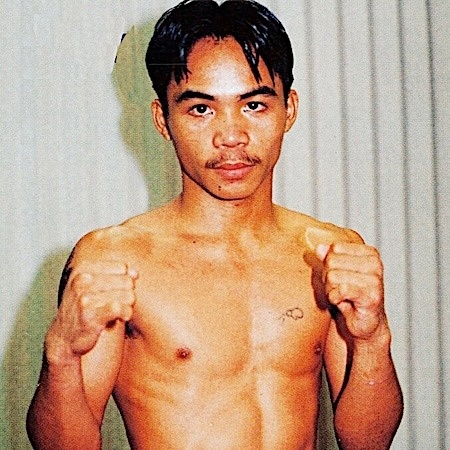
Manny Pacquiao, whose full name is Emmanuel Dapidran Pacquiao Sr., is a Filipino professional boxer and former politician. Nicknamed “PacMan,” he is widely regarded as one of the greatest boxers of all time and remains the only fighter in history to become an eight-division world champion. [Source: Wikipedia]
Pacquiao (pronounced pa-KEE-ow) captured a total of twelve major world titles and achieved lineal championships in four weight classes: flyweight, featherweight, super featherweight, and light welterweight. He was the first boxer to win major world titles in four of boxing’s eight “glamour divisions” and is the only fighter to hold world championships across four different decades—from the 1990s through the 2020s. In July 2019, he made history by becoming the oldest welterweight world champion at age 40 after defeating Keith Thurman, also becoming the first recognized four-time welterweight champion.
Pacquiao fights generated about $1.2 billion in revenue from 25 pay-per-view bouts, and he was ranked among the world’s highest-paid athletes by Forbes. Later recognitions included being named the greatest Asian athlete of the 21st century by ESPN in 2024 and ranked second among the greatest pound-for-pound fighters of the century by The Ring in 2025. He was inducted into the International Boxing Hall of Fame in 2025.
Manny Pacquiao's Boxing Career and Achievements
Manny Pacquiao compiled an amateur record of 60–4 and a professional record of 62–8–3, with 39 wins by knockout. Boxing historian Bert Sugar ranked him as the greatest southpaw fighter of all time, while in 2021, DAZN placed him at number one on its list of the top 10 boxers of the previous 30 years. [Source: Wikipedia]
Pacquiao made history as the first boxer to win world titles in eight weight divisions, capturing a total of twelve major world titles and securing lineal championships in four weight classes. He was also the first fighter to win titles in four of boxing’s original eight “glamour divisions”—flyweight, featherweight, lightweight, and welterweight—and the first to become a four-decade world champion, holding titles from the 1990s through the 2020s. For many years, he was widely regarded as the best pound-for-pound boxer in the world by major outlets such as ESPN, Sports Illustrated, Yahoo! Sports, BoxRec, and The Ring. He also held a place in The Ring’s top ten pound-for-pound rankings continuously from 2003 to 2016.
Over his career, Pacquiao generated approximately 20.4 million pay-per-view buys and about $1.3 billion in revenue from 26 bouts. Forbes ranked him as the world’s second highest-paid athlete in 2015. He fought under major promotions including Top Rank, led by Bob Arum, and later with Premier Boxing Champions, alongside Paradigm Sports Management. On September 29, 2021, Pacquiao announced his retirement from boxing, although he later returned for exhibition bouts, including a 2024 appearance at Super RIZIN 3 against Rukiya Anpo, which ended in a draw.
Throughout his career, Pacquiao defeated 22 world champions, including Marco Antonio Barrera, Érik Morales, Juan Manuel Márquez, Oscar De La Hoya, Ricky Hatton, Miguel Cotto, Shane Mosley, Timothy Bradley, Adrien Broner, and Keith Thurman, among others. His later bouts included a fight against Mario Barrios in July 2025, as well as earlier exhibition matches such as his 2002 win over Jesus Salud.
Pacquiao received numerous accolades throughout his career. He was named “Fighter of the Decade” for the 2000s by organizations such as the Boxing Writers Association of America, World Boxing Council, World Boxing Organization, The Sporting News, and HBO. He also won multiple “Fighter of the Year” awards and the Best Fighter ESPY Award. In 2025, the WBC named him “Fighter of the Century,” placing him alongside Sugar Ray Robinson as one of the few fighters to achieve the “triple crown” of boxing honors. That same year, The Ring ranked him second only to Floyd Mayweather Jr. among the greatest pound-for-pound fighters of the 21st century.
Pacquiao also holds multiple Guinness World Records, including the most consecutive world title fight victories in different weight classes, the most world titles in different divisions (eight), and recognition as the oldest welterweight world champion. His 2015 fight at the MGM Grand in Las Vegas set records for both the highest-selling and highest-grossing boxing pay-per-view event, further highlighting his global impact on the sport.
Manny Pacquiao's Early Boxing Career in the Philippines
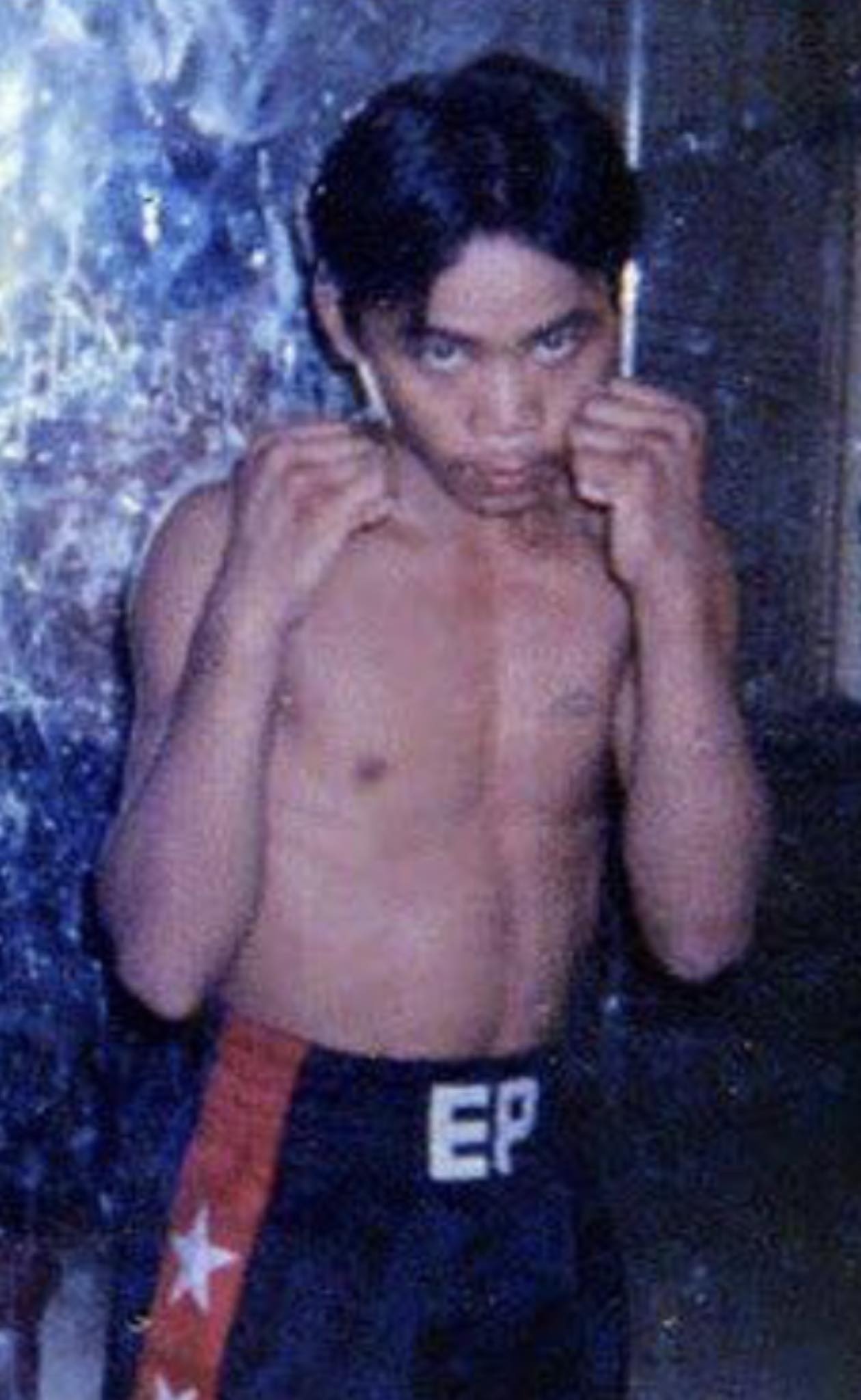
Pacquiao was introduced to boxing at age 12 by his uncle Sardo Mejia. He later recalled that watching Buster Douglas defeat Mike Tyson in 1990 was a life-changing moment. After training in a makeshift home gym, he began fighting in parks in General Santos and quickly rose through the amateur ranks. He reportedly had his first fight when he was 12 and earned less than $1, which he immediately gave to his mother to buy rice. By age 14, he was considered the best junior boxer in the southern Philippines and stole away on a ferry to turn pro in Manila without his mother's permission.
Pacquiao left his family in Mindanao when he was 14 because his mother could not support all her children. At the beginning of his stay in Manila, Pacquiao lived on the streets. He made the Philippine national amateur boxing team which gave him room and board, which were paid for by the government. Even then he trained inside the ring in the afternoon and at night while working construction during the day. For a while he welded steel at a factory and used his weekly pay to buy flowers, which he sold on the streets for twice the price.[Source: Boxing.com]
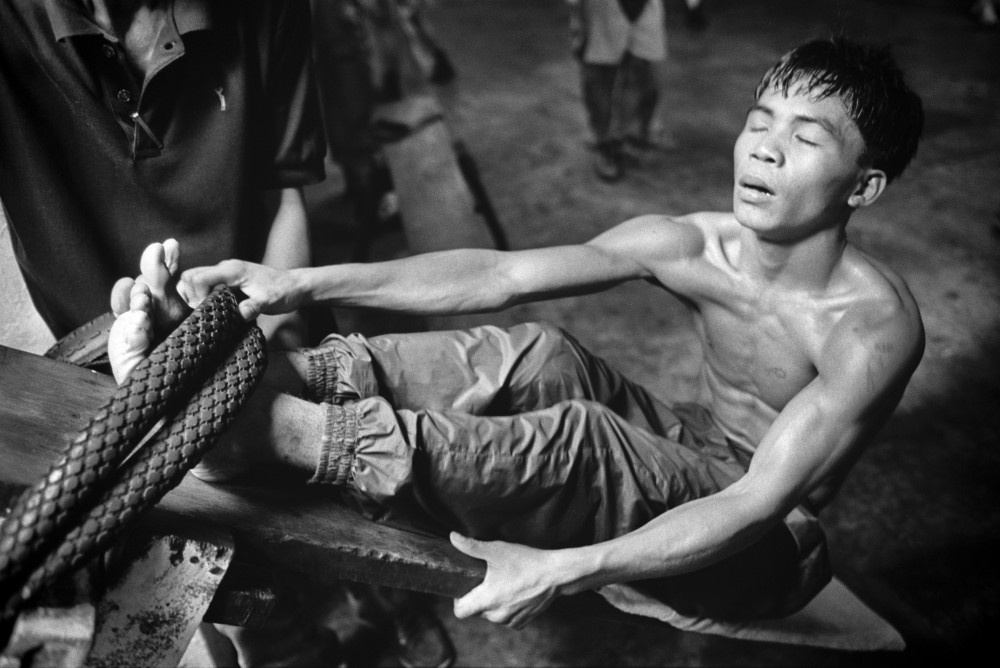
Not long after his arrival in Manila, in January of 1995, at the age 16, Pacquiao made his professional debut as a junior flyweight in a bout, against Edmund Ignacio. Pacquiao won the fight in four rounds, in a unanimous decision. At that time he was a gangly 48 kilograms (106 pounds) and is said to have fought like a mad dog: wild and out of control. On December 4, 1998, at age 19, he won his first major title—the WBC flyweight championship. Reflecting on his early struggles, [Source: Wikipedia; Gendy Alimurung, LA Weekly, March 11 2010]
Pacquiao early boxing career in the Philippines included dangerous bus rides and poorly funded fights where earnings were minimal. One early bout earned Pacquiao $30,000, with little crowd revenue and improvised venues, reflecting how far he still had to go. Pacquiao said he turned to boxing to survive, training relentlessly to support himself and his family.
Pacquiao’s Early Boxing Career and Success In America
In 2001, at just 22 years old, Manny Pacquiao traveled to the United States in search of a trainer, moving from gym to gym across the country. Most turned him away, saying he was too small and that there was little money in the lower weight divisions, especially in an era dominated by heavyweights like Mike Tyson and Evander Holyfield. Near the end of his journey, Pacquiao arrived at the Wild Card Boxing Club, a modest gym, where he hooked up with Freddie Roach, both of which would soon change his life. [Source:Gendy Alimurung, LA Weekly, March 11 2010]
During his early days in Los Angeles, Pacquiao lived simply with his childhood friend Buboy Fernandez. With no money for transportation, they walked long distances each day from their small apartment to the gym, until a Filipino taxi driver began helping them get around for free. Meanwhile his boxing began to change under the guidance of Roach. Recognizing Pacquiao’s raw talent, relentless drive, and eagerness to learn, Roach helped shape him into a world-class fighter.
Gendy Alimurung wrote in LA Weekly: A month after he walked into Roach's gym, in his first fight in the United States, Pacquiao stepped in on two weeks' notice as a last-minute replacement against South African boxer Lehlohonolo Ledwaba. By round three, Ledwaba's gloves were slippery with his own blood, his white shorts stained pink. Elated, Pacquiao brought home the IBF super-bantamweight title. [Source:Gendy Alimurung, LA Weekly, March 11 2010]
Pacquiao’s Skills as a Boxer
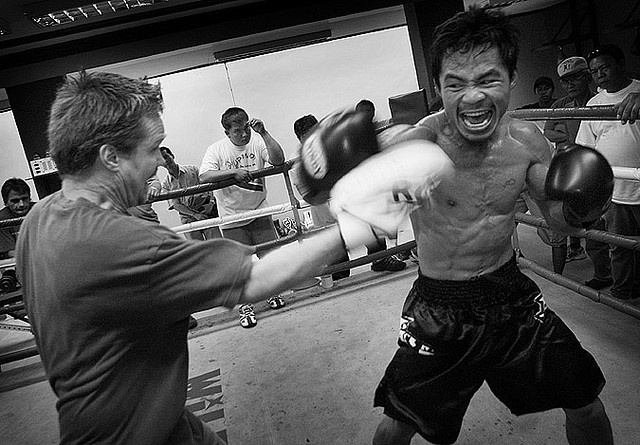
Gendy Alimurung wrote in LA Weekly: Speed and power are his genetic gifts. Poverty's gifts are hunger, endurance, a killer work ethic, the capacity to suffer. Roach molded Pacquiao into a devastating fighter. He took the boxer's wild, reckless, mad-dog swinging and gave it strategy. They worked on footwork, on getting both hands equal... Pacquiao hits opponents at weird angles. His punches are surgical. There are moments in the ring when you catch a glimpse of it in his otherwise soulful face, that great and terrible lust for violence. [Source:Gendy Alimurung, LA Weekly, March 11 2010]
He became known as "The Mexicutioner," "The Destroyer" and "The National Fist," a stark contrast to his other nickname, the sweet, childlike "PacMan." Each time he wins, it is his country's retribution for years of grinding poverty and oppression. It is an awful lot for a man to carry. Roach, who grew up in Boston's projects and knows something about hardship, believes if Pacquiao hadn't grown up poor, he wouldn't be the fighter he is today; wouldn't have sought the brutal way out that boxing offers.
Pacquiao in his prime sets up punches, walks his opponents into shots, counterpunches to take advantage of his incredible speed. He is no longer just a kid going out there and swinging. He has mastered the sweet science of seeing what's happening, and slowing it down. "It's a very difficult thing to do," Roach said. "I never achieved that in my career because I never was that settled. I just would fight hard. I can see it now. Back then I was too anxious about beating the other guy up. You have to be calm in the heat of combat. From round one to round 12, you learn the whole way. And hopefully, somewhere in there, you've figured him out ... and that's where you knock him out."
Pacquiao told the New York Daily News that his most important skill, inside and outside of the ring, is time management. "After the fight I totally set aside boxing," he said. "By the end of March when congress ends (its session), I take a vacation and then I start training for the fight." [Source: Tim Smith, New York Daily News, April 30, 2011]
Bert Sugar, a boxing historian who works with HBO Sports, said Pacquiao Sugar said Pacquiao reminds him of Henry Armstrong in terms of his invincibility and ability to jump between weight classes. "In 1937 Henry Armstrong had 27 fights, winning 26 by knockout and he was the champion in three different weight classes (featherweight, lightweight and welterweight)," Sugar said. "For a time Armstrong was thought of as being in the same position as Pacquiao is today." Armstrong lost a questionable decision to Lou Ambers in 1939 and was beaten more convincingly by Fritzie Zivic in 1941. So nothing lasts forever.
Pacquiao’s Training
In many ways, Manny Pacquiao can be understood through the sheer intensity of his daily routine. At the height of his training, he performed around 1,400 crunches a day, consumed roughly 7,000 calories, and burned more than 5,000. He aimed for about eight hours of sleep each night, often supplemented by a midday nap, though rest could be difficult due to the demands on his mind. He trained six days a week, taking Sundays off for rest and reflection.
Despite moving up in weight to 147 pounds, Pacquiao maintained remarkable speed and endurance. According to his conditioning coach Alex Ariza, his energy levels were so high that trainers sometimes had to slow him down. His day typically began at dawn with a four-mile uphill run in Griffith Park, setting the tone for the grueling work ahead.
After his run, Pacquiao spent about four more hours in the gym, engaging in intense training that included stretching, jump rope, strength exercises, sparring, and bag work. His regimen even incorporated unconventional methods, such as repeated strikes to the stomach to build resilience. Under the guidance of trainer Freddie Roach, however, the focus remained on skill and avoidance—emphasizing that the best defense in boxing is not getting hit at all.
In the gym men line up, ready to provide whatever the boxer needs. One guy carries the white towel that Pacquiao uses to wipe his nose. Another to squirt warm water into his mouth. Another to tell him funny stories. One guy slathers him with cologne. Two men lace up his green practice gloves — one for the left hand and one for the right. Pacquiao's entourage grows with each fight. "Never hit the bone because you'll hurt your hand," Roach says as Pacquiao hits his mitts with painful-sounding smacks. There's an ineffable sense of play in his movement. "Take that body apart." Pacquiao's eyes widen in surprise when his handlers auction off the sweatshirt he's wearing for $450. "You want my shirt?" he asks.
Pacquiao’s Team
Pacquiao has a close-knit team of confidants. Chief among them is his coach, Freddie Roach. Roach has become a celebrity in the Philippines, where he is held in high regard. Like Pacquiao, Roach has overcome immense hardship to find success. Specifically, he suffers from Parkinson’s disease, a degenerative condition that affects motor skills and, ultimately, cognitive abilities. Despite the onset of this disease, Roach has been able to thrive, although he is known to shake and slur his speech. [Source: Ben Sztajnkrycer]
Pacquiao’s fight promoter, Bob Arum, is also of paramount importance. A Harvard Law School graduate who once worked for the New York City District Attorney’s Office, Arum Bob Arum began his involvement in boxing in 1962 while working for the U.S. Department of Justice, when he was assigned to handle financial matters related to a fight between Floyd Patterson and Sonny Liston. In 1966, encouraged by football player Jim Brown, Arum transitioned into boxing promotion. Brown also helped connect him with Muhammad Ali, who became a major influence on Arum’s career. Arum went on to serve as a vice president and secretary of Ali’s promotion company, Main Bout, despite having had little prior exposure to boxing before working with Ali. By the 1980s, Arum had become one of boxing’s most powerful promoters, emerging as a rival to Don King and helping shape the modern boxing industry.
Two other key member of the team are adviser Michael Koncz and lex Ariza, Pacquiao’s strength and conditioning coach. Ariza focuses his training on stamina and proper breathing. Ariza is so vital to the team that there is a section on Manny Pacquiao’s official website dedicated to his musings. Greg Bishop wrote in the New York Times: They say they must fight to prove themselves, and while they do not mean this literally, sometimes fisticuffs occur. In the Philippines, Koncz and Ariza, came to blows over the coveted corner slots for one bout. Koncz said the fight was overblown and that he always operates with Pacquiao’s best interests at the forefront. Ariza said Koncz remains at the center of the team’s conflicts, whether attempting to have Roach fired, or failing to give credit to others, two charges Koncz dismissed. [Source: Greg Bishop, New York Times, November 12, 2009]
During training, an unidentified culprit hung a sign inside the gym. It read: The meeting for the Mike Koncz Fan Club has been canceled. Roach claimed no knowledge of the sign’s source. But he was in no hurry to remove it. “I don’t know if he’s socially maladjusted, or if it’s just an ineptness to socialize,” Ariza said of Koncz in Las Vegas. “I know it sounds funny, but I’m serious. He’s caused disarray.” Referring to Pacquiao, Roach added: “I know this: Alex doesn’t cut his meat for him. Mike Koncz does.”
Despite the criticism, Koncz still holds significant sway, particularly in regard to Pacquiao’s finances. There is also Buboy Fernandez, Pacquiao’s childhood friend, who worked as a janitor in Pacquiao’s first gym. Fernandez once handled the duties now performed by 15 men, like washing his boss’s socks, or holding a rice cooker near the vent in a hotel so staff could not smell food being prepared. His reward? His own room in the condo.
Freddie Roach — Pacquiao’s Trainer
Chris Mannix wrote in Sports Illustrated: The man responsible for much of the Filipino superstar's development is trainer Freddie Roach, who has forged a special bond with Pacquiao since taking over his corner in 2001. The relationship is simple: Roach teaches; Pacquiao learns; both of them win. Before every fight Roach watches hundreds of hours of tape on Pacquiao's opponent, dissecting weaknesses and devising a fight plan. "If I get Manny to watch 30 seconds of film, I'm doing a good job," says Roach. "But he trusts that I know what I'm talking about." [Source: Chris Mannix, Sports Illustrated, May 11 2009]
It was Roach who persuaded Pacquiao that the best game plan against the bigger De La Hoya would be an aggressive one—which is how Pacquiao, who gave up four inches to the Golden Boy, came to redden De La Hoya's mug with a flurry of stinging left hands and sweeping right hooks. In the weeks leading up to the fight against Hatton, Roach noticed that the Brit cocked his punches before he threw them, a flaw in his technique that left him open to a short right hook. Sure enough, as Hatton loaded up for a big left hand in the first round, Pacquiao, a southpaw, slipped a surprise right hook to Hatton's jaw that dropped him to the canvas. "People don't understand how smart Manny is," says Roach. "He used to be just strong and reckless. Now he's a complete fighter."
Roach compares his relationship with Pacquiao to one between a "father and son," so he's not afraid to discipline the fighter. One day early in training camp, Roach noticed that Pacquiao was sluggish. He asked around and discovered that Pacquiao had been out singing karaoke until the early hours of the morning. That night Roach chewed out the fighter in front of his entire entourage. He accused Pacquiao of not taking his training seriously and ordered him to keep a 9 p.m. curfew for the rest of the camp. The argument became so heated that the two men didn't speak for days. "A lot of people thought that I was going to get fired," says Roach. "No one talks to Manny like that anymore. But he knows that I have his best interests at heart."
As close as the two men have become, Roach has always made a point of keeping some distance between himself and his star pupil. In the mid-1980s Roach trained light heavyweight champion Virgil Hill, and the two were inseparable: They worked in the ring during the day and partied together at night. But as the line between Freddie the Boss and Freddie the Buddy became blurred, Hill started to tune Roach out, and he finally split with his cornerman after several years. "We became too close," says Roach. "I'd tell him to do something, and he would just laugh. It ruined our working relationship."So Roach makes sure he is there to serve Pacquiao's every professional need, but his social exigencies? That's what the fighter's considerable entourage is for. Says Roach, "There has to be someone in charge."
Pacquiao’s Entourage
There is an inner circle of about 15 people, but the total number hovers around 50 and includes trainers, assistants to the trainers, advisers, assistants to the advisers, cooks, dishwashers, car washers, drivers, publicists, gofers, security, his musical group, a vocal coach and his political chief of staff, who keeps him briefed on legislative issues. There is a security guard in charge of turning away families seeking autographs. Another man is charge of securing tickets.
Greg Bishop wrote in the New York Times: Pacquiao does not do anything alone. The condominium, where he was staying before a fight in 2011, looks like a fraternity house, not the resting place for boxing royalty. Stained carpets cover the floor. Dartboards hang from the wall. Bowls of food, half-eaten leftovers, line the kitchen. Manny Pacquiao, one of the best boxers in the world, sleeps here. But he does not sleep alone. His entourage — swollen, dysfunctional and, in his mind, necessary — makes sure of that. [Source: Greg Bishop, New York Times, November 12, 2009]
On a recent visit, while Pacquiao slept upstairs, one member did the laundry. Another surfed the Internet. Yet another sprawled on the couch, his booming snores interrupting another otherwise peaceful morning for Team Pacquiao.“They’re all competing to be golden boy for the day,” said Freddie Roach, Pacquiao’s trainer. “Clean his pool. Take his shoes off. They will do anything for Manny Pacquiao.” “I’m telling you,” he continued, “the funniest thing is, whoever is on the best terms with Manny at that moment sleeps closest to him, at the foot of his bed.” More than anything, they wait. They wait for Pacquiao to wake up, to eat, to spar, to sing, sign autographs, do interviews, act, shop.
Pacquiao tolerates little disrespect based on placement in his hierarchy, another policy produced by his upbringing. He once sold doughnuts on the street. So when Ramos suggested they find less expensive alternatives for washing his car, noting that Pacquiao paid a man at Wild Card Boxing Club in Hollywood, where he trains, $200 three times a week, Pacquiao warned Ramos never to eliminate the job of someone trying to earn a living. This leads to tasks that overlap, filled by people who perform the same function. Or people who perform essentially no function.“There’s a lot going on,” said Rob Peters, the head of the security detail. “You have to know who everybody is, what they do. It’s almost like I need a chart.”
The entourage compares itself to a large family, but the daily competition for Pacquiao’s affection and power makes this brood competitive and intense. Winners receive perks, like riding in the car with Pacquiao, or sitting next to him while he eats. One Tuesday in Las Vegas, Pacquiao conducted interviews inside a trailer. When he finished, someone grabbed a jacket and helped him put it on. Someone else stood at the bottom of the stairs, in case he fell. Someone else started the team bus, each seat filled. Before one sparring session, members of the entourage arrived early, fetched towels, cleared the gym and debated what type of Gatorade their employer would prefer, finally settling on orange. When word came that Pacquiao was sleeping, that he might not practice, they waited, dozens of lives affected by the whimsical decisions of one man.
The entourage’s size varies, as do assignments and sleeping arrangements, members shuffling from bunk beds to twin beds to the foot of the most important bed. Usually, at least 20 aid in Pacquiao’s routines. “I see new guys every day,” said Joe Ramos, an assistant. “Guys who I don’t even know who they are, or what they do.”
The worst job? “The cook,” Pacquiao said. “Because there are so many. He must cook a lot.” Sometimes Pacquiao sequesters himself inside his bedroom, waiting for the living room to clear. Most nights, Peters stops by to expedite the process. “The downfall of Manny Pacquiao, if there is one, will be his kindness and generosity,” Koncz said. “At some point, I fear that’s going to catch up to him.”
Image Sources: Wikimedia Commons
Text Sources: “Encyclopedia of World Cultures Volume 5: East/Southeast Asia:” edited by Paul Hockings, 1993; “Culture Shock!: Philippines” by Alfredo Roces and Grace Roces, Marshall Cavendish International, 2010; Metropolitan Museum of Art; National Geographic, Live Science, Philippines Department of Tourism, New York Times, Washington Post, Los Angeles Times, Smithsonian magazine, Encyclopedia.com, Library of Congress, The Conversation, The New Yorker, Time, BBC, CNN, Reuters, Associated Press, AFP, Lonely Planet Guides, Google AI, Wikipedia, The Guardian and various websites, books and other publications.
Last updated March 2026