
MANNY PACQUIAO
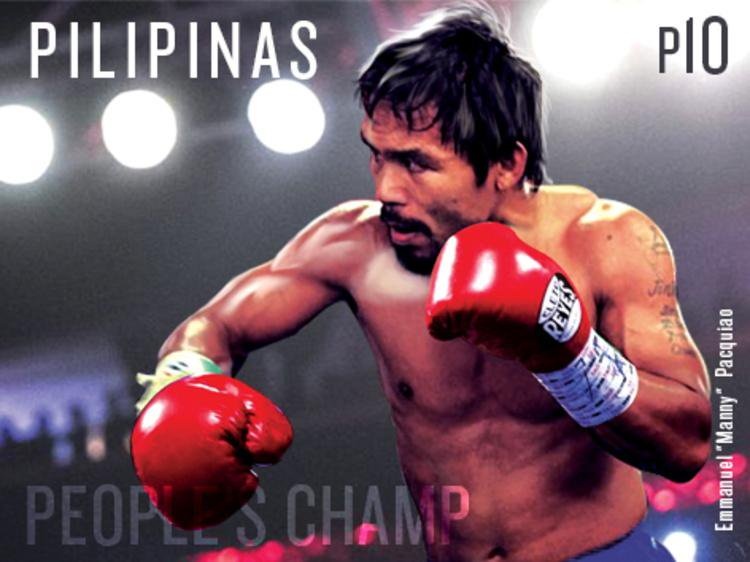
Manny Pacquiao, whose full name is Emmanuel Dapidran Pacquiao Sr., is a Filipino professional boxer and former politician. Nicknamed “PacMan,” he is widely regarded as one of the greatest boxers of all time and remains the only fighter in history to become an eight-division world champion. [Source: Wikipedia]
Pacquiao (pronounced pa-KEE-ow) captured a total of twelve major world titles and achieved lineal championships in four weight classes: flyweight, featherweight, super featherweight, and light welterweight. He was the first boxer to win major world titles in four of boxing’s eight “glamour divisions” and is the only fighter to hold world championships across four different decades—from the 1990s through the 2020s. In July 2019, he made history by becoming the oldest welterweight world champion at age 40 after defeating Keith Thurman, also becoming the first recognized four-time welterweight champion.
Pacquiao fights generated about $1.2 billion in revenue from 25 pay-per-view bouts, and he was ranked among the world’s highest-paid athletes by Forbes. Later recognitions included being named the greatest Asian athlete of the 21st century by ESPN in 2024 and ranked second among the greatest pound-for-pound fighters of the century by The Ring in 2025. He was inducted into the International Boxing Hall of Fame in 2025.
Pacquiao During His Prime in the Late 2000s
Pacquiao is 1.69 meters (five feet, 6½ -inches) tall and a southpaw. As of the late 2000s, he had fought in weight classes from 106 to 147 pounds in the first 13 years of his career. In December 2008 at the MGM Grand in Las Vegas, Pacquiao (47-3-2, 35 KOs), a world champion in four weight classes, jumped to welterweight to face Oscar De La Hoya (39 — 5, 30). On the eve of that fight, Pablo S. Torre wrote in Sports Illustrated: Of all the titlists the Filipino has vanquished, none would be greater, literally or figuratively, than the Golden Boy, a 5-foot-10 1/2-inch former middleweight. The fighters' disparity in size hasn't diminished interest — or hurt the balance sheet. The Grand sold out almost instantly, and the $17 million gate is the second largest in history. Throw in the international audience, and promoters predict that it will be the most profitable fight ever, surpassing De La Hoya's bout against Floyd Mayweather Jr. in May 2008. As Mark Taffet, vice president for HBO PPV, puts it, "It's a fantasy sports matchup." [Source: Pablo S. Torre, Sports Illustrated, December 8, 2008]
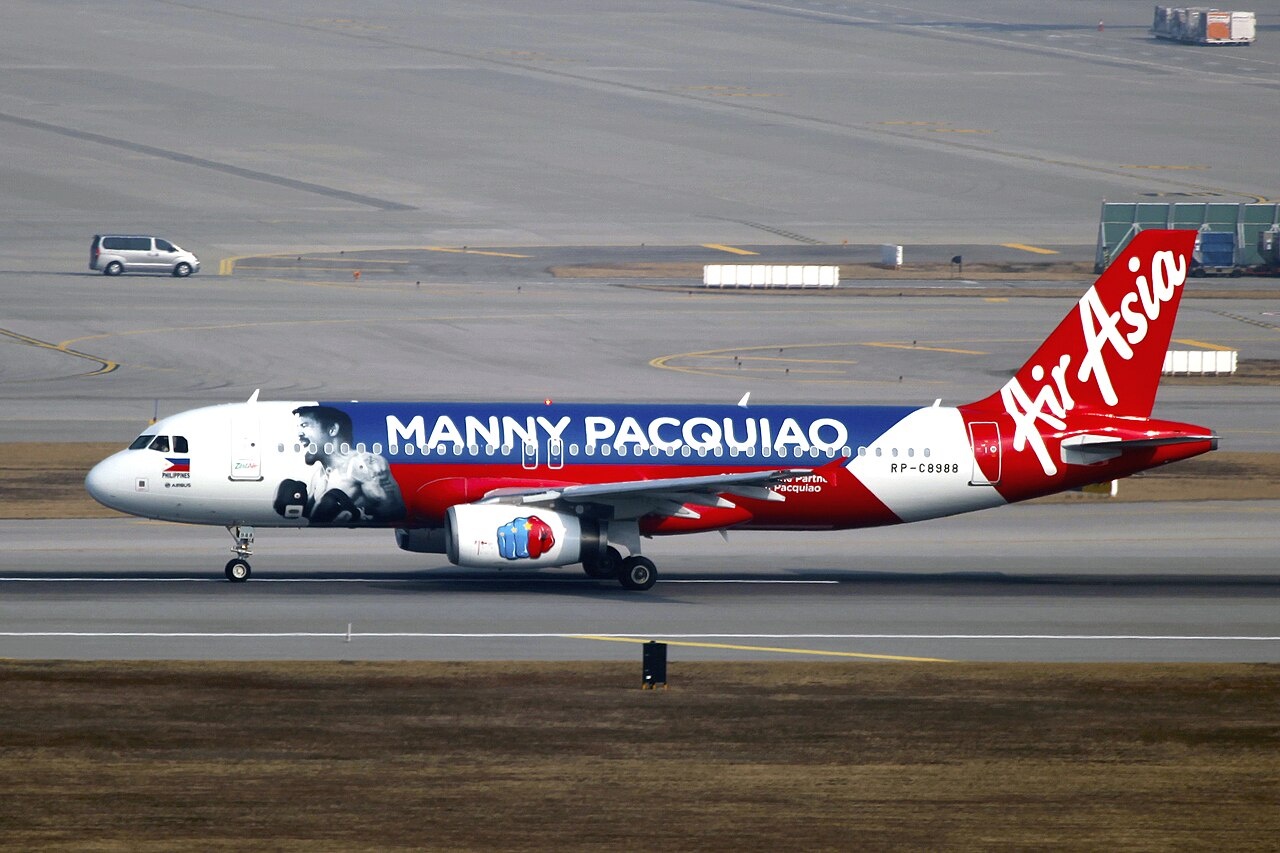
Pacquiao the boxer is essentially the same as he ever was. The blond dye that once streaked his bangs is gone, but for all of Roach's refinements, Pac-Man's style still features feverish punches and constant motion. The southpaw lets out a yell with every punch (Boom!) and combination (Boomboomboom!). If he takes a hard shot, he'll bang his gloves together, stick his arms into the air and grin broadly.
With his kinetic energy Pacquiao has generated "heavyweight-level" pay-per-view ratings and is a huge attraction in Mexico. "The fans there respect him as a great fighter," says Ignacio (Nacho) Beristain, who trained Márquez and now works with De La Hoya. To do otherwise would constitute denial. Pacquiao made a name for himself in 2003 with a TKO of Mexican featherweight Marco Antonio Barrera. Since then Pacquiao has gone 9-1-1 and battled five world champions of Mexican heritage over three weight classes, earning the nickname the Mexecutioner.
Pacquiao loves standing toe-to-toe and hacking like a farmer with a machete, a perpetually blurry figure whose signature stratagem — straight right, straight right, straight left — is so overwhelming that it doesn't matter that his opponent knows what's coming. But the key isn't his wicked hand speed; he has the most powerful legs in boxing. "God's gift to me," Pacquiao calls them. When he first fought Márquez in 2004, Pacquiao darted in and out so often that the sheer friction bloodied the soles of his feet. Naturally he signed an endorsement deal with a socks manufacturer the next day.
Pacmania in the Late 2000s
Pablo S. Torre wrote in Sports Illustrated: At Nat's Thai Food, a one-room joint wedged into a minimall in Hollywood, a microphone awaits the national treasure of the Philippines. As gentle piano chords drift from a karaoke machine atop the counter, Emmanuel Dapidran Pacquiao carefully mats down his black bangs, rises from his table and announces to his entourage, "Beatles! Beatles!" Then, grinning impishly, the best pound-for-pound boxer in the world leaves his chicken satay for a song. [Source: Pablo S. Torre, Sports Illustrated, December 8, 2008]
Had his dulcet rendition been any less genuine, the choice of a ballad — Let It Be — might have come off as awfully ironic. Manny Pacquiao is the least passive pugilist of this era and climbs weight classes as smoothly as he does octaves: In 2006 he had a hit single in the Philippines. Back home, in fact, Beatlemania pales in comparison to Pacmania. Pacquiao, 29, is an aspiring politician. He is both the star and subject of movies. He hosts a reality TV show. He even has his face on a postage stamp.
Pacquiao overshadows just about everything, national security included. Last March, before his victorious super featherweight rematch against Juan Manuel Márquez, the Philippine military declared a seven-hour ceasefire in its war against communist insurgents. But what of the rebels, sir? "I suggest," said the army's chief of staff, "that they also watch the fight."
"We can't even train in the Philippines," says Freddie Roach, Pacquiao's trainer of seven years. "Everyone wants a piece of him." So the boxer comes here, to Roach's Wild Card Gym on Vine Street, just 20 feet from Nat's. While clusters of fans have spent hours in the parking lot waiting for Pacquiao, the scene is merely a simulacrum of the madness back home. "I haven't seen anything like it, not since Ali," promoter Bob Arum says.
"Manny is our people's idol and this generation's shining light," Philippine president Gloria Macapagal-Arroyo says. "He is our David against Goliath, our hero and the bearer of the Filipino dream ... You can feel the excitement throughout the country every time he is in the ring."
In the dusty barrios of the southern Philippines, the best Asian prizefighter in history is not only an inspiration; he's also a neighbor. While “other boxers have relocated Pacquiao, with his wife, Jinkee, and their children, proudly reigns over the sport from General Santos City. Both Catholics and Muslims are Pac-Man fans. When he fights, the streets empty, the crime rate plummets and the government grinds to a halt. "I'm probably the most powerful person in the Philippines," Arum jokes, "because I decide which politicians get to take a photo with him in the ring."
In January 2006, memorably, after Pacquiao TKO'd super featherweight champ Erik Morales, more than 300 people sat outside his estate for three days. They refused to leave until they got balato — a share of monetary windfall, usually given to friends and relatives. "Manny had absolutely nothing growing up," Roach says, "but he still can't say no to anyone." He runs a charity, signs autographs and merrily hands out plastic baggies with money (about $4) and food (usually rice and sardines) to devotees. For him, balato is an almost daily responsibility.
Pacquiao Against the Great Boxers of His Time
Gendy Alimurung wrote in LA Weekly: One by one, the greats dropped to their knees before him: Marco Antonio Barrera, Juan Manuel Marquez, Oscar Larios, Jorge Solis. Pacquiao left Eric Morales sitting dumbfounded against the ropes like he'd had a very bad day at the office. He used David Diaz's head as target practice. Oscar De La Hoya, he dismantled. Left him perched on a stool, humiliated, stunned, a deer caught in headlights. The fight generated nearly $70 million from viewers of pay-per-view—the broadcasting format for most of Pacquiao's fights since the early 2000s. Ricky Hatton, pride of England? Lights out, nobody home. Out cold in round two before his head even hit the canvas. Most recently, Pacquiao broke Miguel Cotto, whose handsome face swelled like a pumpkin. [Source:Gendy Alimurung, LA Weekly, March 11 2010]
Chris Mannix wrote in Sports Illustrated: At some point Manny Pacquiao is going to run out of divisions to dominate. Super featherweight? Conquered, courtesy of a March 2008 victory over WBC super featherweight champ Juan Manuel Márquez. Lightweight? Pacquiao checked off that class when he stopped WBC champ David Díaz three months later. Welterweight? Pacquiao not only forced Oscar De La Hoya to quit on his stool in December—he also forced him out of the sport. And last Saturday in Las Vegas, Pacquiao (49-3-2, 37 KOs) staked his claim as the best junior welterweight in the world when he knocked down Britain's Ricky Hatton (45 — 2) three times before knocking him out in the second round of their IBO title bout. The defeat was Hatton's first in the 140-pound division and gave Pacquiao a title in a record-tying sixth weight class. "Manny was brilliant," says Lee Beard, Hatton's assistant trainer. "The [knockout] punch would have knocked anyone down. It was that good." [Source: Chris Mannix, Sports Illustrated, May 11 2009]
On the de la Hoya fight, the BBC reported: Manny Pacquiao dominated Oscar de la Hoya from the start to win the welterweight super-fight in Las Vegas. The Filipino gave his bigger, more famous opponent such a beating that De la Hoya declined to come out of his corner after the eighth round. The technical knockout marked only the second time De la Hoya had been stopped in his 16-year professional career. "He's just a great fighter," said De la Hoya. "I have nothing bad to say about him. He prepared like a true champion." Defeat for the 35-year-old came at the hands of a fighter who fought at just 129lb months earlier. "Speed was going to be the key to this fight," said the victorious Pacquiao, 29, who picked up an $11m (£7.5m) purse. "I'm not surprised by the result, because I prepared well to control the fight from the beginning. I'm happy that I could give this victory to my country." [Source: BBC, December 7, 2008]
In November 2010, Margarito was hospitalized and underwent surgery on his right orbital bone that was fractured in his fight with Pacquiao. Pacquiao pounded Margarito so severely that at one point in the 11th round he looked to referee Laurence Cole and asked him to stop the fight. After the fight, Pacquiao said he carried Margarito in the final round because he did not want to inflict anymore damage to him. [Source: Dan Rafael, ESPN.com, November 16, 2010]
Pacquiao Losses
In June 2012, Manny Pacquiao lost to American boxer Timothy Bradley in a 12-round bout, with the judges scoring it 115-113. This was an incredible upset for boxing fans because Pacquiao had won seven rounds to Bradley's five. The pay-per-view broadcast was watched by thousands of fans worldwide. The judges' decision sparked widespread speculation, with critics and fans arguing that Pacquiao should have been named the victor.
The New York Times reported: Bradley (29-0) scored a stunning and controversial upset Saturday night over Manny Pacquiao (54-4-2), winning a split decision in the welterweight bout at the MGM Grand. Bradley overcame Pacquiao’s advantage in speed over the first six rounds with head-rocking power that eventually left Pacquiao, a Filipino congressman, looking tired and slow. [Source: Norm Frauenheim, New York Times, June 10, 2012]
Pacquiao moved side to side in an almost tireless dance for the first six rounds. But it wasn’t enough for the judges in a close fight. The judges Duane Ford and C. J. Ross scored it for Bradley, 115-113. On Jerry Roth’s scorecard, it was 115-113 for Pacquiao, who lost the World Boxing Organization’s version of the 147-pound title. Pacquiao told fans, many of whom booed the decision, that he thought he had done enough to win. But he couldn’t knock out Bradley in the early rounds when he appeared to be dominating the bout.
In December 2012, Pacquiao suffered another difficult defeat. He was knocked out by Juan Manuel Márquez in the sixth round of their welterweight bout in Las Vegas. According to the New York Daily News, Pacquiao explained his loss by saying, "I just got hit by a punch I didn't see."CNN reported: With a crushing right hand, Juan Manuel Marquez knocked out Manny Pacquiao in the sixth round of a non-title bout in Las Vegas scoring a definitive victory after three previous bouts that ended in close judgments. The fight came to an end 2:59 into the sixth round, after Juan Manuel Marquez landed a right hand to Manny Pacquiao's face, knocking him cold at the MGM Grand Garden Arena. Pacquiao went down face-first and lay motionless for a while, possibly unconscious, before eventually sitting up. It was called a technical knockout and Marquez declared the winner. Pacquiao shook Marquez' hand after getting back on his feet. [Source: Ben Brumfield and Steve Almasy, CNN, December 10, 2012]
In April 2014, Pacquiao got his revenge against Bradley. At the MGM Grand Garden Arena, Pacquiao earned a unanimous decision and reclaimed the WBO welterweight title. There no doubt about the outcome this time around. Despite suffering severe cuts and requiring 32 stitches, Pacquiao showed clear relief and satisfaction, having settled the score decisively in front of a pro-Pacquiao crowd. Bradley himself acknowledged the loss, and the judges’ scores confirmed Pacquiao’s dominant performance, marked by superior speed, power, and footwork. [Source: Bob Velin, USA TODAY Sports, April 13, 2014]
In July 2017, former schoolteacher Jeff Horn upset Manny Pacquiao with a controversial unanimous decision at Suncorp Stadium in Brisbane to win the WBO welterweight title. Horn’s aggressive, physical style led to cuts on Pacquiao, while a dominant ninth round by Pacquiao nearly ended the fight. Many observers disputed the judges’ scores—especially the wide 117–111 card—but a subsequent WBO review upheld the result, confirming Horn as the winner. Fought before more than 51,000 fans, the bout became known as the “Battle of Brisbane” and remains one of boxing’s notable upsets.
Pacquiao, Money and Business
According to Forbes, Pacquiao had has earned $500 million from purses, pay-per-view and endorsements as of 2016. By 2010 Pacquiao was the sixth richest athlete in the world. He endorsed beer, ice cream, ibuprofen, and was sponsored by Nike. In the Philippines he owned gasoline stations, coffee shops, a boxing-promotion company, a gym, a basketball team, a grocery store and a rooster farm. In 2009, Pacquiao earned $40 million and gave a good chunk of it away to hospitals; to schools; to his entourage as an incentive to get healthy. Three thousand dollars to whoever loses 15 percent of his body weight; 70 people are participating. [Source: Gendy Alimurung, LA Weekly, March 11 2010]
Pacquiao earned $20 million for his fight against Shane Mosley in May 2011. The event was held at the MGM Grand in Las Vegas and was covered by 1,600 accredited media from around the world. Around that time Pacquiao began working with Lucia McKelvey, previously with IMG overseeing deals for a group of golfers including Tiger Woods. McKelvey, who joined promoter Arum’s Top Rank organisation had been amazed by Pacquiao’s previously untapped potential. “The world is his oyster, and he is completely unsaturated,” McKelvey said. McKelvey said his market ratings should make him the highest earner in sport. Deals were made with Hewlett Packard and a cologne fragrance company. There was also ‘Pacquiao Produce’ — a food line with vegetables grown on Mexican farms. [Source: Gareth A Davies, The Telegraph, May 5, 2011]
Manny Pacquiao owns a lottery outlet for the Philippine Charity Sweepstakes Office, which functions as the government’s charitable arm. Proceeds from the lottery help fund public services such as healthcare and social welfare, and Pacquiao’s involvement has helped boost its visibility and impact. His philanthropic efforts extend further through the Official Manny Pacquiao Foundation, which supports underprivileged communities across the Philippines. [Source: Dave Golokhov, askmen.com]
Pacquiao and Mayweather
A long-anticipated fight between Floyd Mayweather Jr. finally took place on May 2, 2015—about five years later than originally expected. The delay, often described as boxing’s “missed era,” was caused by prolonged disputes over drug testing, financial terms, and promotional rivalries.
One major sticking point was Mayweather’s insistence on strict, Olympic-style blood and urine testing up to fight day, which Pacquiao initially resisted due to concerns about weakening his performance. Negotiations also broke down over purse splits, with disagreements about how the earnings should be divided.
Complicating matters further were tensions between rival promoters and networks—Top Rank and HBO on Pacquiao’s side, and Mayweather’s camp aligned with Showtime—making talks even more difficult. Mayweather later suggested that delaying the bout ultimately increased its financial success.
Mayweather Jr. Defeats Pacquiao
The May 2015 fight took place at the MGM Grand Garden Arena in Paradise, Nevada. Mayweather Jr. won the contest by unanimous decision, with two judges scoring it 116–112 and the other 118–110. By the time the fight finally happened, both fighters were considered past their peak, though the event still shattered revenue records and became one of the most lucrative bouts in boxing history.
Reuters reported: Mayweather cemented his place among the pantheon of boxing greats by improving to 48-0 with a unanimous decision over Manny Pacquiao in a fight that lived up to its immense hype and price tag. Mayweather weathered an early assault from the Filipino southpaw before winning the later rounds using his reach and jab to finish ahead on all three scorecards in a welterweight showdown set to be the top grossing prize fight of all-time. Though Pacquiao repeatedly forced Mayweather to backpedal, the wily American blunted his opponent's best efforts by using his renowned defensive skills while getting in several telling jabs and punches of his own. [Source: Steve Keating, Reuters, May 3, 2015]
Dubbed "The fight of the Century," the event was held at the MGM Grand in Las Vegas and was broadcast in Pay Per View (PPV). The fighters were paid royally. Mayweather was guaranteed $120 million and Pacquiao $80 million with both men pocketed much due the number of PPV purchases. Overall the fight grossed more than $500 million worldwide, making it the biggest event in boxing history. "When the history books are written, it was worth the wait," Mayweather said. "Manny Pacquiao is a hell of fighter, I see now why he is at the pinnacle of boxing. I'm a smart fighter, I outboxed him. We knew what we had to do. He's a tough competitor... a very awkward fighter and I had to take my time and watch him closely."
Tickets were the price of a new car or a college education. Among the celebrities on hand were actors Clint Eastwood, Robert De Niro, Mark Wahlberg, Jake Gyllenhaal, Ben Affleck, and Denzel Washington, athletes such as Magic Johnson, Michael Jordan, Andre Agassi, Steffi Graf and Tom Brady as well as Donald Trump and Paris Hilton. With the best seats commanding six-figure sums on the resale market even the very wealthy and very famous were forced to call in favors to secure a golden ticket while An estimated 150,000 to 200,000 fight fans flooded into the desert gambling capital to be part of the buzz.
Pacquiao-Mayweather Fight
Reuters reported: Wearing a simple white T-shirt, Pacquiao knelt in his corner for a prayer as boos filled the hall when Mayweather appeared on the giant screens.There were no smiles from the stone-faced American as he entered the ring wearing black white and gold trunks and sporting a $23,000 mouth guard infused with flecks of gold and pieces of a hundred dollar bill. Five years of hype then reached a climax when famed announcer Jimmy Lennon stood in the center of the ring and told the crowd, "the wait is over, it's go time". "It is a good fight. I thought I won the fight. He didn’t do nothing. He always moved outside," said Pacquiao, who dropped to 57-6-2. "I did my best but my best wasn't good enough." [Source: Steve Keating, Reuters, May 3, 2015]
Greg Bishop wrote in Sports Illustrated: It went the way most Mayweather fights go. Pacquiao spent most of the past month saying what all Mayweather opponents say: that he would be aggressive, force the pace, get inside, rough Mayweather up. Everyone says that. But it’s one thing to say it. And another thing to do it. And yet another thing to win. [Source: Greg Bishop, Sports Illustrated, May 3, 2015]
Pacquiao did pursue Mayweather. He followed him into the corners and stalked him around the ring. In the fourth round, Pacquiao landed a straight left hand that staggered Mayweather backward and brought the crowd to its collective feet. Pacquiao continued to throw punches in flurries, continued to land, and at that point it seemed possible, if only momentarily, that Mayweather would lose. Mayweather leaned back on the ropes and shook his head, as if to say, Not tonight. “As long as I moved on the outside, I was O.K.,” Mayweather said. “It was only when I stayed in the pocket that he was able to get me.”
As Pacquiao followed Mayweather around the ring, he smiled at him. He kept smiling at him. But for all the smiles, and for all the boos the crowd rained down on Mayweather, Pacquiao could not connect the way he wanted to. Pacquiao threw 429 total punches, when more like 800 were expected if he was to win. He landed only 19 percent, to 34 percent for Mayweather, who connected on nearly half (48 percent) of his power punches and threw more punches overall. Still, Pacquiao said afterward, “I thought I won the fight.”
Mayweather Won the Fight But Pacquiao Won the Crowd
Greg Bishop wrote in Sports Illustrated: The Fight of the Century ended, and what seemed like half of the arena swarmed inside the ring. Mostly, they just stood there. But not Floyd Mayweather Jr. He had an image to reinforce. It’s not easy to be the most hated athlete in professional sports. Mayweather climbed up each corner and thumped his chest and pointed at the crowd that booed him throughout Saturday. “I know I won!” he shouted. Then he thumped his chest. Then they booed him. Thump. Boo. Thump. Boo. “I know I won!” he shouted once again. [Source: Greg Bishop, Sports Illustrated, May 3, 2015]
The crowd booed and booed and booed. The crowd booed when the announcer proclaimed Mayweather the winner by unanimous decision, booed when broadcaster Jim Gray interviewed Mayweather in the ring, booed especially loudly when Mayweather turned his eyes toward history, and, more specifically, to his place in it. To the surprise of no one, he places himself at the top. Mayweather thanked God. Boo! Mayweather thanked his father. Boo! Mayweather thanked his team. Boo!
This is how it goes with Mayweather, how it always is with Mayweather. He may have made upwards of $180 million, and he further cemented his status as the best boxer of his generation. But there is one fight—that of public perception; to be known as a world-class fighter, not a serial batterer—that he cannot win.
What Mayweather doesn’t realize, and what none of his acolytes have the heart to tell him, is he arrived in this space largely through his own design. He turned himself into a villain and mocked those who accused him of domestic violence and incited the hatred that now defines him. He wants all of it to go away now, but most seem to be past that point. At once Mayweather can topple Pacquiao and still remain in a fight he cannot win.
The crowd filtered out of the arena, quietly for the most part. Some booed. The Fight of the Century wasn’t a dud, not even close. But it didn’t live up to the hype, either, and in that regard it never had a chance. The hype was simply too great. It set an impossible bar.
Pacquiao Says He Dreamt of Losses to Marquez and Mayweather Before They Occurred
In April 2017, Pacquiao told the media for first that he had premonitions about his two biggest losses — to Marquez and to Mayweather. He said he believed that God had warned him in advance so he could mentally prepare for defeat. In an interview, he explained that he had dreamt about both his loss to Floyd Mayweather and the knockout defeat to Márquez before stepping into the ring. According to Pacquiao, he had dreamt of several fight outcomes throughout his career, and they had never been wrong. He added that he had shared these visions with his closest confidants, a claim supported by adviser Michael Koncz and publicist Fred Sternburg, who confirmed that he spoke about the Mayweather dream ahead of time. [Source: Jamie Pandaram, Daily Telegraph, April 28, 2017]
Pacquiao said: “I’m in training for the Mayweather fight ... in LA. One month before the fight I had a dream. And my dream is the fight with Mayweather, and in that dream I lost the fight.” He said that early the next morning, while out jogging, he told his pastor and companions about the dream: “‘I have a dream and the fight is already finished with Floyd Mayweather, I lost the fight’. I told them.” He also remembered seeing confusion in the vision: “But I saw, there is controversy, it’s not clear, there’s a protest. I ask them, ‘Why is that?’ And the pastor said, ‘We just pray, we just pray’.” Pacquiao noted that he wrote the dream in his diary that same day and emphasized its accuracy afterward: “After the fight, what I saw in my dream (was) exactly what happened to the fight. Exactly what happened to the fight.”
He shared a similar experience before facing Márquez, saying, “On Marquez fight, I never felt bad (about) what happened because I saw that one week before the fight.” Reflecting on these visions, Pacquiao described them as divine messages: “It’s a message. It’s a favour, I’m so thankful because God told me ahead of time (to be prepared).” He recalled telling others about a dream the Sunday before the fight: “Sunday night (before the fight), I had a dream and I tell everybody, asking them ‘What is this?’” During the bout itself, he said the memory of the dream stayed with him: “After the fight, if you watch the fight, when you review the fight, when I’m in the ring, I just smiled because I remembered my dream. It’s from the Lord. You cannot say I make (up) a story because the fight is already finished, no, I told (people) ahead of time.” Pacquiao said kept written accounts of his experiences and recorded his prophecies in his personal diary before the events happened.
Image Sources: Wikimedia Commons
Text Sources: “Encyclopedia of World Cultures Volume 5: East/Southeast Asia:” edited by Paul Hockings, 1993; “Culture Shock!: Philippines” by Alfredo Roces and Grace Roces, Marshall Cavendish International, 2010; Metropolitan Museum of Art; National Geographic, Live Science, Philippines Department of Tourism, New York Times, Washington Post, Los Angeles Times, Smithsonian magazine, Encyclopedia.com, Library of Congress, The Conversation, The New Yorker, Time, BBC, CNN, Reuters, Associated Press, AFP, Lonely Planet Guides, Google AI, Wikipedia, The Guardian and various websites, books and other publications.
Last updated March 2026