
PAPUA
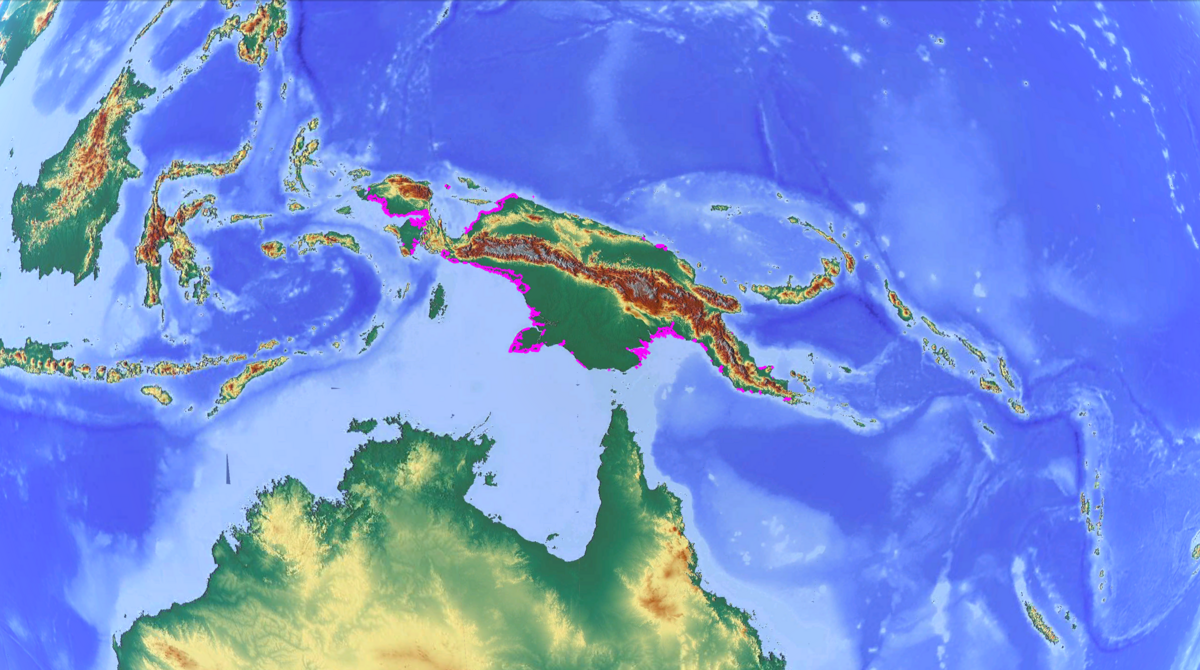
The Indonesian part of New Guinea is known as Papua. It was formerly called West Irian and Irian Jaya, and is also referred to as Western New Guinea or West Papua. Papua is the largest and most sparsely inhabited region of Indonesia. Sometimes called the Great Steamy, it is clearly an end-of-the-world kind of place, sometimes referred to by environmentalists as the last great wilderness of Asia and the Pacific. Vast areas of the interior are still unexplored. New species, including tree kangaroos, are still being discovered.
The island of New Guinea, the second largest in the world after Greenland, is a mountainous, sparsely populated tropical landmass divided between two countries: the independent nation of Papua New Guinea in the east, and the Indonesian provinces of Papua and West Papua in the west. Borneo is the third largest island in the world.
Papua is a land of contrasts, with some of the most impenetrable jungles in the world and snowcapped mountain peaks towering over glacial lakes. Papua is Indonesia’s largest and eastern most province and covers the western half of the world’s second largest island. It is a land of exceptional natural grandeur; with beautiful scenic beaches, immense stretches of marshlands, cool grassy meadows and powerful rivers carving gorges through dense forests. The most heavily populated and cultivated parts of the island are the Paniai Lakes district and the Baliem Valley to the east.
Even though Papua is one of the richest Indonesian provinces in terms if oil, gas, minerals and timber it is Indonesia’s second poorest province. The infant mortality rate is so high that children aren't given names until they are 12 months old. And there are people alive that have hunted heads and eaten human flesh. There are still occasional reports of head hunting and cannibalism. In the late 1990s, the chief of a Baliem Valley tribe caught and ate several men who had murdered his wife.
The provincial capital of Jayapura is situated on hills which overlook the sea, and is accessible by boat and plane. It was here that General MacArthur assembled his fleet for the invasion of the Philippines during the Second World War.
RELATED ARTICLES:
HISTORY OF PAPUA factsanddetails.com
PAPUA factsanddetails.com
FIRST PEOPLE IN NEW GUINEA ioa.factsanddetails.com
UNREST AND LIMITED AUTONOMY IN PAPUA SINCE THE OUSTER OF SUHARTO IN 1998 factsanddetails.com
ETHNIC GROUPS IN NORTHERN PAPUA AND THE BIRD'S HEAD (VOGELKOP) OF NEW GUINEA factsanddetails.com
NORTHWEST PAPUA AND THE BIRDHEAD OF NEW GUINEA factsanddetails.com
HIGHLAND GROUPS OF WEST NEW GUINEA — EIPO, DAMAL, EKAGI — AND THEIR HISTORY, LIFE AND SOCIETY factsanddetails.com
DANI AND PEOPLE OF THE BALIEM VALLEY: HISTORY, RELIGION, WHERE THEY LIVE factsanddetails.com
LIFE OF DANI PEOPLE OF WESTERN NEW GUINEA: SOCIETY. FOOD, SEXUALITY factsanddetails.com
BALIEM VALLEY: HISTORY, PEOPLE, TRAVEL, HIGHLIGHTS factsanddetails.com
ETHNIC GROUPS IN THE SOUTHERN LOWLANDS OF PAPUA (WEST NEW GUINEA) factsanddetails.com
MARIND PEOPLE OF SOUTHERN PAPUA (SOUTHWEST NEW GUINEA, INDONESIA) factsanddetails.com
KIMAM PEOPLE OF SOUTHERN PAPUA (WEST NEW GUINEA) factsanddetails.com
ASMAT: HISTORY, RELIGION AND HEADHUNTING factsanddetails.com
ASMAT LIFE: SOCIETY, MARRIAGE, FOOD, VILLAGES, WORK factsanddetails.com
ASMAT CULTURE: MUSIC, FOLKLORE, CEREMONIES, BODY ADORNMENT factsanddetails.com
ASMAT ART: BIS POLES, SPIRIT CANOES, BODY MASKS factsanddetails.com
KOROWAI PEOPLE: HISTORY, CANNIBALISM, CONTACT WITH WESTERNERS factsanddetails.com
KOROWAI LIFE AND SOCIETY: RELIGION, FOOD AND TREEHOUSES factsanddetails.com
ASMAT AND KOROWAI COUNTRY factsanddetails.com
NINGERUM PEOPLE OF CENTRAL NEW GUINEA: HISTORY, RELIGION, LIFE, SOCIETY ioa.factsanddetails.com
LORENTZ NATIONAL PARK AND THE HIGHEST MOUNTAIN IN OCEANIA factsanddetails.com
FREEPORT (GRASBERG) GOLD AND COPPER MINE IN PAPUA, INDONESIA factsanddetails.com
PROBLEMS AT THE FREEPORT MINE: VIOLENCE, POLLUTION AND BRIBES TO THE MILITARY factsanddetails.com
Names and Name Changes for Papua

Highland Papua (darker blue)
Papua (purple)
South Papua (dark green)
Southwest Papua (light blue)
West Papua (olive green)
Papua is the official name for the region as a whole and the name of at least one of the current provinces within it. Western New Guinea is a descriptive name for the western half of the island of New Guinea, with the country of Papua New Guinea occupying the eastern half. West Papua is also commonly used, particularly by those who refer to the region as a whole. The region was previously known as Netherlands New Guinea, West Irian, and Irian Jaya.
Papua‘s name changes go back to the Age of Exploration and the earliest colonial period. After their first encounter with New Guinea in 1511, the Portuguese named the island “Ilhas dos Papuans” (“Island of the Fuzzy Haired”), using the Malay word “papuwah”. Early Dutch explorers called it New Guinea because the black inhabitants reminded them of the blacks that lived in Guinea in western Africa and later called the western half Dutch New Guinea.
After Indonesia took control of the territory in 1969, it was called Irian Barat (West Irian). After it was integrated into Indonesia as the its 26th province in 1973 West Irian was renamed Irian Jaya. Irian means hot land" in the Biak language of northern Papua. Jaya means "victorious” in Bahasa Indonesian. It was a name given to the area by Suharto (president of Indonesia from 1967 to 1998). Irian is also an acronym for “Ikut Republik Indonesia Anti-Nederland” (To Follow the Anti-Netherlands Republic of Indonesia). Local people prefer the name West Papua.
Indonesia’s The national parliament changed the name back to its original name of Papua in October 2001. In 2003, Indonesian President Megawati set in motion a tortuous three-year process by which the northwestern portion was split off to form the new province of Irian Jaya Barat (West Irian Jaya), with the eastern two-thirds retaining the name Papua. Irian Jaya Barat was renamed West Papua (Papua Barat) in 2007. Further division of Papua was blocked at the time.
In 2022, the Indonesian parliament voted to create four new provinces in the Papua region by splitting the original Papua province into Papua, Central Papua, Highland Papua, and South Papua. Separately, the West Papua province was split into West Papua and Southwest Papua provinces.
The name changes, the Indonesian government said, were done to provide better public services and stimulate development in the region, though it has been met with criticism. Some critics argue that the division is a "divide and conquer" tactic to weaken Papuan identity and resistance, and that the process did not get approval from the Papuan Peoples' Council as mandated by the Special Autonomy Law.
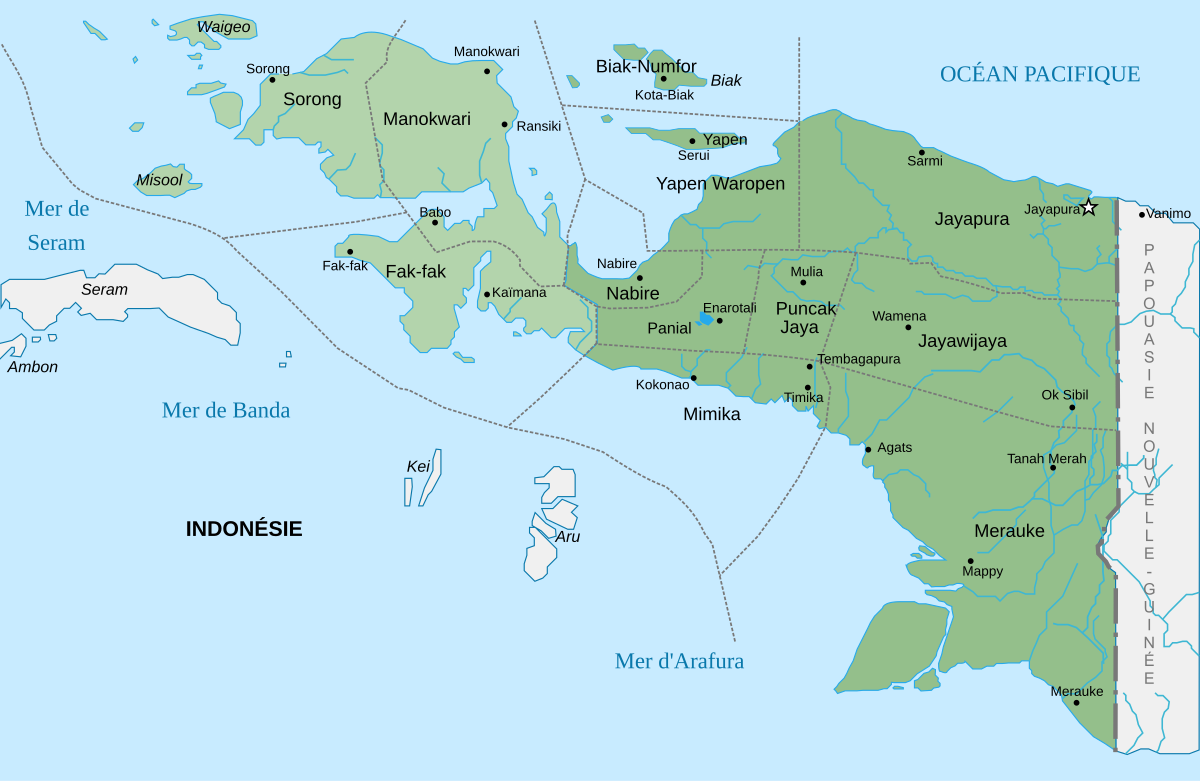
A) The Original Papua province became four provinces:
1) Papua (the remaining central northern coastal area)
2) Papua Tengah (Central Papua)
3) Papua Pegunungan (Highland Papua)
4) Papua Selatan (South Papua)
B) West Papua province was split into two:
5) Papua Barat (West Papua)
6) Papua Barat Daya (Southwest Papua)
Geography of Papua
The Indonesian provinces of Papua and West Papua occupy the western half of New Guinea, the world's second largest island, and cover 421,981 square kilometers (161,390 square miles), an area about the size of California. The two provinces measure 1200 kilometers from east to west and 735 kilometers from north to south and embraces 15,000-foot-high snowcapped peaks, Asia's only tropical glaciers (located just a few degrees south of the equator), volcanic mountain ranges, raging rivers, montane forests, deep gorges, vast swamps, alluvial plains, lowland rain forests, and World War II wreckage. The highest mountain in Indonesia, 5050-meter-high Puncak Mandala, is located in Papua .
Jungles and rain forests (among the densest and most impenetrable in the world) and swamps and mangrove swamps with sago palms cover 85 percent of the land area of Papua and West Papua. In the south, coastal swamps penetrate 300 kilometers inland. The north is dominated by a mountain range, the Pegununga Maoke, runs across the spine of the province.
Birds of Paradise, cockatoos, tree kangaroos, bandicoots, ring-tailed possums, flying phalangers, cuscuses, frill necked lizards, poisonous snakes, bowerbirds, cassowaries are found on this island but the rain forests here don't have the richness in flora and fauna that the forests in Africa and South America have. Deforestation is becoming a problem. The Indonesian government has designated 20 percent of the provinces as conservation areas but has also earmarked Papua for increased logging and development and more transmigration settlements.
Papuan People
Papua accounts for 22 percent of Indonesia's land area but only one percent of its population. Over 250 different ethnic groups and sub-groups of people occupy Papua. Most of them are of Melanesian descent like those in Papua New Guinea and many of the southwest Pacific islands. They are very different from the Malay peoples who dominate the other islands of Indonesia.
The people of Papua are culturally, linguistically and racially different from the other people of Indonesia and have no historical links with them. They are Papuans of the Melanesian culture, and are even more different than the other diverse groups of Indonesia are from each other. The word Papuan is derived a word derived from the Malay expression for "frizzy haired."
By one estimate there are around 1.2 million native Papuans and one million migrants in Papua. By another count there are about 1.9 million people indigenous people and 700,000 people from other parts of Indonesia. In 1999, about half of the 1.8 million people in Papua were native Papuans. The remainder were mostly people who migrated from other parts of Indonesia since independence in 1949 and Papua became part of Indonesia in 1969, when were 700,000 people in the region.
The inland areas of Papua tend to be inhabited mostly by indigenous Papuans while coastal areas are occupied by a mix of Papuans, Melanesians and transmigrants. The number of indigenous people on Papua is increasing with the help of modern medicine and the end of clan warfare. At the same time many migrants are arriving from elsewhere in Indonesia in search of jobs and opportunities.
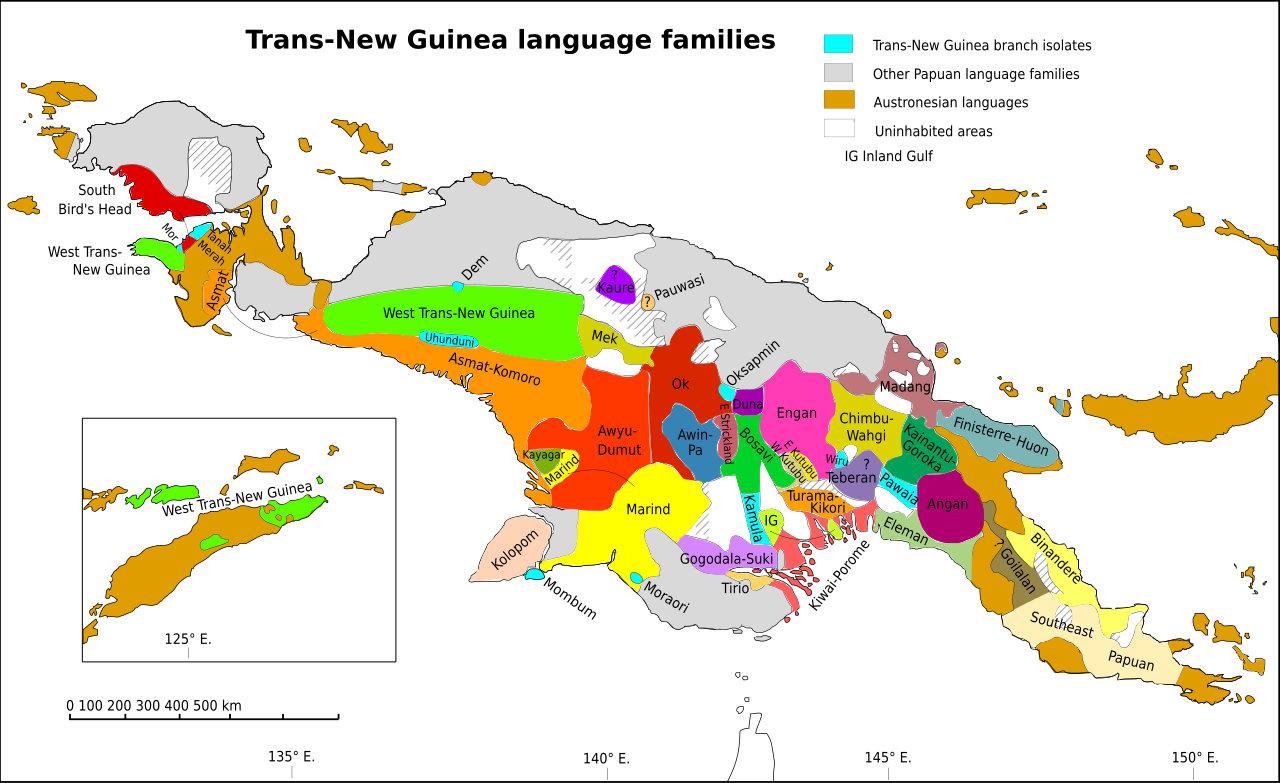
Linguists have identified 250 languages in Papua, half of them spoken by less than a thousand people. In some remote region villages less than a day's walk apart speak completely different languages. In New Guinea there are over 1000 languages, one fifth of the world's total. In mid 1998, the Indonesian government reported the discovery of two “new tribes” in a very remote area of Papua that communicate using sign language.
Religion and Cargo Cults in Papua
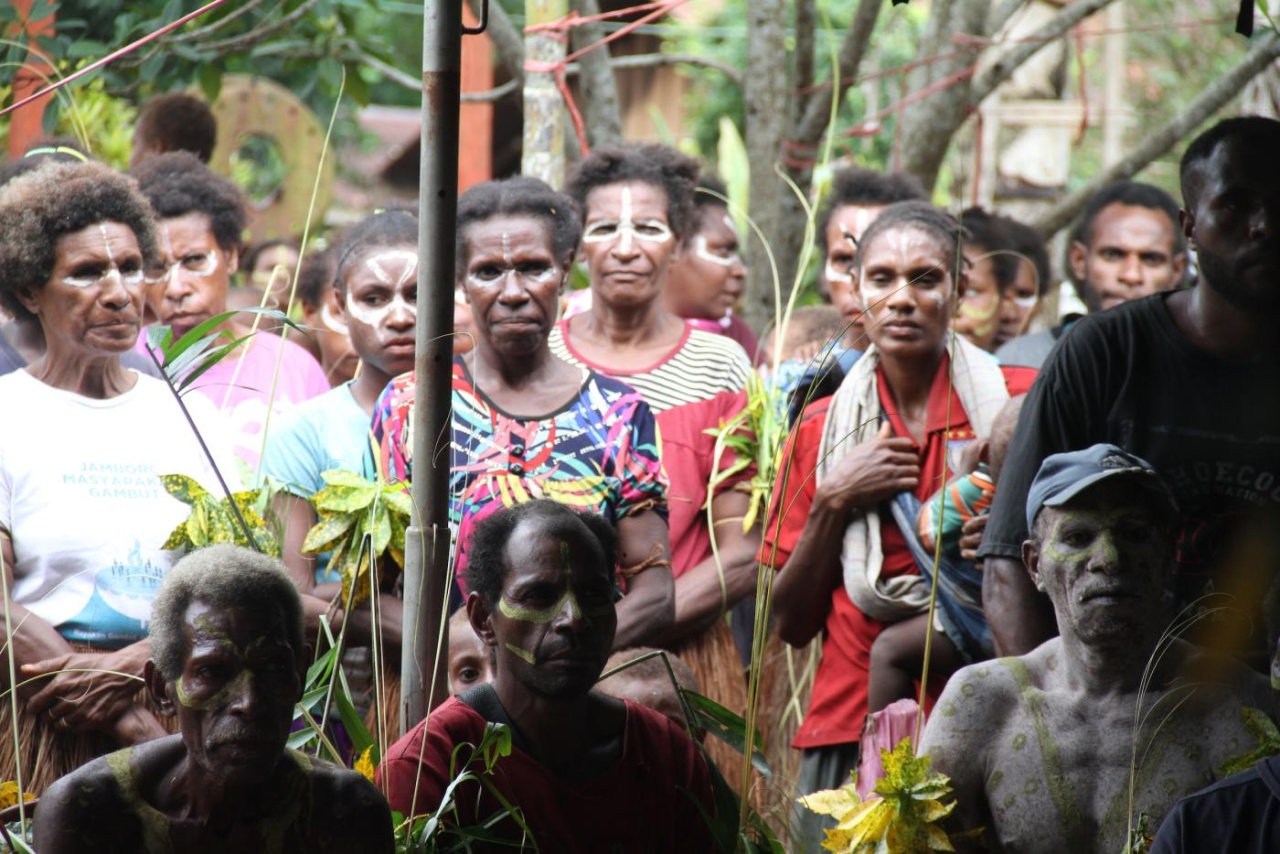
By one count 99 percent of the population is Christians of all denominations. Many of those who are Christian have incorporated traditional beliefs to varying degrees. the figure seems hard to believe considering the number of immigrants from Muslim areas in Java and Sulawesi and the number of native Papuans that cling to their traditional animist beliefs. One reason for the figure is that Indonesians have to register themselves as belonging to one of six religions. Catholicism and Protestantism are regarded as two of these religions but traditional tribal beliefs and animism are not.
Many native Papuans are both animist and at least nominally Christian. David Lamb of the Los Angeles Times described the Papuans as "churchgoing Christians on Sunday and animist who believe in evil spells and earth spirits on other days." By contrast most citizens of Indonesia are Muslims. For animists everything in the forest and mountains has sacred meaning.
Some people in New Guinea are followers of Cargo Cults, which sprung up among primitive peoples who had never seen outsiders. When white people arrived by airplanes with weapons, food and clothing—all things they desired—they believed these things must be divine gifts and their bearers, gods. As a way to attract these gods some villagers built airstrips with replicas of aerial towers. [Source: Malcolm Kirk, National Geographic, March 1972 ♦]
Some cult leaders stir up their followers the point where they ignore their duties. One leader told his people he had the power to attract airplanes and make food appear from underground. He also told them if they prayed hard enough their skins would turn white. The people spent so much time praying, pounding their drums and listening to services performed the cult leader they stopped fishing and gathering food. The government finally had be called in to drive the cult underground. ♦
See Minorities such as the Asmat, Papua New Guinea
Missionaries in Papua
Dutch, American, European,Protestant and Catholic missionaries have all descended on Papua in the past couple of decades. In 1995, there were about 200 or so in the region. At that time, in an effort to promote self-sufficiency, the Indonesian government wanted all non-Indonesian missionaries out the country by the year 2000 unless they become Indonesian citizens.
Missionaries in Papua and Papua New Guinea have built hospitals and operated successful animal husbandry, agricultural, literacy, school and translation programs. Facilities that were opened in the 1950s are still open today. In many places, missionaries introduced metal tools to Stone Age tribes by passing out axes and machetes. At first the indigenous people fled the missionaries, fearing the were "white ghosts."
In Papua, Sunday prayer meetings are held in traditional long houses. In the larger town churches are often filled. Journalist Thomas O'Neill observed a Sunday sermon attended by several hundred Dani swaying as if in a trance as a Dani deacon in an open-necked shirt shouted out: "On earth your grass may dry out. Your river may dry out. But in heaven it is always good. There is no fighting. You don't have to hunt or garden. Everything good comes to you." [Source: Thomas O'Neill, National Geographic, February, 1996 ☼]
Many of the Catholic missionaries in Papua belong to the Crosiers, a small order based in St. Paul, Minnesota that replaced Dutch priests in the Asmat region in 1958. "Inspired by the reforms of the Second Vatican Council in the mid-1960s," O'Neill wrote, "they saw themselves not as authority figures but as counselors who, in their own way, would go native to help the Asmat hold on to home and traditions." Attempting to rebuild the Asmat culture, which was nearly destroyed in the 1960s by the Indonesian government, which tore down men's house, outlawed feasts and destroyed sacred objects, the Crosiers incorporated Asmat rituals into their Catholic services. They also acted as mediators in clan conflicts and as intermediary between the Asmat and the Indonesian government. ☼
Papuan Customs and Life
The people that live in the central highlands of Papua have tended to maintain their ancestral and traditional customs and many are virtually untouched by outside influence. Melanesian cultures have traditionally worshiped animist spirits, raised pigs as a sign of wealth and practiced cannibalism and headhunting. One Papuan man told Thomas O'Neill of National Geographic, "While we believe we are descended from the forest, most Indonesians believe that devils live in the forest and that the forest must be destroyed." One missionary told National Geographic, “I don't see how the Indonesians and the Papuans can ever truly mix." [Source: Thomas O'Neill, National Geographic, February, 1996 ☼]
In some places in Papua, people like to pound their chest and shout. Girls have traditionally been kept at home so they can bring a good bride price, often paid in pigs. In the 1980s, a Papuan father might try to get 20 pigs or so—each worth about $40—from the a groom in exchange for his daughters hand in marriage. Often though the father had to settle for 11 or 12.
Sweet potatoes are the staple crop of highland tribes in Papua (See Dani). With cultivated land becoming scarce in the valleys, more and more farmers and raising their crops of steep mountain slopes. In the lowlands many eat the pith of the sago palm and treasure large beetle larvae as a delicacy (See Asmat and Korowai).
Many cultures have a men’s house and some sort of initiation for boys. Men in many tribes wear penis gourds called “kotekas” and women go topless and wear grass skirts or cover their butts and genitals with tastle-like "modesty aprons" made from leaves. Many natives of Papua now wear western clothes when attending school or visiting, but wear their traditional clothes in their villages. Despite their near nakedness highland people in reality are very modest.
Many men wear grass skirts and go bare chested even in the chilly highland nights, evenings and mornings. Women wear feathers in their hair and strings of shells around their necks. Traditional dancers now wear synthetic decorations instead of traditional feathers and furs. Many men wear T-shirts and beat-up running shoes.
Headhunting, Cannibalism and Revenge Wars in Papua
Cannibalism and clan warfare were reportedly common in Papua in old days but have been outlawed by the Indonesian government. Once practiced all over New Guinea, cannibalism was traditionally linked to acts of revenge or punishment for a crime such as murder or rape or perceived sorcery. The power of the deceased was alleged to be absorbed by the people who ate him or her.
There are still occasional reports of headhunting, cannibalism and revenge wars. There are still occasional reports of head hunting and cannibalism. In the late 1990s, the chief of a Baliem Valley tribe caught and ate several men who had murdered his wife. In the 1970s a highland Papua tribe killed and ate a mission preacher and a dozen of his assistants for allegedly stealing land and coming on to local women. National Geographic photographer George Steinmetz, who visited Papua in the mid 1990s, said, "They called me Long Pig in Papua. But that's what they call anyone who looks tasty.”
See Asmat, Dani, Korowai Under Minorities
Indonesia Claims West New Guinea
On December 27, 1949, the Dutch recognized the independence of the former Dutch East Indies, except for West New Guinea (Irian Jaya), as the Republic of the United States of Indonesia. A few months later, on August 17, 1950, the federal system was rejected, and a unitary state—the Republic of Indonesia—was established under a new constitution. West New Guinea remained under Dutch control until October 1962 when the Netherlands transferred the territory to the United Nations Temporary Executive Authority (UNTEA). Indonesia took complete possession of the disputed territory on May 1, 1963, establishing it as the province of Irian Barat (West Irian), which was renamed Irian Jaya in 1973.[Source: Worldmark Encyclopedia of Nations, Thomson Gale, 2007]
Continued Dutch occupation of West New Guinea, which was claimed by Indonesia but firmly held by the Dutch, led to a break in diplomatic relations between Jakarta and The Hague in 1960. In December of that year, Sukarno established a special military unit, the Army Strategic Reserve Command (Kostrad), also known as the Mandala Command, based in Ujungpandang, to "recover" the territory. In 1961, armed clashes broke out between Indonesian and Dutch troops. In early 1962, Sukarno dispatched paratroopers to Dutch New Guinea, a territory claimed by Indonesia but firmly held by the Dutch. To avoid full-scale war, the Dutch agreed to a compromise was worked out under United States auspices in which West New Guinea was first turned over to UN and then to Indonesian administration. It was understood that the area would then pass under Indonesian administration in May 1963, pending a referendum to be held by 1970. The UN replaced the Dutch on October 1, 1962, and in May 1963, Indonesian authority was established. [Source: Library of Congress; Columbia Encyclopedia, 6th ed., Columbia University Press]
The so-called Act of Free Choice, a UN-sanctioned and -monitored referendum to discover whether the population, mostly Papuans living in tribal communities, wanted to join the republic, was held in 1969. A total of 1,025 community leaders representing the various sectors of society were chosen by consensus at local level meetings and then met among themselves at the village, district, and provincial levels to discuss affiliation. Only these community leaders could vote and they approved incorporation unanimously. A subsequent UN General Assembly resolution confirmed the transfer of sovereignty to Indonesia. Criticism of the process by foreign observers and suspicions of pressure on the voting leaders threw its legitimacy into question.
After the August 1969 referendum, Netherlands New Guinea was formally annexed by Indonesia and renamed West Irian (Irian Barat), then Irian Jaya, and finally Papua. Opposition to Indonesian administration of Papua gave rise to small-scale guerrilla activity, led by the Organisasi Papua Merdeka (OPM; Free Papua Movement), in the years following Jakarta's assumption of control. The OPM seeks Papua's independence. In the more open atmosphere since 1998, there have been more explicit expressions within Papua calling for independence from Indonesia.
Indonesian Government in Papua
The blue and white Morning Star flag symbolizes the Papuan separatist movement. The Indonesian government has little tolerance for who raise this flag or other displays of independence or separatism. People have killed for processing copies of underground magazines that criticize government policies and have been sentenced to long prison terms for raising the Papuan flag. It is illegal for ethnic groups within Indonesia to refer to themselves as anything other than Indonesians.
Several parts of Papua are closed to foreigners for security reason. Visitors traveling to parts of the interior that are open often need a special permit. The police and army like to keep close track of visitors.
The Indonesian government says that indigenous people own their land but if they need it they simply take it. For the most part the indigenous people of Papua want schools, health clinics and new laws and a say in issues that affect their lives, particularly land rights.
Military. the Freeport Mine and International Issues in Papua
The Indonesian military in Papua often acts ruthlessly and independently of Jakarta. It get only 25 percent of its budget from the national government and has to raise riase the rest of its money itself through various legal and illegal endevours. The Indonesian military controls the brothels, alcohol sales and logging in Papua. It receives a considerable amount of money to provide security for the Freeport McMoRan mine. In the 1990s it got $18 million a year from the Freeport McMoRan.
In 1995, an Indonesian army officer ran amok in a Papua airport, fatally shooting 15 people and wounding 14 others. the officer reportedly went nuts after returning from a remote village with the remains of two soldiers who had been hacked to death for reportedly raping two local women.
Problems in Papua have implications for Indonesia’s foreign relations as well, particularly with neighboring Papua New Guinea and Australia. The border crossing with Papua New Guinea on the north coast near Jayapura reopened in late 2005, but relations with Australia soured after it granted 42 Papuan boat people temporary protection visas in March 2006.
See Separate Articles about the Freeport Mine:
FREEPORT MCMORAN GOLD AND COPPER MINE IN PAPUA, INDONESIA factsanddetails.com
PROBLEMS AT THE FREEPORT MINE: VIOLENCE, POLLUTION AND BRIBES TO THE MILITARY factsanddetails.com
Lack of Development in Papua
Many Papuan come from out jungle to work in the towns and cities. Many others would like to but they don't have any clothes. The government is making an effort to teach the Papuans the national language, Bahasa Indonesian. The text books that are used describe trains and rice problems. The only problem is the Papuan have no idea what a train or rice paddy is.
Ellen Nakashima wrote in the Washington Post, “Worige Wandikbo lives about an hour's walk from Siliba in a hut of sticks and thatch called a honai . The dirt floor is strewn with dried grass to make sitting more pleasant. There is no road, no electricity and no store. Once, Worige walked all day on muddy trails and a pitted road to Wamena, the nearest town. There, she saw "people driving in a car and living in nice houses." "I want to live like that," said the strong-boned woman, her grim face lined with conviction. "I want freedom." [Source: Ellen Nakashima, Washington Post, June 25, 2006 ]
“Like many adults in her village, Worige has never been to school. Unable to read or write, she votes in elections by poking a pinhole in the picture of the candidate she likes. Papua does not suffer from a lack of teachers or schools, but from the unequal distribution of resources, which flow to the cities at the expense of remote areas such as the highlands, the World Bank said. Simon said that many Papuan parents in the highlands take their children out of school so the children can marry or help raise pigs or vegetables.
Once, the villagers tried to open a kiosk, an effort at commerce, said Simon, one of only six people in the village of 250 with a high-school education. "But we sold just Coca-Cola," said Biruk Wandikbo, Worige's husband, the current tribal chief of war. "And nobody bought it." Papuans in the highlands who were educated during the highly centralized Suharto era spoke of how non-Papuan teachers made no effort to hide their disdain for Papuans, whose Melanesian features — dark skin, nappy hair, broad noses and lips — distinguish them from the ethnic Malay majority.
Health, Energy and Transportation in Papua
The infant mortality rate in Papua is so high that children aren't given names until they are 12 months old. Malaria rates are very high in Papua. In some places, malaria is the number one killer. A malaria epidemic arose after El Niño. During the contact era there were problems with diseases such as cholera, influenza and yaws, likely passed on Papuans by outsiders.
Papua possesses large underwater oil and natural gas reserves. There is a huge natural gas field in Tangguh and some oil in the lowlands. BP Indonesia, a unit of the British oil and gas company BP, is taping the Tangguh field and is building a huge refinery there. To avoid some of the problems that Freeport-MacMoRan has faced BP plans to use an unarmed, community-based security force rather than hire the Indonesian military to provide protection.
Small prop planes like Twin Otters and missionary planes are the workhorses of the Papua transportation system. Pilots usually take off at dawn to avoid the clouds often engulf valleys and surround mountaintops by mid morning. Many settlements are located around the 200 or so landing strips cleared by missionaries from the jungle. The settlements often consist of tin-roofed school surround by thatch-roof huts. Deaths by plane crashes are common.
Non-Papuans and Transmigration
Non-Papuans settlers make up about 30 percent of the population of Papua. Most are concentrated in a few towns. They have their own militias to defend them. Some came as part of the transmigration program. Many came on their own. Many of the new settlers are unskilled laborers who sometimes find jobs in logging, fishing or selling merchandise. Non-Papuans have been the object of violence. Some have had their houses and business burned down. Some have been killed. Native Papuans worry as new Indonesia settlers are arriving all the time and Papuans worry that before long they will be outnumbered by non-Papuans.
Most of non-Papuan outsiders from Java, Bali and Sulawesi arrived as part of transmigration schemes. Most live in settlements neat the main towns of Jayapura, Merauke, Manokwari, Nabire and Sorong. Transmigration is viewed as a threat as outsiders intermix with local people and dilute and eventually wipe out their identity. The program has also provided labor for the logging operations and fuled deforestation as settlers move in to previously undeveloped areas along logging roads and occupy the logged land.
Transmigration settlements, designated with numbers like SP6, are located in areas cleared from the rain forest. Laid in rows like homes in an American suburb, the tin-roof houses are constructed of painted rain forest timber. Transmigration settlers who move from Java and Bali to Papua are given five acres of land, a years worth of rice and a free one-way ticket to the settlement. When new settlers arrive the bare land is usually covered with forest debris and burnt stumps.
New settlers include prostitutes from Sulawesi, laborers from Java, itinerant peddlers, government workers and soldiers. One non-Papuan student told O'Neill, "It's difficult to get jobs anywhere else in Indonesia. Here there are more chances.” One new settler told O'Neill, "I am going to grow rice and after that soybeans. I came a week ago from West Java with 20 other families. the government is giving me...land, tools, clothing and food for a year. At home I was a peasant with no land. Here I want to stay." [Source: Thomas O'Neill, National Geographic, February, 1996 ☼]
Papuans worry that they will one day be outnumbered by Indonesian from other islands in the archipelago. Mile-square areas have bulldozed from the jungle in Papua to make way for transmigration immigrants. The Free Papua Movement has attacked transmigration settlements because they were built on the hunting grounds of indigenous Papuans.
Due to pressure from native groups and lack of funds, the government has begun phasing out the transmigration to Papua.
Image Sources: Wikimedia Commons
Text Sources: New York Times, Washington Post, Los Angeles Times, Times of London, Lonely Planet Guides, Library of Congress, Compton’s Encyclopedia, The Guardian, National Geographic, Smithsonian magazine, The New Yorker, Time, Newsweek, Reuters, AP, AFP, Wall Street Journal, The Atlantic Monthly, The Economist, Global Viewpoint (Christian Science Monitor), Foreign Policy, Wikipedia, BBC, CNN, and various books, websites and other publications.
Last updated December 2025