
ART AND CRAFTS IN BALI
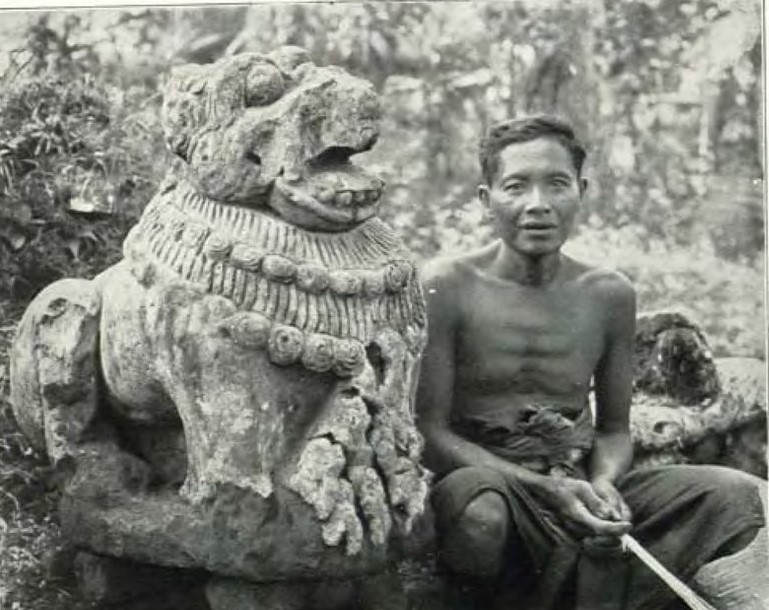
Among the most prominent crafts are painting, stone and wood carving in both traditional and modern styles, puppet making, mat and basket weaving, and gold and silver work. Much of this production today is oriented toward the tourist market. Traditionally individual villages supported specific crafts and art forms. For example Ubud was a village of painters while Mas was a village of carvers.
Traditional Balinese crafts are celebrated for their intricate artistry and deep cultural roots. They are all closely intertwined with Hindu belief and everyday ritual life, from temple decorations and guardian figures to offerings used in household shrines. At the same time, Balinese artisans have embraced modern aesthetics and global tastes, adapting traditional skills to new forms and markets. These crafts are typically learned within families, passed down through generations, and employ a wide range of materials, including wood, stone, bamboo, rattan, and silver, reflecting a balance between spiritual tradition and contemporary demand.
Balinese Jewelry, especially silver and gold work, is famous for its delicacy and precision. Villages such as Celuk are internationally known for metalwork featuring intricate filigree designs and traditional motifs. Painting represents another vital craft, ranging from classical narrative styles associated with Ubud—often depicting mythology, epics, and village life—to contemporary works that reinterpret traditional themes in modern ways. Ceramics and pottery, including hand-painted tiles and decorative household items, further expand the island’s diverse craft traditions.
Balinese jewelry is nearly always constructed by hand and rarely involves traditional casting techniques. Balinese jewellery is very innovative, employing, traditional designs but, more often than not, adapting designs or copying from other jewellery presented by western buyers. Lombok pottery is very fashionable and has an earthy primitive look with subtle colourings. Balinese ceramics show a stronger western influence and are more inclined to use glazing.
Textiles also play a central role in Balinese material culture. Hand-dyed fabrics such as batik and ikat are widely used for sarongs and ceremonial clothing, with patterns and colors carrying symbolic meaning. Weaving traditions extend to everyday objects made from natural materials like rattan, bamboo, and palm leaves, producing bags, baskets, mats, hats, and furniture that combine practicality with refined craftsmanship.
Underlying all of these crafts is a reliance on abundant natural resources and time-honored techniques. Artisans skillfully combine locally sourced materials with natural dyes and inherited methods, while remaining highly adaptable. Traditional motifs are frequently blended with modern designs to create unexpected objects, from surfboards to musical instruments, that appeal to international audiences without losing their Balinese identity.
RELATED ARTICLES:
BALINESE CULTURE AND ARTS factsanddetails.com
BALINESE ARCHITECTURE: TEMPLES, TRADITIONAL BUILDINGS, COSMOLOGY factsanddetails.com
BALINESE MUSIC factsanddetails.com
BALINESE DANCE: HISTORY, TYPES, STORIES. CHARACTERS factsanddetails.com
FAMOUS BALINESE DANCES: LEGONG, BARIS AND MONKEY AND TRANCE DANCES factsanddetails.com
BALINESE THEATER AND SHADOW PUPPETS factsanddetails.com
HISTORY OF BALI: ORIGIN, KINGDOMS, MASS ROYAL SUICIDES factsanddetails.com
BALINESE: LANGUAGE, CUSTOMS, BEHAVIOUR factsanddetails.com
BALINESE SOCIETY: GROUPS, CASTE, THE SUBAK SYSTEM factsanddetails.com
LIFE IN BALI: VILLAGES, FOOD, CLOTHES, WORK, AGRICULTURE factsanddetails.com
BALINESE RELIGION: HINDUISM, SPIRITS, TEMPLE LIFE, PRIESTS factsanddetails.com
Balinese Painting
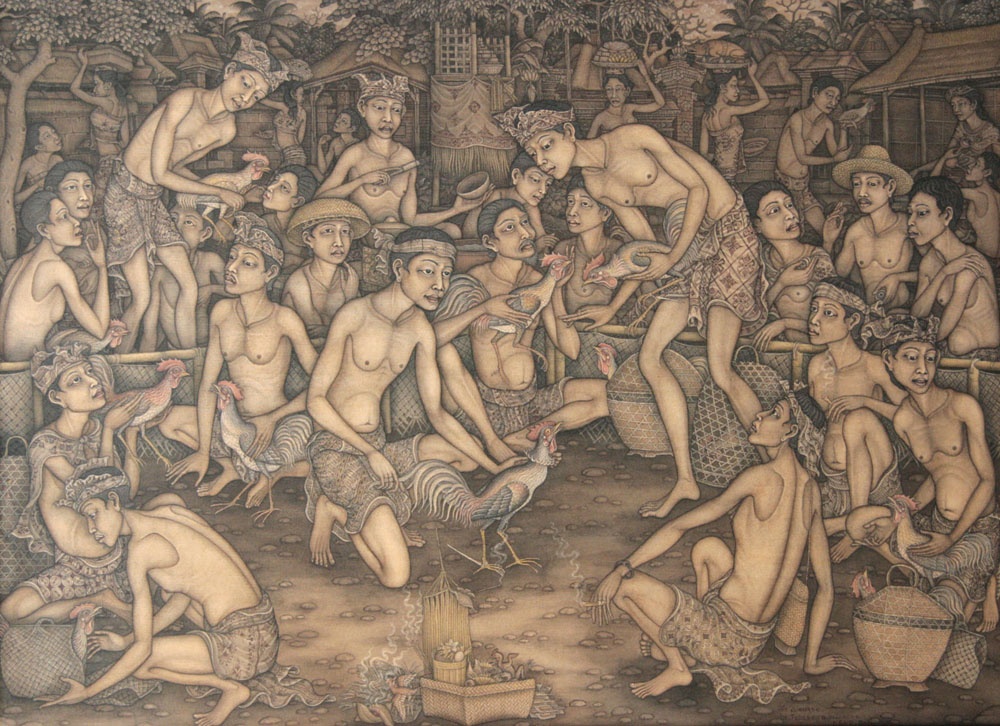
Painting is widespread in Bali as an accompaniment to other art forms. For example, woodcarving, masks and pottery are often painted, as are religious items, such as calendars or religious designs painted. Temple painting and other styles of painting exists on Java, but after the conversion to Islam, Bali became the center for painting in Indonesia. Until the arrival of large numbers of Europeans in the 20th century most Balinese painting were wall paintings or decorative hangings for temples and palaces.
Painting is an example of an art form that has been developed primarily for the tourist industry. Traditionally, the most common style of paintings were scroll paintings and cloth painting used as wall hangings in temples. Most works dealt with Hindu myths and were executed in a flat, two-dimensional style like that found on shadow puppets. But now many painting are landscapes, abstracts or other Western styles. An individual painting on canvas that is an art form in itself is a modern western concept.
Traditional Balinese paintings were narrative scenes that told stories from Hindu literature and mythology. The characters were often depicted in elaborate costumes that made them recognizable for who they were. Demons with fangs and bulging eyes were prominently featured. The traditional wayang narratives were moral tales or told of the exploits of the gods. The whole concept of the art was to tell a story not to be art.
Balinese painting was turned around in the 1930s by western artists such as Walter Spies and Rudolf Bonnet who came to live and work on Bali. They depicted scenes from everyday life rather than religious narratives. Market scenes replaced the cartoon-like narratives of the Hindu epics like Ramayana. Further transformations occurred with the naive “young artist” style that developed in the 1950s. Balinese painting continues to evolve with many noted modern artists producing innovative work.
Virtual Museum of Balinese Painting balipaintings.org
Masks and Mask-Making in Bali
In Balinese culture, masks are not merely objects but living vessels of character and spirit. As scholar and master dancer I Made Bandem explains, a dancer must “marry” the tapel through ritual offerings to achieve unity with it; some dancers even sleep beside their masks to learn their true nature. Hand-carved wooden masks, often created through generations of inherited knowledge, are believed to possess their own spirit. Acclaimed maskmaker and dancer Ida Bagus Anom Suryawan emphasizes that when proper ceremonies are observed and discipline is maintained, the masked dancer may become a medium through which the spirit inhabiting the mask is expressed. For the Balinese, sacred masks are conduits to ancestors and deities, embodying a living connection to niskala, the unseen world, rather than decorative artifacts.
Mask-making in Bali is rooted in deep artistic lineage and personal mastery rather than mass production. What initially seemed likely to be a tourist stop revealed instead a sophisticated craft tradition centered in villages near Ubud, Bali’s long-established cultural heart. There, master carvers work patiently in home studios, producing masks that are not souvenirs but finely balanced works of sculpture, performance tools, and spiritual objects. For many artisans, mask-making is inherited knowledge, passed from father to son across generations, and refined through decades of carving, dancing, and ritual use.
Ida Bagus Anom’s masks are meticulously carved and layered with dozens of coats of paint, repeatedly sanded to achieve depth and luminosity. Crafted from lightweight pule wood so they can be worn comfortably in performance, the masks are finished with details such as horsehair mustaches and mother-of-pearl teeth. Anom is not only a carver but also a dancer, demonstrating how each mask comes alive only when animated through movement, gesture, and sound. The physical act of wearing and dancing a mask is integral to its meaning.
While traditional masks depicting kings, queens, priests, and mythic figures continue to be made for temple rituals and dance troupes, contemporary maskmakers have adapted to changing audiences. Artisans like Anom still produce sacred and classical forms, but they also carve expressive, playful, or psychologically evocative characters intended for collectors. These newer designs, often humorous or fantastical, appeal to international buyers while still reflecting the maker’s technical skill and cultural grounding.
Historically, masks have been among the most powerful ritual objects in Balinese Hindu life. Accounts from the early 20th century describe sacred masks being stored in temple sanctuaries, wrapped and hidden when not in use, and revealed only during ceremonies when dancers enter trance states under priestly supervision. Even today, masks are understood to possess an inherent force, gaining meaning through proper carving, consecration, and use. For collectors, a distinction is often made between masks created solely for display and those that have been “danced” in ritual contexts.
Despite concerns that traditional crafts might fade, mask-making in Bali remains resilient. Demand continues from ritual dance groups as well as from tourists and collectors, and younger generations are still learning the craft. In villages such as Mas, renowned for wood carving, workshops remain active, and master artisans openly share their knowledge. As long as masks are carved, danced, and respected as more than decorative objects, Balinese mask-making continues as a living tradition rather than a relic of the past.
For the complete article from which the material here is derived see “In Bali, Not Just Another Pretty Face” by Bill Brubaker, Washington Post, November 2, 2008 washingtonpost.com and “Bali’s elaborate masks offer a connection to the gods” by Narina Exelby, National Geographic, March 15, 2023 nationalgeographic.com
Balinese Woodcarving
Wood carving is among Bali’s most prominent art forms, encompassing statues of deities, expressive masks such as Barong and Rangda, and increasingly modern furniture and decorative objects. Carvers often work with local woods such as teak and pule, shaping forms that serve both ritual and domestic purposes. Stone carving is equally important, particularly in villages like Batubulan, which is renowned for detailed sculptures of Hindu gods, temple guardians, and Buddha figures that adorn temples and courtyards across the island.
Wordworking is very developed on Bali and Balinese are expert wood carvers. They produce wonderful stylized wooden flowers and plants as well as temple doors, reliefs and statues. Most objects are made for the tourist trade and they include Asmat bis poles ad Kalimantan fertility statues as well as traditional Balinese objects. Some of the Hindu statues are decorated with little skirts made of black-and-white checked material. The symbolize the animist belief in good and evil. The detritus logs and roots commonly found along the river’s edge have a unique artistic potential.
One of Bali’s most famous artists Ida Bagus Tilem produces woodcarvings that sell for thousands of dollars on the international market. His work includes images of Rama and Sita being swallowed up by flames. One critic commented: “His creations are quite exotic to look at, traditional but without academic influence. His works have a frighteningly macabre feel, his animal carvings eerie, his figurative sculptures showing strange and frightening forms, as well as beasts whose features are indistinct”
I Nyoman Tjokot
I Nyoman Tjokot (c. 1886–1971) was a pioneering Balinese woodcarver from Jati village near Ubud and is regarded as one of the great innovators of Balinese art. Entirely self-taught and not born into an artistic family, he carved intuitively, allowing the natural form of each piece of wood to guide spontaneous, expressive creations whose final shapes were often unpredictable even to himself. [Source: Bali Tourism Board]
In the 1930s his work was championed by foreign artists Walter Spies and Rudolf Bonnet, though it remained controversial and commercially marginal at the time. Tjokot lived modestly, served his community as a priest and healer, and worked obsessively, continuing to carve until shortly before his death from tuberculosis at the age of 83.
Tjokot developed a distinctive style—later known as Tjokotism—characterized by coarse, primitive realism and strong personal expression. Influenced initially by the refined Ubud style, temple carvings, and lontar manuscripts, he ultimately forged an unprecedented approach that later enabled his descendants to improve their livelihoods. Although he left little material wealth, his artistic legacy endures in Bali and across Indonesia through both his reputation and the continuation of his style by later generations.
Art of I Nyoman Tjokot
I Nyoman Tjokot’s woodcarvings are known for their “primitive,” non-academic style, marked by macabre, eerie imagery and powerful personal expression. His small-scale sculptures, often made from very dry local woods, depict animals, humans, and mythical beings in distorted, unsettling forms. This distinctive approach became known as Tjokotism. [Source: Bali Tourism Board]
Many of Tjokot’s works are now held in major Balinese collections, especially the Puri Lukisan Museum in Ubud and the Bali Arts Centre in Denpasar. After Indonesian independence in 1949, his once-marginal style gained wide recognition, attracting collectors from Europe and the United States and elevating him to the status of a master sculptor. By the time of his death, so many works had been sold that only a few could be assembled for later exhibitions.
Tjokot’s art received international exposure through exhibitions in Australia, Japan, and the United States, and was widely praised for its magical, archaic expressiveness rooted in ancient Balinese aesthetics. In 1969, after decades of poverty, he was awarded the Wijaya Kusuma Prize, the highest artistic honor in Indonesia at the time, in recognition of his artistic integrity and lasting contribution to Balinese and Indonesian art.
Balinese Textiles
The most popular locally made cloth is endek, a type of ikat with a tie-dyed weft and solid warp. Another precious kind of ikat is geringsing, which has a complicated dyeing process that takes months to complete. Endek is a Balinese method of weaving with dyed threads. “Prada” is the application of gold leaf or gold and silver thread to traditional Balinese clothes. Songket is most commonly found in West Sumatra, but can be seen in parts of Kalimantan and Bali. Ikat sarongs and Batik shirts are also widely available.
Traditional Balinese textiles are renowned worldwide. While admired by many for their beauty and sheer artistry, textiles also play an important part in the daily life and ceremonies of the Balinese. Textiles in Bali don’t just provide clothed, they also indicate the status and well being of the wearer. Women from royal families compete with each other to make the most beautiful creations using the most sumptuous materials. Moreover, man textiles were believed to hold magical powers, which protected the wearer against malevolent influences. They also serve as go-betweens to the supernatural world in religious rituals such as cremations, when hundred of meters of expensive clothe were turned into ashes to accompany the soul of the dead of in its passage to the other world. The guardians of the secret knowledge of textiles and like the ingredients for certain dyes and a rich compendium of sacred motifs – have always been the women of Bali. In fact, one of the most important duties of a mother is to continue the tradition by handing down her knowledge to her daughter. [Source: Bali Tourism Board]
Endek is a tie-dyed woven textile popular with most Balinese. Wooden hand-operated looms are used in the process of the weft-ikat method. This is where sections of the cloth are tied and then wrapped before immersing them into tubs of dye. The basic designs are irregular and soft wavy patterns. Also created are diamond designs and a zigzagging pattern. Endek is a versatile cloth for the Balinese because it can be worn for both daily use and ceremonial purposes.
Decorating with silver or gold thread, Kain Prada is a lustrous fabric woven of cotton or silk. This cloth is usually applied for table cloth or curtain, or traditional banner in a ceremony or a social gathering. Kain Prada has various colors and motifs. One with lotus blossoms and swastikas as border decorations is the most common. Prada cloth is identified by gold design on batik cloth. Originally the cloth was made with gold but now it is painted using imitation gold coloring, usually on polyester, for use in making fans and hotel decorations. Most Balinese dance costumes are also made of prada.
The geringsing is considered sacred throughout Bali and has always been very rare and expensive. Many stories have been told about it – human blood is said to needed in order to acquire its deep rich color. Older items sometimes come up for sale but are inevitably damaged. If you want to buy a geringsing, Tenganan is the worst place to start, as the villagers here would never sell you their sacred cloth. What is available is usually brought from outside to be sold at outrageous prices to unsuspecting tourists. There are a number of places specializing in new ikat cloths. Singaraja is north Bali renowned as home of the best ikat. Gianyar has many ikat factories with hundreds of women still weaving by hand. Sideman, on the way to Besakih Temple, also has a famous factory. If you are looking for a bargain, try Denpasar market.
Another traditional technique now fast-disappearing is pelangi or tie-dye. By trying off sections of cloth to prevent it from coming into contact with the dye, beautiful patterns are created. Silk cloth is usually used.
Balinese Songket and Batik
Songket is a brocaded silk with interweaving patterns of silver and gold thread made using a technique by which gold or silver threads are woven into the cloth or ikat. It usually comes in 2-meter lengths for use as sarongs or long scarves by Balinese women in ceremonies. Antique cloths can also be found, but are rarely in good condition. New songket of various quality are still woven in Klungkung. Quality is, of course, reflected in the price. If the item is cheap, this mean the songket is loosely woven. Remember that the best quality can cost over 3.000.000 Rupiah. [Source: Bali Tourism Board]
Songket is classified as the ceremonial luxurious dress of all Balinese. Often the price of a Songket is over one millions rupiah (US$110). Songket is usually worn in a wedding party. This cloth is tapestry in appearance and has various motifs including wayang Balinese traditional puppet figures, birds, butterflies, flowers and leaves. The process of weaving is done on back-strap looms. Unfortunately, Songket can neither be machine-washed nor detergent added, for its sensitive pattern and color. Therefore, when one wears this cloth he must very careful. Otherwise, one may rent this traditional cloth in some photo studios or beauty salon around Kuta, Nusa Dua, or Ubud, especially for those wishing to at least have a picture in traditional luxurious Balinese dress. Like Endek, Songket is very easy to be found in many traditional markets in Bali.
Batik, the national cloth of Indonesia, has been both an art and craft for centuries, worn for some official events as well as traditional gatherings. There are two methods in producing Batik, Tulis and Cap. Batik Tulis is a traditional method manually done by using melted wax (Balinese malam). The melted wax is painted on a piece of a cotton in several motifs by using traditional canting needle, a wooden handled tool with a metal cup and a tiny spout, out of which the wax seeps. The inventions of the cooper block or cap which is developed in the twentieth century make a big revolution in the batik productions. It became possible to make high quality designs and intricate patterns much faster than one could possibly do by hand painting. This method of using copper block to applied melted wax patterns is called Batik Cap.
Batik has been developed not only as traditional attire but also high quality modern paraphernalia. The main batik manufacturing in Bali is in the District of Gianyar where many factories can be found and visited. You also can find modern batik clothing in many boutiques around Denpasar or Kuta. Many people who come to Bali ask for “Balinese batik”. But in fact batik was never really made in Bali until recently, and even today most batik come from Java. Balinese batik is usually found on colorful bedspreads and sarongs with designs of anything from Bart Simpson to the Sun and Moon. If you are looking for traditional batik sarongs you should got to the market in Denpasar. You will need to check them carefully as there are many cheap print imitations.
Balinese Ikat and Gringsing
The first kind is “warp ikat”, usually woven in silk. Found in many parts of Bali, it is usually used to make saput, outer sarongs, or the scarves worn on ceremonial occasions. The Indian patola textiles have influenced the design and motifs, which the Balinese have redesigned with more abstract patterns, creating new variations. Certainly the most famous ikat in Bali is the geringsing, only woven in a tiny village of Bali Aga called Tenganan. Here the ikat pattern is created in both the warp and welt threads. This process, known as “double ikat”, is difficult, requiring both expertise and patience to align the two patterns. [Source: Bali Tourism Board]
Gringsing is one of the rarest weaving techniques practiced, and you particularly will only find this textile in the traditional village of Tenganan, East Bali. Gringsing is also known as the ‘flame cloth’ and in this elaborate dyeing process both the warp and weft threads are carefully bound before dyeing. This creates numerous patterns that once finished they seemingly fit together perfectly and harmoniously.
Tenganan is the only place in Bali where the double-ikat process is practiced. There are only a handful of women left in Tenganan who know this practice of weaving, a threat to the next generation. A piece of Gringsing takes up to three days to weave but the finished product is superb. When you visit the village you are welcome to have a look at this weaving process or buy this traditional cloth in a fair price. Like a songket, this cloth is very sensitive to detergent or washing machine so one must hand-wash it very carefully.
Keeping Balinese Art Alive
Writing in the Jakarta Post, Trisha Sertori quotes Pak Moening, who has served as curator of Ubud’s Puri Lukisan Museum for more than 60 years, reflecting on the growing threat to traditional Balinese art when it is driven by commercial demand rather than devotional purpose. Now in his seventies, Moening has watched many talented artists abandon the discipline and integrity of fine art to become, in his words, “factories” producing handicrafts. Yet he also sees renewed hope in initiatives such as Sarasvati Art Management, which actively promotes Bali’s most gifted emerging artists while educating the public about what constitutes fine art within traditional Balinese painting traditions. [Source: Trisha Sertori, Jakarta Post, December 22, 2011 ]
Sarasvati highlights refined styles such as the extraordinarily intricate paintings of Keliki artists, whose line work is executed with brushes “as fine as two human hairs,” according to Sarasvati head Syenny Setiawan. Founded in 2010 by her husband, prominent collector Lin Che Wei, the organization aims to protect and sustain traditional Balinese art and the artists behind it. Che Wei applies a pragmatic, financially informed approach to promotion and education, deliberately placing what he calls “hidden jewels” into exhibitions—exceptional works priced modestly so viewers learn to recognize quality based on artistic merit rather than price. Some collectors overlook these works, while others with trained eyes immediately recognize their value, reinforcing Sarasvati’s emphasis on education.
Che Wei explains that Sarasvati carefully distinguishes between decorative production and collectible fine art, focusing on artists with long-term artistic and investment potential. The organization encourages these artists to value their own work and provides guidance to help them become “investable,” while acknowledging the financial pressures that often push artists toward faster, more commercial production. To counter this temptation, Sarasvati adopts artworks and supports artists directly, addressing their economic realities so they can continue creating serious work. The long-term aim is to elevate them into the ranks of respected, bankable artists such as Affandi, whose works consistently attract collectors.
For many of Bali’s so-called young artists—many now in their forties—Sarasvati’s support is invaluable both financially and symbolically. Painter I Nyoman Sana of Tegalalang, who has painted since childhood, stresses the importance of promoting non-commercial, authentic art. Group exhibitions organized by Sarasvati are especially significant, he notes, because traditional paintings often take months or years to complete, making solo exhibitions difficult. Such support allows artists to focus fully on their practice, creating expressive and distinctive works rather than chasing immediate income.
Artist I Wayan Warta Yasa adds that the challenge facing Balinese art extends beyond commercialism to the risk that fewer people will choose to become artists at all, as many turn instead to jobs in tourism. Organizations like Sarasvati, he argues, are crucial in sustaining painting as a viable and meaningful path. For him, art brings happiness, purpose, and cultural continuity, and success in Bali’s traditional arts can elevate artists to national recognition. Even if the paintings themselves are not widely known, he hopes the artists will be remembered, ensuring that Bali’s artistic legacy endures.
Image Sources: Wikimedia Commons, Indonesia Tourism website
Text Sources: “Encyclopedia of World Cultures Volume 5: East/Southeast Asia:” edited by Paul Hockings, 1993; Wikipedia; National Geographic, Live Science, Metropolitan Museum of Art, Natural History magazine, New York Times, Washington Post, Los Angeles Times, Smithsonian magazine, Encyclopedia.com, Library of Congress, The Conversation, The New Yorker, Time, BBC, CNN, Reuters, Associated Press, AFP, Lonely Planet Guides, Google AI, The Guardian and various websites, books and other publications.
Last updated January 2026