
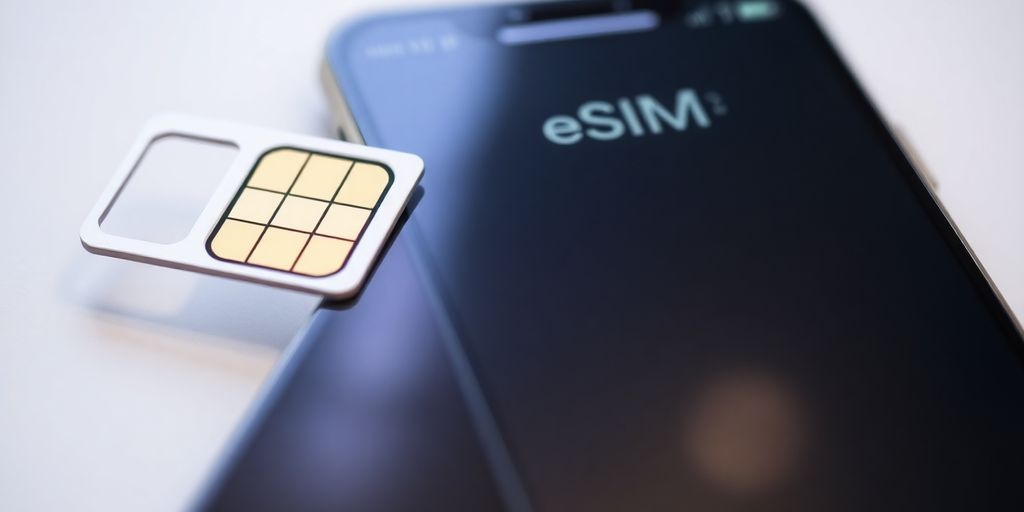
For decades, mobile communication depended on two physical things: a plastic SIM card and a phone number issued by a local carrier. If you wanted to change your network, get a new number, or use your phone abroad, you had to physically replace the SIM card. This system worked, but it was rigid and often inconvenient, especially for people who traveled frequently or needed more than one number. Today, mobile technology is moving toward digital solutions that remove many of these limits, and two of the most important are eSIMs and virtual phone numbers.
Both eSIMs and virtual numbers represent a shift away from hardware-based communication toward software-based systems. Instead of relying on a small card that can be lost or damaged, users can manage their connectivity and communication profiles digitally. This reflects a wider trend in technology, where identity, access, and services are increasingly handled online rather than through physical objects.
Many people first learn about these technologies when traveling, and services such as eSIM Plus have helped make digital SIM cards easier to understand and use. At the same time, virtual phone numbers are becoming common for business, online registration, and privacy protection. Together, these tools are changing how people think about mobile identity and connectivity.
What Is an eSIM?
An eSIM, or embedded SIM, is a digital version of the traditional SIM card. Instead of being a removable piece of plastic, it is built directly into the device. Its function is the same as a physical SIM: it stores the information that identifies a user to a mobile network and allows the device to connect for calls, messages, and mobile data.
The difference is in how it is activated and managed. With a physical SIM card, users must insert the card into the phone. With an eSIM, the process is entirely digital. A provider supplies a QR code or activation code, and when this is scanned, the phone downloads a digital profile. In most cases, activation takes only a few minutes.
Most modern smartphones, many tablets, and even some laptops and smartwatches support eSIM technology. Some devices rely only on eSIMs and no longer include a SIM slot. Others allow both eSIMs and physical SIMs, which makes it possible to use multiple lines on the same device.
How to Get and Use an eSIM
To use an eSIM, a user first chooses a provider and a plan. This can be a traditional mobile carrier or a company that specializes in digital SIM services, especially for travel. After purchasing a plan, the user receives a QR code or activation details. In the phone’s settings, there is an option to add a mobile plan. Scanning the code installs the profile and connects the device to the network.
Once installed, the eSIM can be managed like a regular SIM. Users can decide which line is used for data, calls, or messages. Many phones allow several eSIM profiles to be stored at once, making it easy to switch between plans without changing hardware. This is especially useful for people who move between countries or who want to keep personal and work connections separate.
What Is a Virtual Phone Number?
A virtual phone number is a phone number that is not tied to a physical SIM card or even to a specific phone. It exists in the cloud and works through the internet. Calls and messages sent to a virtual number are routed through software and delivered to an app, a web interface, or forwarded to another phone number.
Virtual numbers are widely used in business, customer service, and online platforms. Companies use them to create professional contact points that work across different regions. Individuals use them to protect their personal numbers when signing up for websites or communicating online.
Unlike traditional phone numbers, virtual numbers can be activated quickly without any physical infrastructure. A user selects a provider, chooses a country or area code, and completes a registration process. The number becomes active within minutes.
How Virtual Phone Numbers Are Used
Most virtual numbers operate through an application or online dashboard. Users can read messages, answer calls, manage voicemail, and set forwarding rules. Some services allow calls to be forwarded to a regular phone number, making the experience similar to using a standard mobile phone.
Virtual numbers are useful for separating different types of communication. A person can have one number for personal contacts, one for work, and another for online registrations. This separation helps reduce spam and makes it easier to control who can reach you.
They are also helpful for international communication. A business can have local numbers in several countries without having offices there. Individuals can keep a number from their home country even after moving abroad.
The Difference Between eSIM and Virtual Phone Numbers
Although both are digital technologies, eSIMs and virtual phone numbers serve different purposes. An eSIM provides network connectivity. It connects a device to a mobile carrier and enables cellular data, voice calls, and SMS. A virtual phone number provides a communication identity. It defines how people can contact you and works over any internet connection.
In simple terms, an eSIM connects your phone to the network, while a virtual number defines your phone number. One is about access, the other is about identity. They can work independently, but they are often used together. For example, a traveler may use an eSIM for mobile data in a foreign country and a virtual number for calls and messages.
Advantages Over Traditional SIM Cards and Numbers
One of the biggest advantages of eSIMs is convenience. There is no need to visit a shop, wait for delivery, or handle small plastic cards. Plans can be bought and activated online. This is particularly helpful for travelers and people who change locations often.
eSIMs also provide flexibility. Multiple profiles can be stored on one device, making it easy to switch between carriers or regions. Users can compare prices and avoid long contracts.
Virtual phone numbers offer similar advantages. They allow people to have multiple numbers without carrying multiple phones or SIM cards. They also improve privacy by allowing users to avoid sharing their main number online.
Both technologies reduce dependence on local telecom infrastructure and make mobile communication more global and adaptable.
Why Travelers and Remote Workers Use eSIMs and Virtual Numbers
For travelers, roaming charges and SIM swapping have always been inconvenient. eSIMs allow users to activate a local data plan quickly, often before arriving in a country. Virtual numbers allow travelers to remain reachable on a stable number even while changing networks.
Remote workers and digital nomads often rely on both technologies. The eSIM provides data connectivity in different regions, while the virtual number acts as a consistent contact point for clients and colleagues. This combination makes communication simpler and more predictable.
Students and expatriates also benefit. They can keep a number from their home country while using local data through an eSIM, maintaining continuity in communication.
Providers in the eSIM and Virtual Number Space
There are many providers offering services in this area.
eSIM Plus
eSIM Plus provides digital SIM profiles that allow users to activate mobile data plans without physical SIM cards. It is designed for people who want quick, digital access to mobile networks, especially while traveling.
Airalo
Airalo offers country-specific and regional eSIM data plans. It is widely used by travelers who want fast and simple mobile data in new destinations.
Google Fi
Google Fi supports eSIM technology and provides automatic network switching in some regions. It is designed for users who want one account for both domestic and international connectivity.
Twilio
Twilio provides virtual phone numbers mainly for businesses and developers. It allows companies to build custom communication systems for calls and messaging.
TextNow
TextNow offers virtual numbers for personal use. It is commonly used as a secondary number for everyday communication.
Grasshopper
Grasshopper focuses on business communication and provides virtual numbers with features such as voicemail, call routing, and extensions.
Limitations and Things to Consider
Not all devices support eSIMs, especially older phones. Some countries restrict digital SIMs or internet-based calling services. In addition, some banks and financial platforms do not accept virtual phone numbers for account verification.
Virtual numbers also depend on internet connectivity. Without a stable data connection, they cannot function properly.
The Future of Mobile Communication
eSIMs and virtual phone numbers show how mobile communication is becoming more flexible and software-driven. The traditional link between a phone, a SIM card, and a number is weakening. Instead, identity and connectivity are becoming separate services that can be managed digitally.
As global mobility increases and devices continue to evolve, these technologies are likely to become standard. They represent a future in which communication is no longer limited by physical hardware, but shaped by digital freedom and adaptability.