
ATLAS MOTH, THE WORLD’S BIGGEST MOTH

Atlas moths (Attacus atlas) are large saturniid moths found in the tropical and subtropical forests of Southeast Asia, and common across the Malay archipelago. They are considered the largest moths in the world in terms of total wing surface area — up to 400 square centimeters (62 square inches). Their wingspans are also amongst the largest, reaching over 25 centimeters (10 inches). Females are much larger and heavier. [Source: Wikipedia]
Atlas moths are said to be named after either the Titan of Greek mythology, or their map-like wing patterns. In Hong Kong the Cantonese name translates as "snake's head moth", referring to apical extension of the forewing, which bears a passing resemblance to a snake's head. The largest lepidopteran in terms of wingspan is thought to be the White Witch from Latin America. A record specimen of Atlas moth from Java measured 26.2 centimeters while Thysania are claimed to be about 27 to 28 centimeters (11 inches). Based on some spread specimens and angle of wing, actual measurements of around 28.9 centimeters have been estimated.
In India, Atlas moths are cultivated for their silk in a non-commercial capacity; unlike that produced by the related Silkworm moth (Bombyx mori), Atlas moth silk is secreted as broken strands. This brown, wool-like silk is thought to have greater durability and is known as fagar. Atlas moths moth cocoons have been employed as purses in Taiwan.
Atlas moths have also been called "empire silkworms" because of the their large size or the "fagara silkmoth" after the fagara silk that is obtained from its cocoons. "Atlas moth" is used by some for any moth in the genus Attacus. The scientific name Attacus atlas was was given to the species by Carlus Linneaus, the father of taxonomy, and has remained an accurate classification despite the repeated reclassifications of other species in the genus. [Source: Peyton Tajchman, Animal Diversity Web (ADW) /=]
Atlas moths are not endangered. On the International Union for Conservation of Nature (IUCN) Red List they are listed as No special status. In CITES (Convention on International Trade in Endangered Species of Wild) they have no special status. Their main threats are deforestation and loss of habitat. They are common in the pet trade and featured at many zoos. They are voracious eaters and can damage crops.
Habitat, Home and Lifespan of Atlas Moths
Atlas moths are widely distributed in Southeast Asia, ranging from about 79°E to 121°E in longitude and about 35°N to about 5°S in latitude. They are widely distributed in Indonesia and found in Nepal, northeastern India, Bangladesh, Bhutan, southeastern China, Laos, Cambodia, Vietnam, Brunei and Taiwan. Localized populations have been reported in the Philippines, Papua New Guinea, and northern India. [Source: Peyton Tajchman, Animal Diversity Web (ADW) /=]
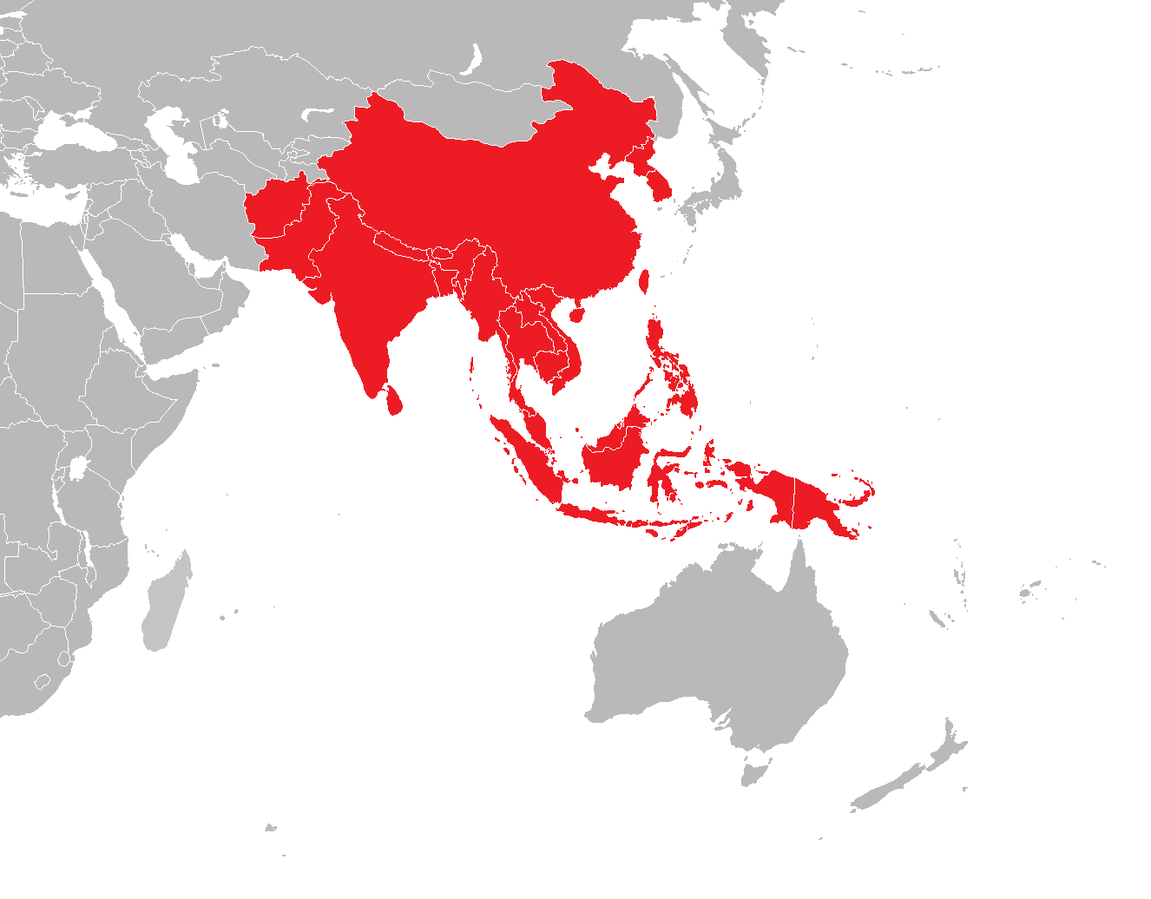
Atlas moths are primarily found in tropical and subtropical rainforests and at elevations from sea level to 2000 meters (6562 feet). These forests where they live generally do not have four seasons, but rather a dry and a wet season. The forest themselves are characterized by closed canopies, broad-leafed evergreen trees, and temperatures approaching but not exceeding 25°C. The moths spend the majority of their lives on a single tree: laid on the leaves as eggs, eating the leaves as larvae, pupating off the branches, and resting in wait for a male mate as an adult female. /=\
The lifespan of Atlas moths varies slightly, depending on the host plant the larvae are reared on. Those raised under lab conditions, lived between 78 and 100 days, with a mean lifespan being 96 and 99.8 days for males and females, respectively. The longevity of adults varies depending on their activity levels since adults do not feed, instead they live off stored fat from the larval stage. Females typically live longer than males. The longest life stages are the larval and pupal stages. The 1st larval instar is the shortest and the 5th larval instar is the longest (lasting 2.8 and 15.6 days respectively),
Atlas Moth Development
Atlas moths undergo the four main life stages typical of Lepidoptera (butterflies and moths) for complete metamorphosis: egg, larvae, pupa and adult. The fertilized eggs are laid on a host plant by the female moth where they emerge a week or two later as first instar caterpillars. Instars are the distinct larval periods of growth that are separated by ecdysis (the shedding of the exoskeleton). Atlas moths have five larval instars, though a 6th has recently been recorded in rearing Atlas moths on Citrus lemon. Following the final larval instar, the caterpillar spins silk around itself to form the cocoon where it pupates for about one to one and a half months . The pupa may go through diapause in the winter. [Source: Peyton Tajchman, Animal Diversity Web (ADW) /=]
The eggs of Atlas moths are yellowish white to pale yellow and are oval and flattened consistent with all moths in the family Saturniidae. According to Animal Diversity Web: They are covered in a gummy substance used for attachment to each other and the leaves The size ranges from 2.7 to three millimeters in length and 2.1 to 2.7 millimeters in width. /=\

The larvae are pale green with orange or brownish speckles and a bright orange ring on the anal somite. There is a white waxy substance on the dorsal side of the larval body which begins developing in the 2nd instar. The first two instars have darker heads and body coloration between the scoli. The body length varies from 0.8 to 1 centimeters in the first instar to 8.8 to 9.2 centimeters of the fifth and sixth instars. The 1st, 2nd and 3rd somites have dorsal protrusions . The 4th through 11th somites have dorsal and subdorsal blueish green scoli (branched, thickened spines protruding from the body) and black lateral scoli below the spiracles. /=\
There are a few key differences in the larvae of Atlas moths and the related species Attacus lorquinii and Attacus caesar. The dorsal, subdorsal, meso- and metathoracic scoli of Atlas moths are flattened and greenish while that of A. lorquinii are rounded yellow knobs about 2 millimeters long and that of A. caesar are flattened and yellowish. The patch on the anal prolegs of mature Atlas moths larvae is a light greenish blue surrounded by a bright orange ring. In A. lorquinii the patch is solid brownish orange and in A. caesar it is solid brownish orange with a bright yellow edge. /=\
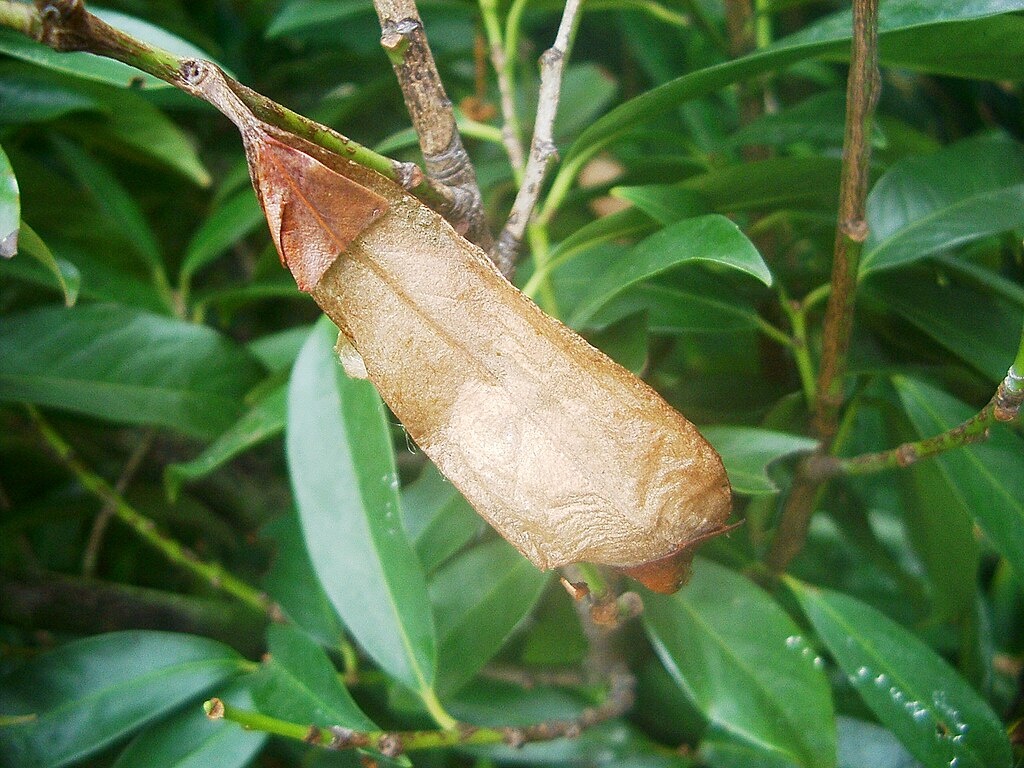
In the pupal stage, the pupa, comparable to the chrysalis of a butterfly, is surrounded by a cocoon, a papery outer covering of the pupa. It serves as camouflage as Atlas moths pupates in the trees. The cocoon coloring of Atlas moths varies depending on the host plant from a blackish brown to a brownish yellow to whitish, though most commonly cocoons are light brown. The cocoons may be spun with highly variable size shape, color and texture. The pupa itself is dark brownish orange, smooth and shiny and is 3.5 to 5.5 centimeters long. The adult moths emerge from the cocoon during the morning and remain there for eight to 10 hours while their wings expand and harden. /=\
Atlas Moth Characteristics
Atlas moths have a head and body length that ranges from three to four centimeters (1.18 to 1.57 inches). Their wingspan ranges from 21 to 25 centimeters (8.27 to 9.84 inches). They are cold blooded (ectothermic, use heat from the environment and adapt their behavior to regulate body temperature). Sexual Dimorphism (differences between males and females) is present: Females are larger than males. Female Atlas moths reared in lab conditions were 3.9 to 4 centimeters in length while males were 3 to 3.6 centimeters. Wingspan ranged from 24 to 25 centimeters in females and from 21 to 23 centimeters in males. The forewing in males is 7.3 to 12.5 centimeters long with a mean of 10.2 centimeters. and the hindwing is about 4.8 to 7.2 centimeters long with a mean of 6.9 centimeters (Peigler 1983). In females the forewing is 9.3 to 13.1 centimeters long (mean of 11.9 millimeters) and the hindwing is 7.6 to 10.1 centimeters long (Peigler 1983).[Source: Peyton Tajchman, Animal Diversity Web (ADW) /=]
Atlas moths are predominantly tawny to maroon in colour with roughly triangular, diaphanous "eyes" on both forewing and hindwing, bordered in black. The purpose of these dramatic, gossamer portals is not clear, but they are thought to play a role in predator avoidance. The shape of the wings is rounded, with the forewing having a protrusion from the anterior distal edge. The base of the wing is colored deep orange, soft brown, or deep reddish brown and is patterned with white, black, brown, and pink coloration.The protrusions and edges of the wings resemble the head and body of a snake. The undersides of the wings are pattered the same as dorsal sides but may be paler in color. Patterns and colouration vary among the many described subspecies. Male Atlas moths are distinguished from females by their smaller size, more tapered wings, and larger, bushier antennae. [Source: Wikipedia]
Atlas moth bodies are hairy, reddish to orangish brown and can vary in shade and are disproportionately small compared to their wings. The mouthparts of adults are non-functioning, with some parts disfigured or completely absent. They have two large compound eyes and two yellowish brown bipectinate antennae, meaning the antennae are comb-like on both sides. The antennae measure 2.3 to 3.9 centimeters in length and 1.0 to 1.3 centimeters wide in males and 1.7 to 2.1 centimeters long and three millimeters wide in females.
Atlas moths are distinguishable from other similar moth species in the genus Attacus by the presence of a patch of yellow or orange above and below the red dash in conjunction with a prominent white component of the postmedian and antemedian lines. The red dash is longer and thicker in Atlas moths than in Attacus mcmulleni, which bear similar resemblance . /=\
Atlas Moth Behavior and Protection from Predators
Atlas moths are arboreal (live mainly in trees), crepuscular (active at dawn and dusk), motile (move around as opposed to being stationary) and solitary. If the food supply is sufficient, an atlas moth can spend the entirety of its life cycle on a single tree or else move to neighboring trees if the tree it is on has been defoliated or if a nearby mate must be located. [Source: Peyton Tajchman, Animal Diversity Web (ADW) /=]
Atlas moths are sessile (fixed in one place and immobile) in the egg and pupal stages but can freely move as caterpillars (larvae) and adults. Caterpillars have three pairs of true legs on the thorax and four pairs of prolegs on the abdomen that help the insect move in slinking, worm-like way and aid it in grasping onto plant material. The large wings on adults allow them to fly and find mates and escape predators. While more than one moth may live in the same tree, these animals are solitary. /=\

Larvae spend the majority of their time eating leaves in trees and only don’t stop until they are fully grown and ready to pupate. As adults moths emerge from their cocoons in the morning and remain there a few hours until their wings have expanded and dried. Adults are most active at dusk and dawn, with the males flying around in search of a mate in the evenings. /=\
Peyton Tajchman wrote in Animal Diversity Web: As larvae, the green coloration of Atlas moths offers camouflage against the green host leaves. The wax secreted by the caterpillars may also discourage predation by mimicking bird droppings or a dead larva infected with a white fungus, though this has not been tested. Caterpillars also spray irritating compounds, including vertebrate neurotransmitters, from small holes in their abdominal scoli when vigorously touched, likely as a defense against birds. [Source: Peyton Tajchman, Animal Diversity Web (ADW) /=]
The hanging cocoons are hidden among the leaves of host plants and hang so that if pecked they swing back and forth and thus are more difficult for birds to pierce. The large size of Atlas moths in its adult stage aids in defense against vertebrate predators, especially mammals and birds, by discouraging attack and perhaps frightening them. The wings of moths in the genus G. Attacus resemble snakes and if threatened may drop to the ground and thrash around like a snake uncoiling, or else feign death and attempt to blend in with the ground. Furthermore, since predators, especially birds, tend to attack the circular spots and the elongated sections of the wings, the moth can escape from an attack with its body intact and retain the ability to fly even with large amounts of wing damage. Because Atlas moths occupies a large number of host plants, parasites and predators are less likely to learn to target only a few plants in search of hosts and prey./=\
Atlas Moth Senses, Communication and Diet
Atlas moths sense using touch and chemicals usually detected with smell and communicate with vision and chemicals usually detected by smelling, mimicry and pheromones (chemicals released into air or water that are detected by and responded to by other animals of the same species). [Source: Peyton Tajchman, Animal Diversity Web (ADW) /=]
Insects have large numbers of chemoreceptors on their antennae and legs for the detection of air-borne molecules that the help them find food and, in the case of adult male moths, detect the pheromones of females. Also located in the antennae are thermoreceptors and mechanoreceptors, as well as a specialized organ, called the Johnston's organ, for detecting windspeed and direction when flying. /=\
Atlas moths primarily communicate through chemical cues, such as with the pheromones and their visual appearance. Waxy larvae may resemble bird droppings or decaying caterpillars, thus discouraging predation. Similarly, adult moths are patterned to resemble snakes, perhaps warding off predators, especially birds. Interestingly, female atlas moths do not respond to the mating pheromones they or other female Atlas moths produce. /=\
Atlas moths are classified as herbivores (eat plants or plants parts) and folivores (eat leaves). Adults do not have complete mouthparts and do not eat. All feeding is done when they are larvae (caterpillars) and then they pretty much do nothing but eat. Larvae consume only the leaves of the trees they are on and ignore flowers, roots, buds, woody stems, and any other plant parts. They prefer the mature leaves of small trees two to five meters in height and tend not consume developing leaves. Because they do not consume food in their other life stages (egg, pupa, adult), large, fast-growing larvae must consume large amounts of leaves to store enough energy to supply all future life processes, including the egg and pupa stages of the next generation.
Peigler (1983) identified over 80 species in over 40 genera of plants that are host plants of species in the genus Attacus. Those identified as the main hosts of Atlas moths were Averrhoa carambola (carambola), Cinchona officinalis (Cinchona tree), Elettaria cardamomum (cardamom), Litchi chinensis (lichi), Mangifera indica (mango), Persea americana (avocado), Psidium guajava (guava), Swietenia macrophylla (big leaved mahogany), Syzygium samarangense (water apple). An additional 21 hosts have been identified, including tea, cocoa, and pepper plants.
Atlas Moth Mating, Reproduction and Offspring
Atlas moths are monogamous (have one mate at a time) and polygynous (males have more than one female as a mate at one time). They are semelparous. This means that offspring are all produced in a single group (litter, clutch, etc.), after which the parent usually dies. Semelparous organisms often only live through a single season/year (or other periodic change in conditions) but may live for many seasons. In both cases reproduction occurs as a single investment of energy in offspring, with no future chance for investment in reproduction. [Source: Wikipedia, Peyton Tajchman, Animal Diversity Web (ADW) /=]
Atlas moths employ sexual fertilization in which sperm from the male parent fertilizes an egg from the female parent and engage in internal reproduction in which sperm from the male parent fertilizes an egg from the female parent. They are oviparous, meaning that young are hatched from eggs. Atlas moths only breed during the one week they live as adults. Females breed only once in their lifetimes. The number of eggs laid each season ranges from 134 to 160. The spherical eggs weigh 0.012 grams and are 2.5 millimeters in diameter. The average gestation period is 10 days. After they emerge from their cocoons, Atlas moths are adults. Females and males reach sexual or reproductive maturity at 64 to 90 minutes. Pre-birth provisioning is done by females. Soon after mating for males and egg laying for females parent atlas moths die when their food stores are used up and thus are are not involved in rearing their offspring. /=\
Adult Atlas moths are sexually mature after the emerge from their cocoons and almost immediately seek mates to reproduce with. Females are sexually passive. They release powerful pheromones which which males detect using chemoreceptors on their large feathery antennae. Males follow the pheromones to locate females which males can pick up from several kilometers downwind. Atlas moths are unsteady fliers, and the female does not stray far from the location of her discarded chrysalis: she seeks a perch where the air currents will best carry her pheromones.
Adult Atlas moths are active at dusk and couple for up to 24 hours during which time the male deposits sperm into the female to fertilize her eggs. Neither sex possess fully formed mouthparts and therefore do not feed; throughout their one to two week adult life they survive entirely on larval fat reserves that they build up while they are caterpillars. Males may be able to mate multiple times depending on how long it takes to find a mate and couple with her, but females are monandrous (only mate with one male). /=\
Once mated, the female lays a number undersides of leaves host plants such as cardamom, mango and tea. Dusty-green caterpillars hatch after about two weeks and feed voraciously on the foliage of certain citrus and other evergreen trees. The caterpillars are adorned with fleshy spines along their backs which are covered in a waxy white substance. After reaching a length of about 11.5 centimeters (4.5 inches), the caterpillars pupate within papery cocoon interwoven into desiccated leaves. The adult moths emerge after about four weeks.
Image Sources: Wikimedia Commons
Text Sources: Animal Diversity Web animaldiversity.org ; National Geographic, Live Science, Natural History magazine, David Attenborough books, New York Times, Washington Post, Los Angeles Times, Smithsonian magazine, Discover magazine, The New Yorker, Time, Reuters, Associated Press, AFP, Lonely Planet Guides, Wikipedia, The Guardian, Top Secret Animal Attack Files website and various books and other publications.
Last updated February 2025