
JUNGLE CATS
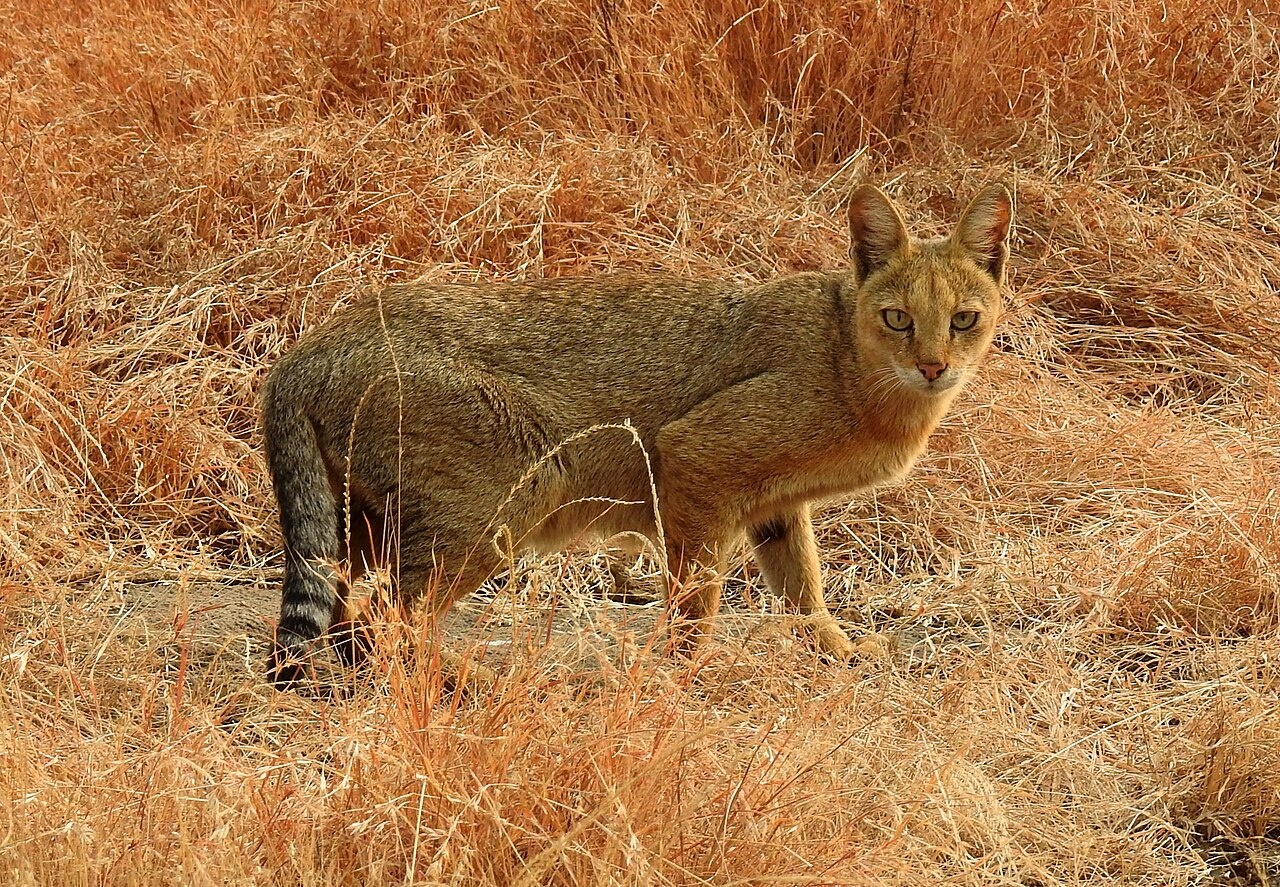
Jungle cats (Felis chaus) are found in three continents: Africa, Europe and Asia. Defying their name, they thrives in a number of habitats, including semi-deserts, tall grass, thick bush, deciduous forest, agricultural land; are often seen looking for food along the banks of canals and streams; and seem comfortable living in close proximity to people.
Jungle cats are very quick and good jumpers. They feed on rodents, frogs, lizards, fish, insects, chickens and small deer. They have been observed leaping into the air to catch birds and eating carrion and the remains of a kill left behind by a tiger. Jungle cats vary in size from four to 12 kilograms (10 to 30 pounds), with bigger cats found in the northern extremes of their range and the biggest of all in Central Asia. They have a plain unspotted coat that varies in color from reddish to gray ro brown. Black ones have been seen in Pakistan and India.
Jungle cats may be the source of domesticated cats. They are fairly common in the Middle East and were mummified and depicted in tomb paintings by the ancient Egyptians. Today they breed easily with house cats and produce hybrids. They are regarded as pest and killed by poultry farmers and hunters who blame them for killing chickens and game animals. In captivity, jungle cats live an average of 15 years, but have been known to live up to 20 years. Lifespan in the wild ranges from 12 to 14 years.
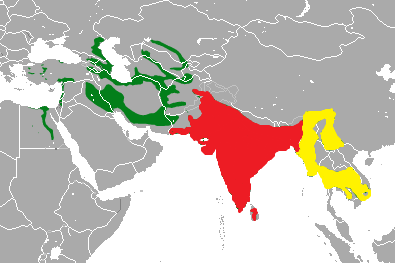
Based largely on external morphological differences, jungle cats have been separated into 10 subspecies: Felis chaus nilotica (Egypt), Felis chaus chaus (Caucasus), Felis chaus furax (Isreal and Iraq), Felis chaus oxiana (Syr Darya and Amu Darya), Felis chaus prateri (Thar desert in the Indo-Pak region), Felis chaus affinis (Himalayan region), Felis chaus kutas (Northern India), Felis chaus valballala (Southern India), Felis chaus kelaarti (Sri Lanka), and Felis chaus fulvidina (Southeast Asia).
Jungle Cat Habitat and Where They Are Found
Jungle cats are native to Asia and they pretty much occupy the entire continent as well as Egypt, the Caucasus and southern Russia. Their wide ranging distribution extends from Jordan, northern Saudi Arabia, Syria, Iraq, Iran, to the shores of the Caspian Sea and the Volga River delta, east through Turkmenistan, Uzbekistan, Tadzhikistan, Kazakhstan and to western Xingjian, Afghanistan, Pakistan, Nepal, India, Sri Lanka, Myanmar, Laos, Thailand, Cambodia, Vietnam, and southwestern China. [Source: Amber Fitzgerald, Animal Diversity Web (ADW) /=]
Jungle cats live in temperate and tropical land environments in deserts (where they are found near oases or along riverbeds), savannas, grasslands, shrubby woodlands, dry deciduous forests, cleared areas in moist forests, rainforests, marshes and other wetlands, agricultural area and mountains at elevations up to 2500 meters (8202 feet). /=\
Jungle cats prefer habitats near water with dense vegetative cover but can be found in a variety of habitats. They are commonly found in tall grass, thick brush, riverside swamps, and reed beds. They also adapt well to cultivated land and can be found in many different types of agriculture and forest plantations.
Jungle Cat Characteristics
Jungle cats range in weight from four to 16 kilograms (8.8 to 35.2 pounds) and range in length from 70 to 120 centimeters (27.5 to 47.2 inches). They stand 35 to 38 centimeters tall. Throughout their range, there are significant variations in weight. Those in west Israel, for example, weigh 43 percent more than those in east India, a differece likely due to increased competition with different cat species in the east. Sexual Dimorphism (differences between males and females) is present: Males are larger than females. [Source:Amber Fitzgerald, Animal Diversity Web (ADW) /=]
Amber Fitzgerald wrote in Animal Diversity Web: Jungle cats have long, slim faces with white lines above and below their bright yellow eyes with a dark spot just below each eye near the nose. They have long rounded ears, with a distinctive tuft of hair at the tips. Jungle cats have relatively short tails, about 1/3 of their total body length, which have several dark rings along its length and a black tip.
Their coat color varies from a reddish or sandy brown to tawny grey. Black jungle cats are regularly seen in southeastern Pakistan and India. Kittens may be striped and spotted, however, these markings typically fade with age and are only retained on the fore and hindlimbs. The muzzle, throat, and belly of the jungle cat are a pale cream color, and their winter coat is darker and denser than their summer coat. /=\
Jungle cats are primarily carnivores (mainly eat meat or animal parts) but do eat non-animal food. They mainly eat terrestrial vertebrates such as birds, mammals, amphibians, reptiles, fish insects. Among the plant foods they eat are fruit. [Source: Amber Fitzgerald, Animal Diversity Web (ADW) /=]
Jungle cats primarily prey on animals that weigh less than one kilogram such as rodents, lizards, snakes, frogs, birds, hare, fish, insects and fowl. Rodents are their primary food source, providing up to 70 percent of their daily calories. Although they mainly hunt small prey, jungle cats have been known to kill larger animals such as wild pigs and chital deer fawns.
Jungle Cat Behavior and Communication
Jungle cats are terricolous (live on the ground), nocturnal (active at night), diurnal (active during the daytime), motile (move around as opposed to being stationary), sedentary (remain in the same area) and solitary. The size of their range territory is 45 to 180 square kilometers, which they likely maintain via indirect means such as scent marking. [Source: Amber Fitzgerald, Animal Diversity Web (ADW) /=]
Jungle cats are generally solitary animals outside of breeding season, but on occasion family groups (male, female, and cubs) are seen. They are most active at night, but are not strictly nocturnal. They are most often seen at dusk and travel approximately five to six kilometers per night. They typically rest in dense cover during the day but often sunbathe on cold winter days. Unlike many cat species, jungle cats like the water and are good swimmers that can dive into water to catch fish with their mouths.
Jungle cats sense using touch and chemicals usually detected with smell and communicate with vision, sound and chemicals usually detected by smelling. They also leave scent marks produced by special glands and placed so others can smell and taste them. According to Animal Diversity Web: Vocal communication consists of meowing, chirping, purring, gurgling, growling, hissing, and barking. These noises have not been significantly studied, therefore, their meanings are not well understood. Jungle cats also communicate via scent marking and cheek rubbing. Like most felids, they use urine to scent mark their territory, which may help individuals avoid unwanted confrontation. When cats cheek rub, they leave saliva, which serves as a scent marker for other cats. They also cheek rub against scent markings to "pick up" scents, and males often cheek rub females that are in estrus.
Jungle Cat Mating, Reproduction and Offspring
Jungle cata are polygynandrous (promiscuous), with both males and females having multiple partners. They are iteroparous. This means that offspring are produced in groups such as litters multiple times in successive annual or seasonal cycles. They engage in seasonal breeding: one or two times a year. The breeding season varies regionally. The number of offspring ranges from three to six, with the average number of offspring being three. [Source: Amber Fitzgerald, Animal Diversity Web (ADW) /=] /=\
According to Animal Diversity Web: Jungle cat mating season is marked by the shrieks and fighting of male cats. Vocalization rates of males and females increases prior to copulation. Intense mew calls are used by both genders to attract potential mates. They also scent mark territorial boundaries, which may help them find and locate potential mates. Male and female jungle cats may have multiple different mates throughout their lives.
The gestation period for jungle cats ranges from 63 to 66 days. Kittens are quite large at birth (136 grams) and gain weight at a rate of about 22 grams per day. Kittens nurse until they are about 90 days old, but begin to eat solid food around day 49. The average weaning age is 15 weeks and the age in which they become independent ranging from eight to nine months. Females and males reach sexual or reproductive maturity at 11 to 18 months.
Parental care is provided by both females and males. Jungle cats live in families consisting of mother, father, and offspring while cubs are being reared. The father’s involvement is limited to territorial defense while mothers provide cubs with food via nursing. Young jungle cats develop predatory skills rapidly and are able to stalk, kill, and eat their own prey by six months old. At eight to nine months old, although only half the size of a mature adult, they are independent.
Jungle Cats, Humans and Conservation
On the International Union for Conservation of Nature (IUCN) Red List jungle cats are classified as a species of “Least Concern”, however, population numbers are currently declining. . In CITES (Convention on International Trade in Endangered Species of Wild) they are in Appendix II, which lists species not necessarily threatened with extinction now but that may become so unless trade is closely controlled. [Source: Amber Fitzgerald, Animal Diversity Web (ADW) /=]
Jungle cats feed primarily on rodents, which is helpful to humans. They are often spotted hunting near villages and farms where rodent populations tend to be higher. On the negative side, jungle often take poultry and trapped, hunted and poisoned by farmers for this reason. They are sometimes for their fur, meat and parts for traditional medicine.
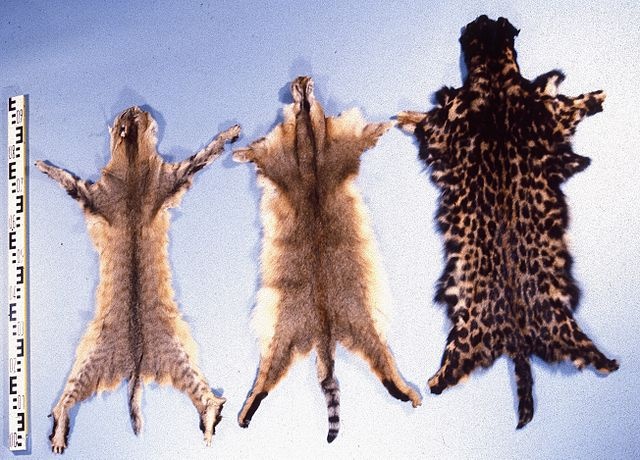
Habitat destruction and persecution by humans are the main threats to jungle cats. As the human population increases, more land is cultivated and jungle cats' natural habitat is converted to farmland. Although they are very adaptable, these altered environments do not support the same density of cats. Although laws have been implemented to protect them, illegal trade still continues in many countries. During the a ten period in the 2000s and 2010s more than 3,000 jungle cat skins were seized across the globe.
Natural predators include leopards and large raptors. Cubs are the primary targets but they have markings that help camouflage them from potential predators.
Image Sources: Wikimedia Commons
Text Sources: Animal Diversity Web animaldiversity.org ; National Geographic, Live Science, Natural History magazine, David Attenborough books, New York Times, Washington Post, Los Angeles Times, Smithsonian magazine, Discover magazine, The New Yorker, Time, Reuters, Associated Press, AFP, Lonely Planet Guides, Wikipedia, The Guardian, Top Secret Animal Attack Files website and various books and other publications.
Last updated January 2025