
MONSTER 2.85-METER CATFISH CAUGHT IN ITALY’S RIVER PO
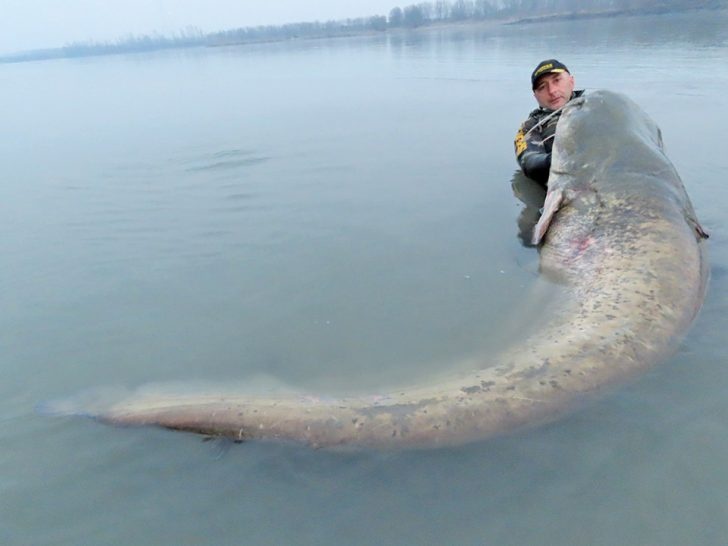
In June 2023, Alessandro Biancardi, an Italian angler, reeled in an enormous, 2.85-meter (9.4-foot) -longs catfish from the shallow waters of the River Po in the Lombardy region of northern Italy. The catch beats the previous world record for the largest wels catfish (Silurus glanis) ever caught by 4 centimeters (1.6 inches). "When it surfaced for the first time, I really realized that I hooked a monster," Biancardi wrote in a statement. "I was alone facing the biggest catfish I [have] ever seen in 23 years." [Source: Sascha Pare, Live Science June 16, 2023]
Live Science reported: When Biancardi landed the behemoth, he and his colleagues measured it before releasing it into the river. "Documentation was sent to the IGFA [International Game Fish Association] so they could officially record this large fish," according to the statement. The River Po, which meanders across northern Italy and through the cities of Turin and Piacenza, is a hotspot for extremely large catfish. The last record-breaking catch, a 9.2-foot-long (2.81 meters) wels catfish, was also pulled from the Po in April 2023.
Wels catfish are the largest freshwater fish in Europe, excluding species that migrate inland from the sea to breed, known as anadromous species. The prized fish are native to Central and Eastern Europe but have been introduced to other parts of the continent in the last 25 years, with populations mushrooming in major rivers across Italy, France and Spain. "Wels catfish were introduced in the River Po around 2000," Per Larsson, a visiting professor at Linnaeus University in Sweden who studies predatory fishes, told Live Science. "When a fish species (like wels catfish) is introduced into a new, suitable environment, the growth is high."
Larsson has studied wels catfish populations in their northernmost habitat in Sweden, where these animals have much slower growth rates than in more southern regions due to the colder climate. In a 2022 study published in the journal Scientific Reports, Larsson and his colleagues documented a 6.4-foot-long (1.95 meters) individual — the biggest among a total of 1,183 catfish caught — which they estimated to be 70 years old.
But catfish caught in warmer European regions are usually much younger than that. The recently caught wels catfish is probably 20 to 30 years old, Larsson estimated, but "a fish of the size that was caught in River Po would be around 100 years old in Sweden." High temperatures, a suitable environment and plenty of food could have contributed to the humongous size of this fish, Larsson added.
However, the River Po is drying up for the second year running due to declines in snowfall that usually replenish it in the warm summer months, which could spell trouble for gigantic fish. At the beginning of April, water levels were as low as they had been in the summer of 2022, when extreme drought revealed an unexploded WWII-era bomb on the Po riverbanks. It is unclear how drought will affect wels catfish, but the introduced species may do better than the native Adriatic sturgeon (Acipenser naccarii), which catfish have almost entirely eradicated.
Taimen
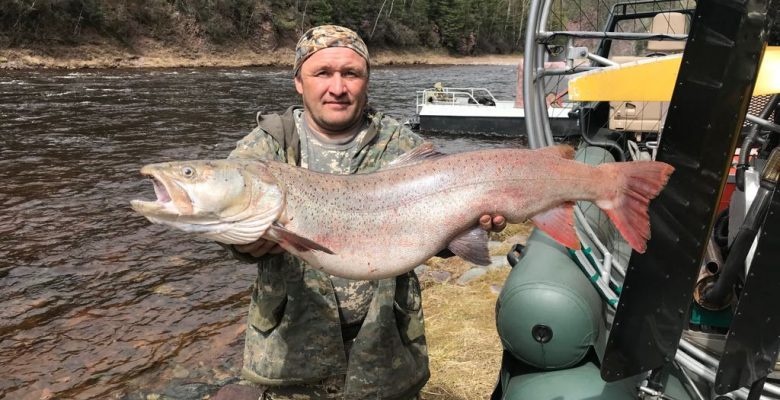
The taimen is a monstrous man-size fish found in rivers in Siberia and northern Mongolia. Specimens over five feet long have been reported. A relative of the Atlantic salmon, this fish is so large that anglers sometimes use live squirrels and teddy bears as bait. People have seen them swallow ducks and marmots whole. Some consider the taimen as a candidate for the world’s largest freshwater fish. There are catch and release rules for the taimen and other endangered fish.
The taimen is the largest member of the salmonid family, which also includes trout and salmon. According to National Geographic: These fish are fierce predators that sometimes chase their prey in packs, a practice that earned them the nickname "river wolves." They have gray-green heads with streamlined, reddish-brown bodies. And they can be enormous, with particularly large specimens reaching six feet (two meters) long. [Source: National Geographic]
Taimen, also called giant Eurasian trout, are notoriously voracious and have a varied diet that includes primarily fish, but also ducks and even mammals like rats or bats. These insatiable fish will also prey upon one another. Some large taimen are known to have suffocated while trying to swallow a slightly smaller member of their own species.
This riverine behemoth is revered by many Mongolian Buddhists as the child of an ancient river spirit, and it has long enjoyed relative peace in Mongolia, where the nomadic culture has traditionally eschewed fishing. But shifting lifestyles in modernizing Mongolia have meant more logging, mining, and grazing, which have harmed water quality in the taimen's range. And fishing, which has driven the taimen to near extinction in China, is beginning to take a toll in Mongolia.
Today recreational taimen fishing has become an international drawing card and a significant revenue source for regional economies. Mongolian officials, together with several nonprofit organizations, are trying to find a balance to curb poaching yet promote regulated fishing and the revenue it brings.
According to the International Game Fish Association (IGFA) the world record for a taimen is 41.95 kilograms (92.5 pounds) with a length of 156 cm. The maximum length is about 150 to 180 cm (59 to 71 in). According to National Geographic, the largest recorded taimen ever caught weighed 105 kilograms (231 pounds) and was 210 centimeters (83 inches) long.
Tracking Down the Taimen in Mongolia
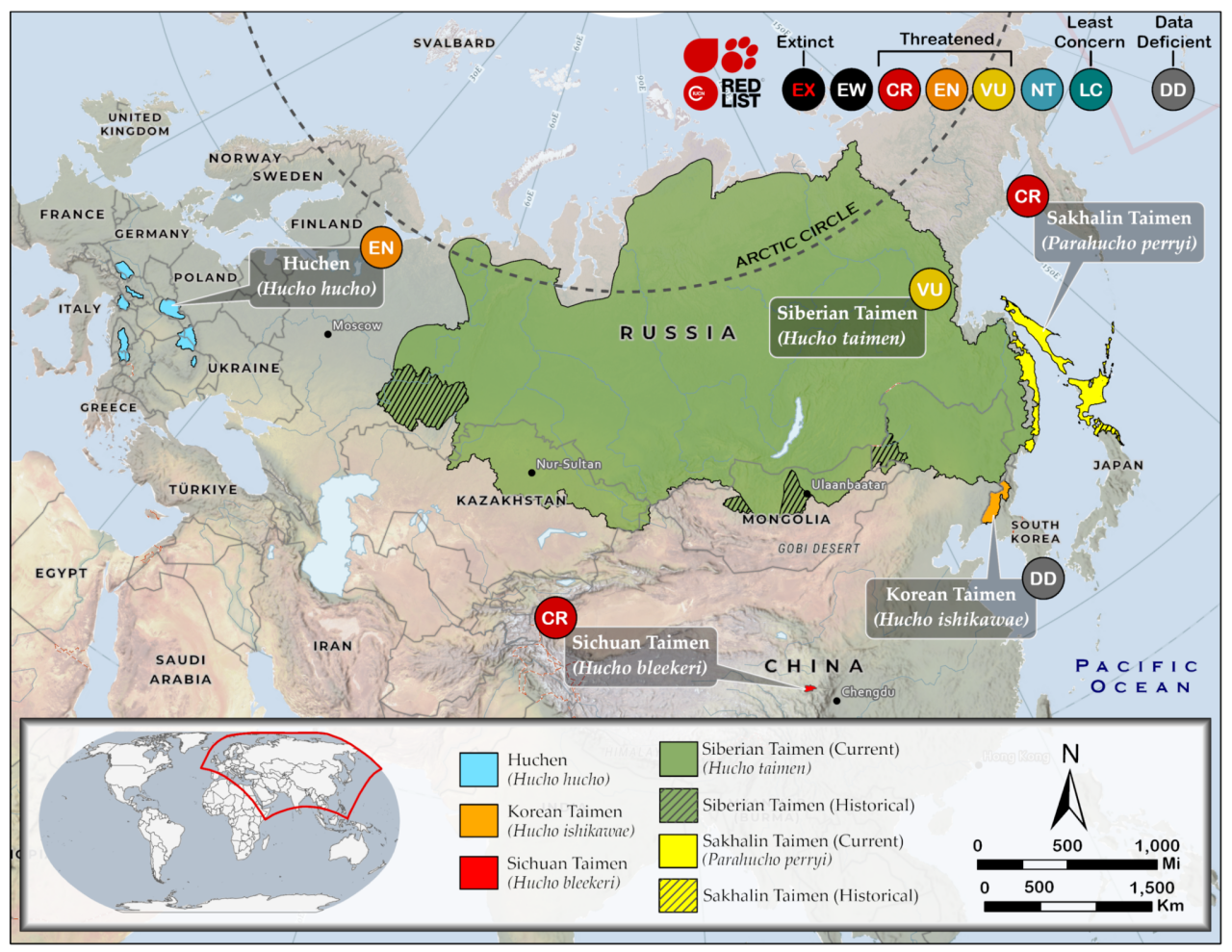
Taimen once swam in rivers from the Russian Pacific Coast westward throughout the former Soviet Union and Mongolia. Today they have been wiped out from much of their range, and significant populations remain only in Russia and Mongolia.
Zeb Hogan, a fisheries biologist with the University of Reno in Nevada, went to Mongolia to track down the taimen for his National Geographic series on the world's largest freshwater fishes. Stefan Lovgren wrote in National Geographic News, “Hucho taimen may be known to the Chinese as "the river god's daughter," but in this remote corner of northern Mongolia, the world's largest trout has long been king. A ferocious and even cannibalistic predator, taimen can grow more than six feet (up to two meters) in length and can weigh up to 200 pounds (91 kilograms). [Source: Stefan Lovgren, National Geographic News, November 14, 2007]
But like many other freshwater giants around the world, the taimen is now threatened with extinction. Scientists last month wrapped up a four-year study of the fish in a 60-mile (100-kilometer) stretch of the Eg and Uur rivers. Their results show that the taimen, also known as the giant Eurasian trout, is now too rare to support sustained commercial or recreational harvest.
"This fish is not like other trout and salmon species," said Zeb Hogan, Waist-deep in the clear, fast-moving waters of the Eg, Hogan prepared to release a newly tagged, 44-inch-long (112-centimeter-long) taimen back into the river. The fish, which takes up to nine years to fully mature, can live for 50 years, said Hogan, who is a National Geographic Society Emerging Explorer. "We only see a few animals this size per mile in the river, so if you remove one of them, it's going to take a long time before it can be replaced," he said.
Sturgeons
Sturgeons are an ancient fish that have been around for 200 million years (the dinosaurs first appeared 230 million years ago). With their ridge of bumps along their back, they look like swimming dinosaurs. During the time of the dinosaurs, they had more armor and looked like armadillos with fins.
There are 27 species of sturgeons (Acipenseridae), all found in the northern hemisphere. They are mostly found in large, freshwater lakes and rivers but some species also travel to the ocean and return to rivers and lakes to breed. All sturgeon species have been extensively used by humans for their meat and their roe. As a result, all sturgeon species are either threatened or endangered. [Source: Tanya Dewey, Animal Diversity Web (ADW)]
Ray-finned fish (scientific name: Actinopterygii) are the largest and most successful group of fishes and make up half of all living vertebrates. At present, approximately 42 orders, 431 families, and nearly 24,000 species are recognized within this class. ] Ray-finned fish fossils first appeared in deposits from the late Silurian (425 to 405 million years ago) or early Devonian (405 to 345 million years ago) periods. The earliest ray-finned fish are grouped in the subclass Chondrostei, of which only sturgeons , bichirs and paddlefishes survive today. [Source: R. Jamil Jonna,Animal Diversity Web (ADW) /=
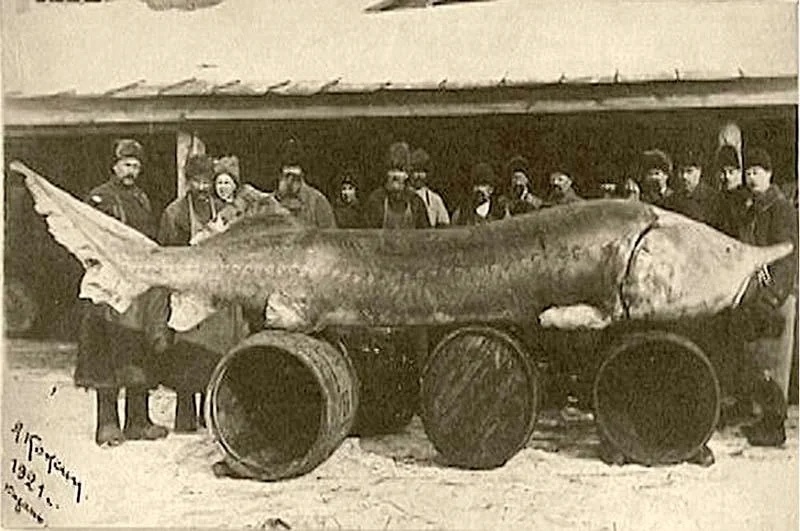
Acipenserids have been hunted for their roe since at least 1100 B.C. (Wei et al. 1997). Ancient Greek, Roman and Chinese literature make reference to acipenseriform species and caviar; and the Chinese reported trade as early as the 10th century A.D. [Source: Prosanta Chakrabarty, Animal Diversity Web (ADW) |=|]
Sturgeon Characteristics
Sturgeons can grow to be very large, up to 4.2 meters. Sturgeons have rows of large, bony scutes on their bodies. Their mouths are positioned ventrally and have four barbels. They have a bony plate covering their skull, rows of sharp, flexible cartilage running along their back instead of a spine and stubby white whiskers like a catfish.
Sturgeons are bottom feeders. Four long whiskers under their snout serve as sense organs, allowing the the fish to probe through bottom muck for snails, insect larvae, crawfish and other creatures which are sucked in with a snorkel-like mouth.
Sturgeons are slow, sluggish fish. Like sharks, they have cartilage rather than bones and have to keep moving or they sink Sturgeons have a shovel-shaped nose, which they move through the mud when they search for food, and five rows of plates along the sides of their bodies. Beluga sturgeon can grow to the size of whales. They can live to be up to a 100 years old and reach a length of 20 feet.
Sturgeon Species
There are six species of sturgeon in the Caspian Sea, of which the beluga is the largest. A 20-year-old beluga sturgeon may weigh a ton and bear enough caviar to feed a wedding party with hundreds of people. Some caviar sturgeon are so large they are hoisted out the water with a crane instead of a fishing pole.
A typical large 350-pound female sturgeon yields about 55 pounds of gray-black caviar. A massive female beluga sturgeon can weigh up to 1,300-pounds, reach 15 feet in length and carry 200 pound of roe. The largest sturgeon on a record, a 2,706-pound female, yielded 541 pounds of top quality caviar worth $700,000 in today's market. A 20-foot specimen at the museum in Astrakhan, Russia may have weighed over 3,000 pounds.
Beluga sturgeons are much larger than sevruga and osetra sturgeon, which are more numerous in the Caspian Sea than beluga sturgeon and also produce caviar. Some of the rarer species of sturgeon are already considered extinct. Beluga sturgeon take a long time to reach reproductive maturity, which is one reason why catching them for eggs can have such a devastating effect on their numbers.
Giant White Surgeon
White sturgeon are found in North America. In the early 2020s, footage showing a giant sturgeon leaping next to a fishing boat went viral, garnering millions of views. The footage was taken during a Yves Bisson charter on British Columbia’s Fraser River and shows the nearly three-meter (10-foot sturgeon) breaking the surface during a ferocious attempt to shake the hook before rolling over and diving out of sight. [Source: Pete Thomas, FTW Outdoors,December 30, 2022]
Bisson, who runs Yves Bisson Sturgeon Co., said on Instagram: “This was an insane jump right beside the boat. Unbelievable this video already has 55 million views on TikTok and will most likely be my most viewed video of the year soon.” Bisson told FTW Outdoors on Thursday morning that the TikTok viewership had since grown to more than 57 million.
Bisson Told FTW Outdoors that the fish was tagged and released as part of ongoing research of white sturgeon on the Fraser River. It measured three meters (nine feet, 10 inches), with a girth of 1.4 meters) 54 inches, and weighed 250 kilograms (550 pounds). Bisson states on his website that sturgeon are “the world’s largest and most powerful freshwater fish” and that his clients occasionally battle fish weighing nearly 1,000 pounds. Recreational sturgeon fishing on the Fraser River is strictly catch and release.
Kaluga Sturgeon
Kaluga Sturgeon (Huso dauricus) are a large, long-lived anadromous species found in the lower reaches of the Amur River of Russia and China. They weigh up to one metric tonne (2,200 pounds) and reach lengths up to 5.6 meters (18.5 feet). NOAA]
Mature Kaluga sturgeon are gray-green to black in color on their back, with a yellowish green-white belly. Like all sturgeon, they have a cartilaginous skeleton, heterocercal caudal fins (upper lobe larger than lower), single spiracle respiratory openings, a bottom-oriented mouth with four barbels (sensory “whiskers”), a flat snout, a strong rounded body, and unique ganoid scales.
Kaluga sturgeon inhabits the Amur River from the estuary to the upper reaches, and tributaries, as well as marine areas of the Sea of Okhotsk and the Sea of Japan. Mature fish migrate from the Amur estuary to the river to breed, mainly during the spring. Kaluga are an active predator and eat freshwater and marine fishes, including smelt, salmon, and herring.
Kaluga mature late in life at 14-23 years, spawn every 3-5 years, and can live to 80 years of age. Breeding migrations from the Amur estuary to the river take place between mid-May to mid-June, and mid-August to late September, though the majority of mature individuals migrate during the spring.[Source: NOAA]
Endangered Kaluga Sturgeon
The Kaluga sturgeon (Huso dauricus) is listed as Critically Endangered on the International Union for Conservation of Nature (IUCN) Red List of Threatened Species. This means it faces an extremely high risk of extinction in the wild. The fish is listed as endangered throughout its range under the Endangered Species Act (ESA, U.S. Fish and Wildlife): In CITES (Convention on International Trade in Endangered Species of Wild) they are in Appendix II, which lists species not necessarily threatened with extinction now but may become so unless trade is closely controlled: Throughout Its range.[Source: NOAA]
The population of kaluga sturgeon declined more than 80 percent between the end of the 19th century and 1992 as evidenced by reductions in annual catch. Continued significant declines in abundance are indicated by the Lower Amur population dropping from 40,000 individuals in the 1990s to 19,100 individuals in 2011, resulting from the overfishing of spawners. Maintenance of the species by natural reproduction alone has been shown to be inadequate, and therefore the release of hatchery-reared juveniles is necessary to restore the abundance and distribution of the species. While the main threat to the species is poaching of mature females, other potential threats facing the species include climate change and habitat degradation from dams and pollution.[Source: NOAA]
Commercial fishing of kaluga was prohibited in the Soviet Union in 1958, and the species has since only been collected for hatchery breeding and to monitor the status of the population. Despite these protections, poaching in Russia and legal commercial harvest in China continue to threaten the species. Selective poaching of large, mature females has also resulted in the population’s highly male-skewed sex ratio and resulting decline in fecundity.[Source: NOAA]
Image Sources: Wikimedia Commons
Text Sources: Animal Diversity Web animaldiversity.org ; National Geographic, Live Science, Natural History magazine, David Attenborough books, New York Times, Washington Post, Los Angeles Times, Smithsonian magazine, Discover magazine, The New Yorker, Time, BBC, CNN, Reuters, Associated Press, AFP, Lonely Planet Guides, Wikipedia, The Guardian, Top Secret Animal Attack Files website and various books and other publications.
Last updated June 2025